

Zaika Mazedaar · Rice & Pulao
A Muradabadi-style egg yakhni pulao built on a freshly ground aromatic spice powder and a sliced lemon cooked right into the rice — it won’t even seem like you made an egg pulao.
We make chicken pulao and mutton pulao often enough in most households that the egg version can feel like an afterthought — until you taste this one. This Muradabadi-style anda yakhni pulao is built specifically to smell and taste like a deep, meat-based pulao, even though there isn’t a scrap of meat anywhere near the pot. The first time the lid comes off after dum, it genuinely doesn’t seem like you’ve made an egg pulao at all.
This recipe is demonstrated step-by-step in our video on the Zaika Mazedaar channel, filmed and cooked in a real kitchen — not assembled from recipe databases.
What Is Muradabadi Anda Yakhni Pulao?
Muradabadi pulao is a regional North Indian style associated with Moradabad, known for layering whole-spice aromatics and a yogurt-based masala into rice to build a deep, restaurant-style flavour without relying on a long meat-stock reduction. A yakhni-style pulao more broadly refers to rice cooked in a flavour-rich base — traditionally a meat stock — rather than plain water. This Muradabadi version gets there a faster, “instant” way: a freshly ground aromatic spice powder, a yogurt masala roasted until it browns, and a sliced lemon cooked directly into the rice water do the work that a long-simmered stock would normally do.
Why This Recipe Works (and How It’s Different from Our Other Egg Pulao)
If you’ve made our simpler Anda Yakhni Pulao, this one is a deliberately different, more elaborate cousin — not a duplicate. That recipe uses a simpler coriander-powder-and-fennel-powder flavouring stirred straight into a yogurt-roasted masala, with no whole-spice grinding, no lemon, and no food colour. This Muradabadi version goes further: a freshly ground aromatic powder — whole coriander, fennel, green cardamom, star anise, and javitri — added in two separate stages, plus a sliced lemon cooked directly into the rice water and an optional kewra-and-food-colour finish for presentation. Both are genuinely yakhni-style. This one is more regionally specific and more elaborate.
Two techniques carry most of the flavour here.
First: a fresh aromatic spice powder, used twice. Grinding whole coriander, fennel, cardamom, star anise, and javitri fresh — rather than relying only on a pre-mixed masala — gives the pulao a sharper, more layered aroma. Using most of it in the masala and holding a little back for the rice layering means you get a second hit of that aroma right as the dum finishes.
Second: a sliced lemon cooked into the rice water. Rather than squeezing lemon juice in, a whole lemon is sliced and added directly to the boiling water before the rice goes in. It’s a deliberately milder, more rounded citrus lift than juiced lemon would give — built to season the rice itself, not just sit on top of it.
Holding back a little of the spice powder to sprinkle over the rice later, instead of using it all in the masala, is a small trick that makes a noticeable difference once the lid comes off.
Ingredients
For the Eggs
- A little less than ½ cup oil
- 4 eggs (5–6 for a larger family), lightly scored with a knife before frying
For the Fried Onion
- 1 medium onion, finely sliced
Whole Spices
- 1 tsp cumin seeds
- 3 green cardamom pods
- 2 bay leaves
- Cinnamon, a small piece
- ½ tsp black pepper, whole
- 3–4 cloves
For the Aromatic Yakhni Powder
- 2 tsp whole coriander seeds
- 2 tsp fennel seeds (saunf)
- Green cardamom, a few extra pods
- 1 whole star anise (badiyan ka phool), broken up before grinding
- Javitri (mace), a small piece
For the Yogurt Masala
- 1 tsp ginger-garlic paste
- 1 tsp green chilli paste (or crushed green chillies)
- ½ cup yogurt, well whisked, at room temperature
For the Rice
- 2 cups basmati rice (about ½ kg), soaked 30 minutes (sela/parboiled rice needs 1–1.5 hours soaking instead)
- 3 cups water
- Salt, to taste (use coarse/open salt for better absorption)
- Green chillies, extra, to taste
- 1 whole lemon, sliced (not squeezed)
- A little kewra (kewda) water mixed with orange food colour (optional, purely cosmetic)
For Garnish
- Reserved fried onion (set aside earlier)
- Reserved 1 tsp aromatic yakhni powder (held back from the masala)
Ingredient Substitutions
| Ingredient | Substitute | Effect on Taste / Texture |
|---|---|---|
| Basmati rice | Sela (parboiled) rice | Needs 1–1.5 hours of soaking instead of 30 minutes; slightly firmer grain |
| Kewra water + orange food colour | Skip entirely | Purely cosmetic per the original recipe — flavour and aroma are unaffected |
| Javitri (mace) + star anise | A smaller amount of garam masala | Rough stand-in only — the aroma will be noticeably less layered and distinct |
| Frying the eggs | Skip and use as-is | Purely a presentation step — the pulao works fine without the golden skin on the eggs |
Mise en Place Checklist
Get all of this ready before turning on the flame. This recipe has two things happening in parallel — the masala roasting and the spice grinding — so prep makes a real difference here.
- Rice soaked (30 minutes for basmati, 1–1.5 hours for sela)
- Eggs scored with a knife
- Onion finely sliced
- Whole spices (cumin, cardamom, bay leaf, cinnamon) measured into one bowl
- Black pepper and cloves measured separately
- Ginger-garlic paste and green chilli paste measured
- Yogurt whisked smooth and brought to room temperature
- Aromatic spice mix (coriander, fennel, cardamom, star anise, javitri) ground and set aside, with 1 tsp held back
- Lemon sliced
- Kewra water mixed with food colour, if using
- Pot or pan ready, with a tight-fitting lid for dum
Step-by-Step Method
Fry the scored eggs
Heat a little less than ½ cup oil in a pot over medium flame. Score each egg lightly with a knife, then fry until a light golden skin forms. Remove and set aside.

Temper the first batch of whole spices
In the same oil, add 1 tsp cumin seeds, 3 green cardamom pods, 2 bay leaves, and cinnamon. Fry briefly until fragrant.
Fry the onion, reserve some for garnish
Add the finely sliced onion and fry on medium flame until golden. Once golden, remove a small amount and set it aside — this reserved portion goes on top as garnish later.

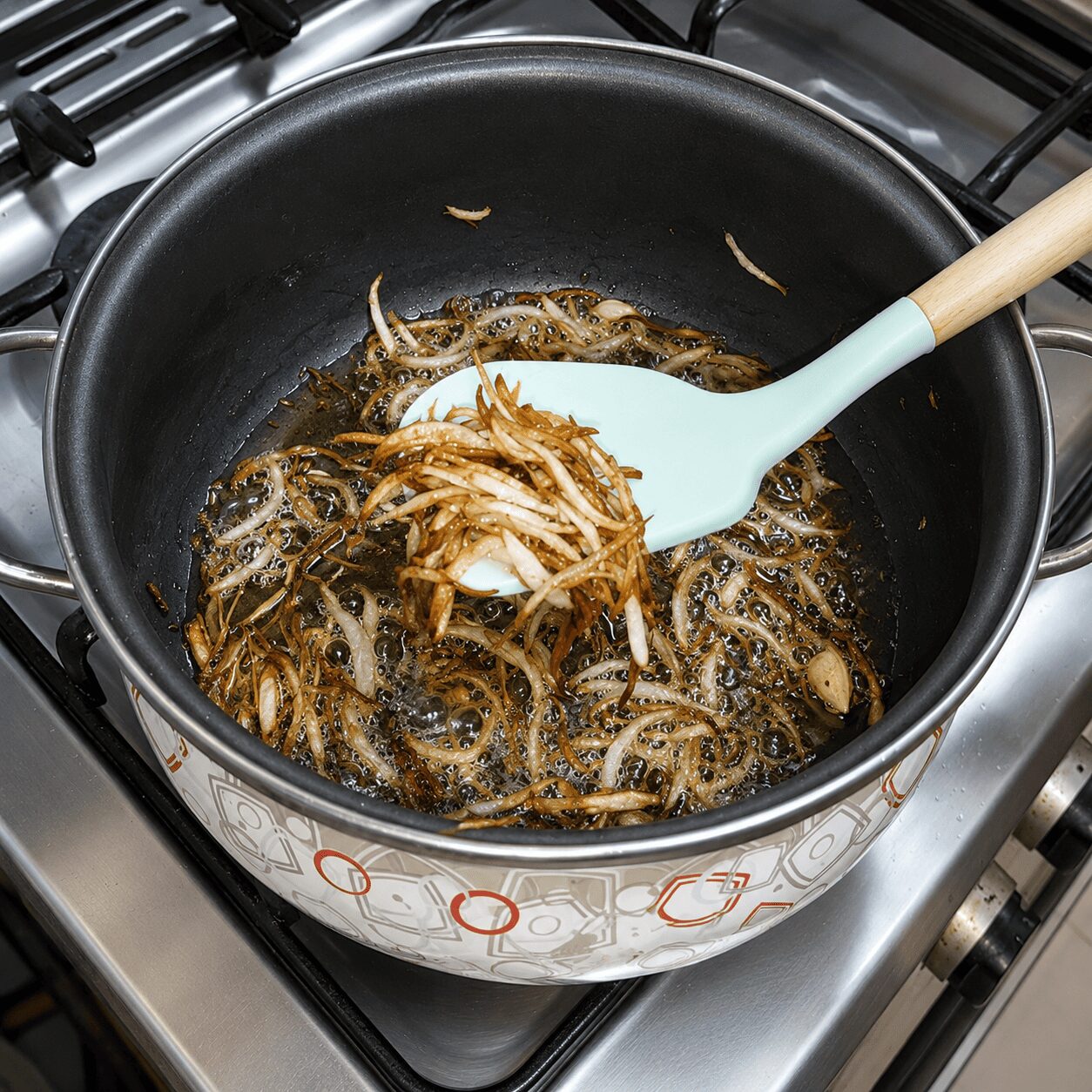
Add pepper and cloves after the onion
Add ½ tsp black pepper and 3–4 cloves now, after the onion — not with the first batch of whole spices. Fry briefly.
Add ginger-garlic and green chilli paste
Stir in 1 tsp ginger-garlic paste and 1 tsp green chilli paste. Fry for 30–40 seconds until the raw smell is gone.
Grind the aromatic spice powder
While the masala continues on a low flame, grind 2 tsp whole coriander, 2 tsp fennel seeds, a few green cardamom pods, the broken star anise, and a small piece of javitri into a fine powder.

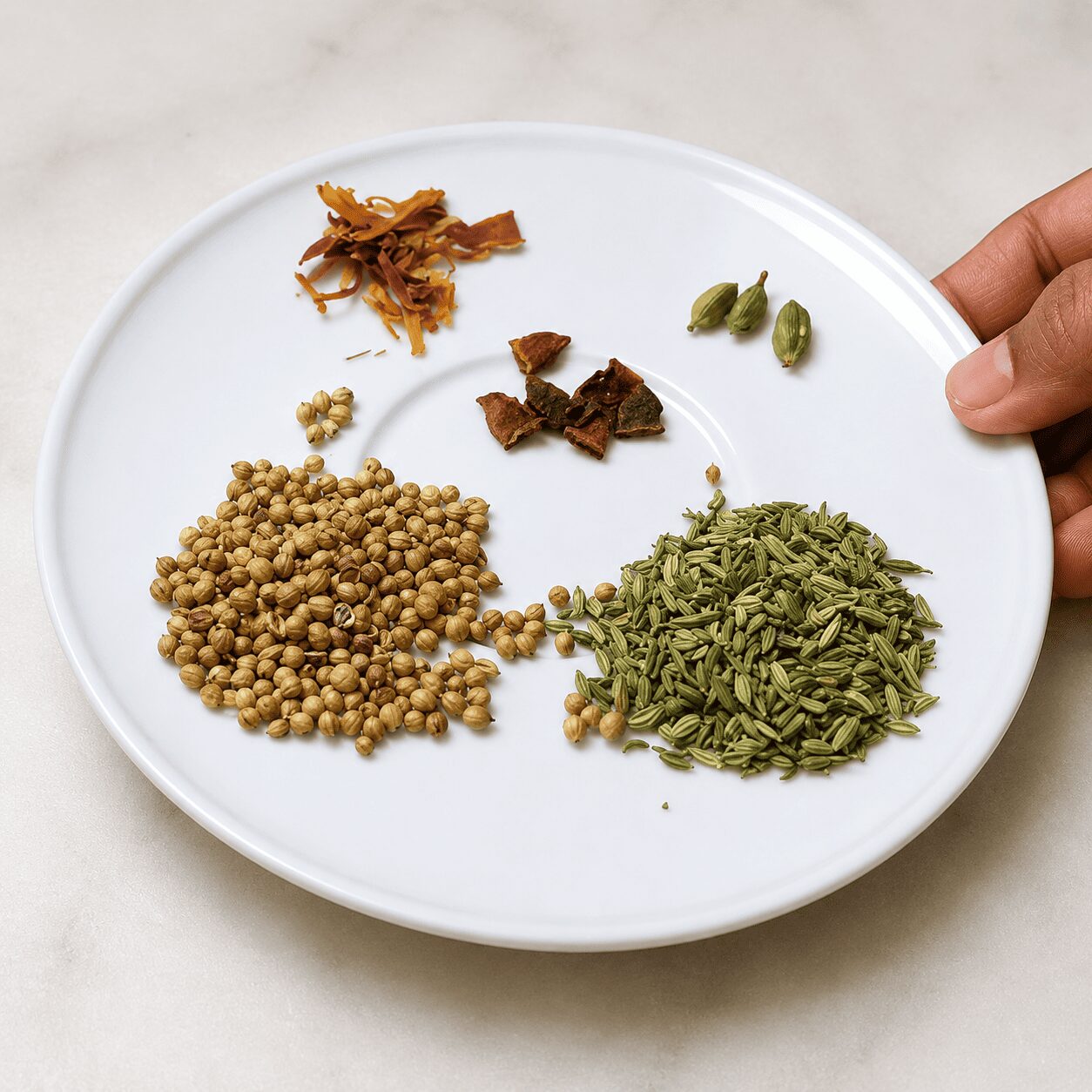
Roast the yogurt into the masala
Add ½ cup well-whisked, room-temperature yogurt and stir quickly to prevent splitting. Roast until the yogurt’s colour visibly browns and the raw smell and excess moisture are gone.

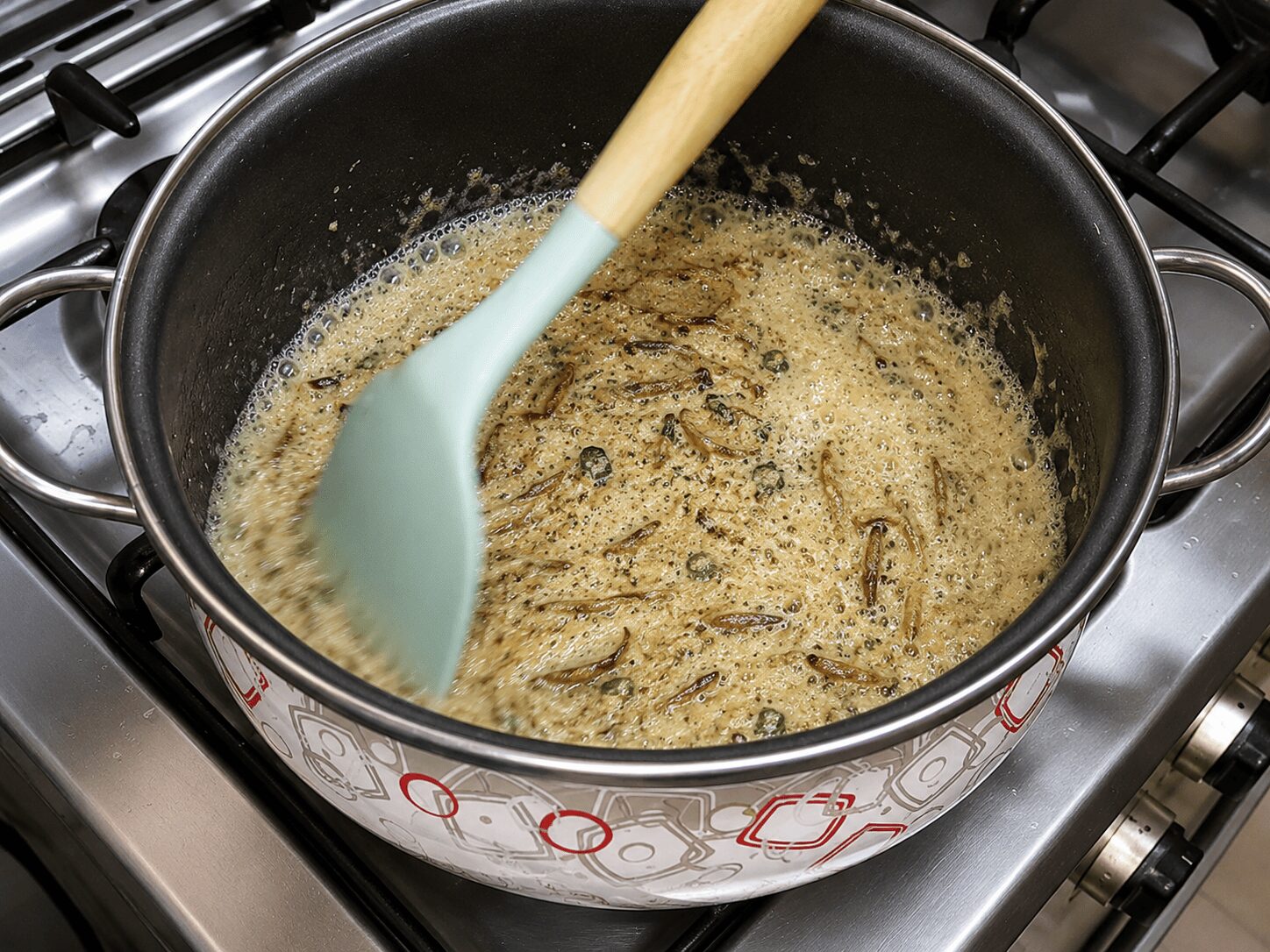
Add the aromatic powder, holding some back
Add almost all of the freshly ground spice powder into the masala, holding back about 1 tsp to sprinkle over the rice later. Fry for 30–40 seconds on the still-low flame.
Build and boil the rice water
Add 3 cups water, salt to taste, a little extra green chilli, and a whole lemon, sliced (not squeezed). Cover and bring to a boil on high flame.

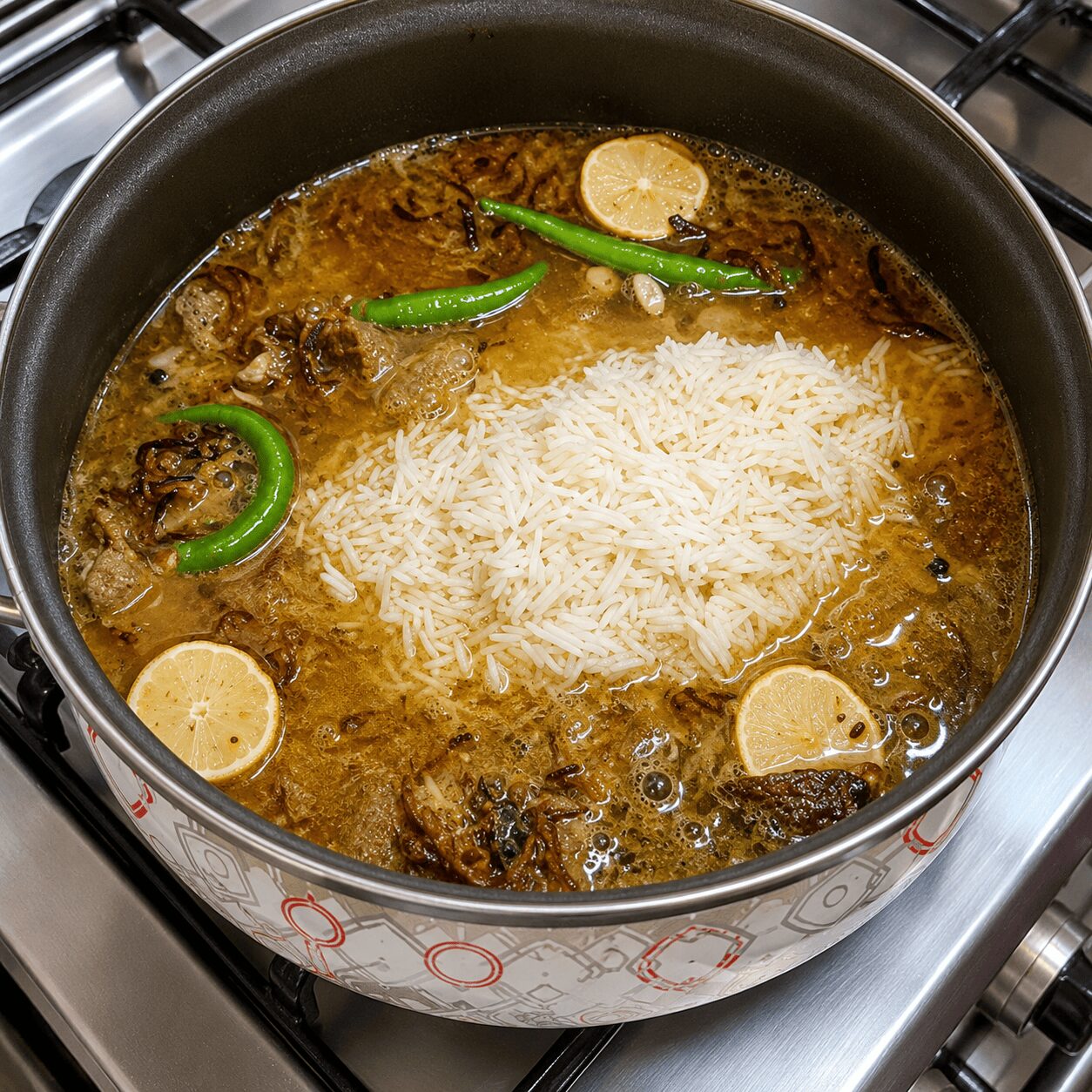
Cook the rice until small bubbles appear
Add the soaked 2 cups basmati rice and mix in gently. Cook covered on medium-to-high flame until the water is almost fully absorbed — you’ll see small bubbles breaking the surface. That’s the visual cue that there’s just enough water left to finish on dum.
Layer, dum, and rest
Pour the kewra-and-food-colour water over the rice, if using. Layer the fried eggs on top, scatter the reserved fried onion over that, and sprinkle the reserved 1 tsp aromatic spice powder on top as well. Cover and cook on dum, low flame, for 8–10 minutes.
Turn off the gas. Do not remove the lid immediately — let it rest a further 4–5 minutes so the aroma settles. When you do open it, let the steam escape briefly before gently folding the rice together by hand.

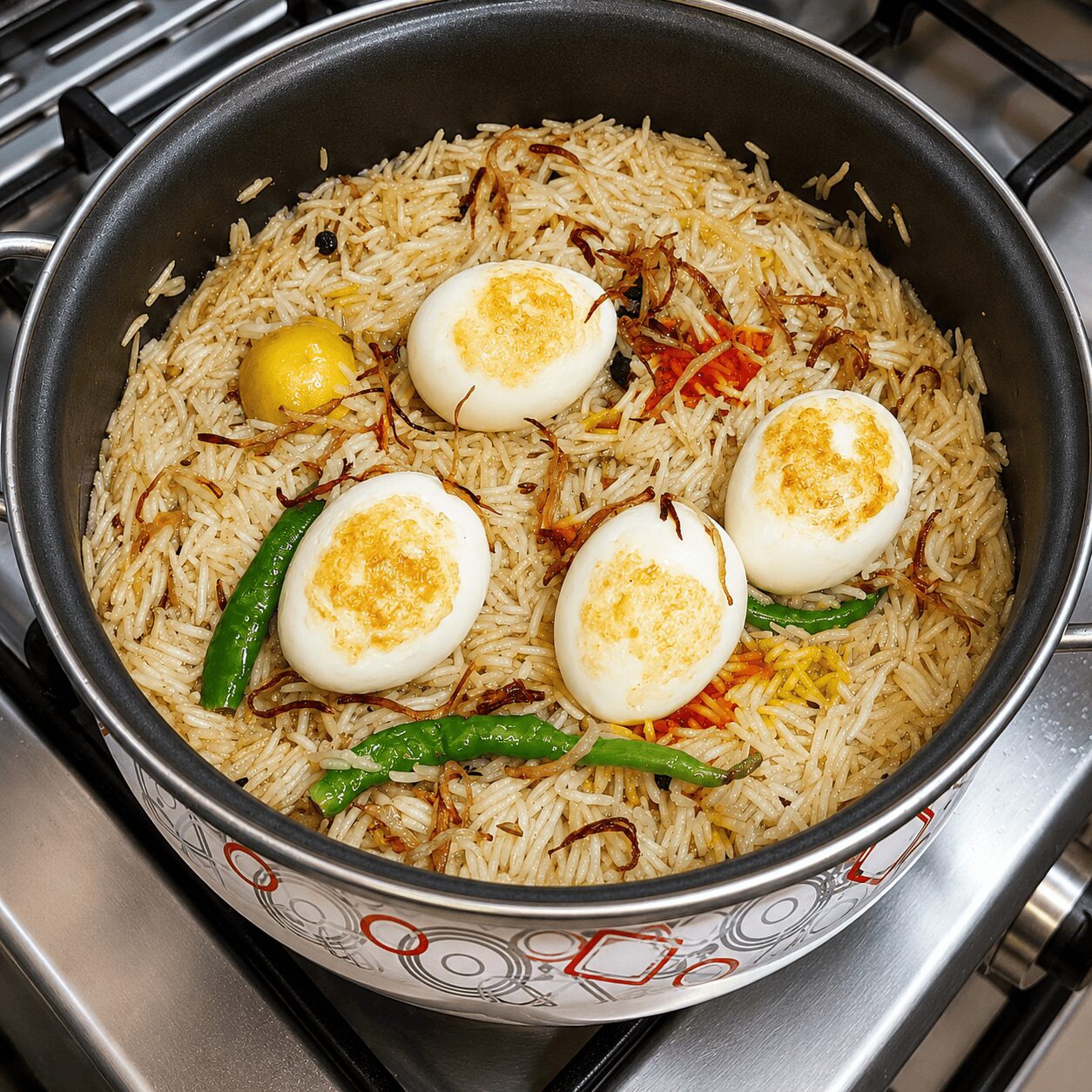
Your Muradabadi Anda Yakhni Pulao is ready.

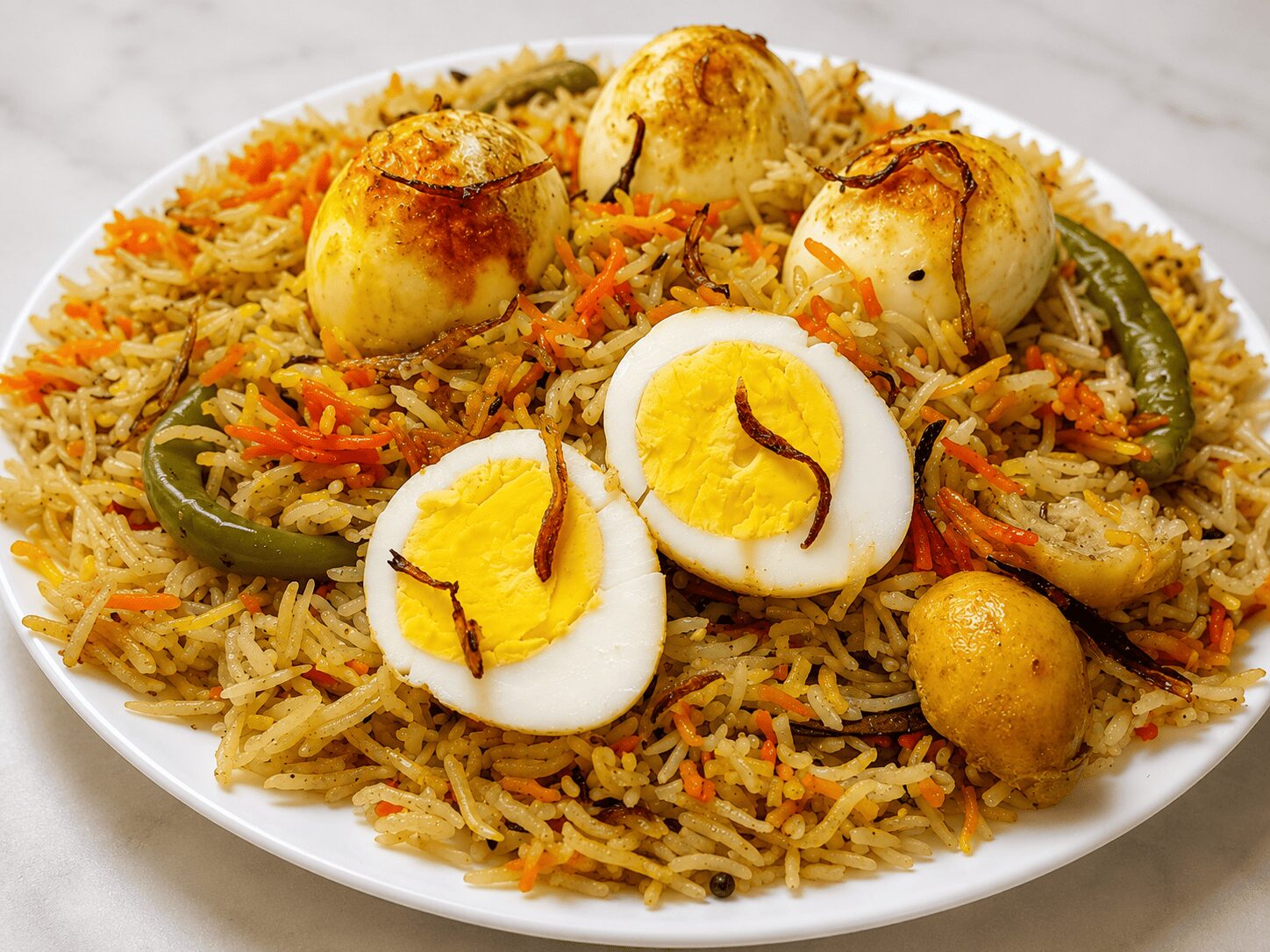
7 Things to Remember for Perfect Muradabadi Anda Yakhni Pulao
- Frying the eggs is optional — purely cosmetic, skip it if short on time
- Stage the whole spices in two batches, not all at once
- Grind a fresh aromatic spice powder rather than relying only on pre-mixed masala
- Add pepper and cloves after the onion, not with the first whole-spice batch
- Slice the lemon into the rice water — don’t squeeze it
- Hold back a little spice powder for the rice layering
- Let steam escape before stirring once the dum finishes
The One Mistake That Flattens This Pulao’s Aroma
Adding all the whole spices at once, or stirring the rice the moment the lid comes off.
It’s tempting to throw cumin, cardamom, bay leaf, cinnamon, pepper, and cloves into the oil together — most pulao recipes do exactly that. But pepper and cloves added with the onion get hidden inside it, and are easy to lose or accidentally bite into later. Add the first batch, then the onion, then pepper and cloves separately, after.
The second version of this mistake happens at the very end: lifting the lid after dum and stirring immediately. That traps less steam to finish the rice properly and breaks the grains. Let the lid sit a full 4–5 minutes after the gas is off, then let steam escape for a moment before folding gently by hand.
For Beginners
Frying the eggs is optional and purely cosmetic — don’t stress over getting a perfectly even golden skin on them. Skip the step entirely if you’re short on time; the pulao tastes exactly the same either way.
For Confident Home Cooks
Try sourcing real javitri and star anise fresh, rather than pre-ground, for a noticeably stronger and more layered aroma. Freshly ground whole spices lose potency quickly once powdered, so grinding just before use makes a real difference here.
What to Serve Muradabadi Anda Yakhni Pulao With
This pulao pairs naturally with a cooling raita — cucumber raita keeps things simple, while boondi raita adds a bit of texture and tang against the deep, spiced rice. A sharp garlic chutney on the side also works beautifully, cutting through the richness of the fried eggs and yogurt masala.
It’s substantial enough to be a complete meal on its own, but also scales easily for a small gathering when you want something that feels like biryani night without the extra effort of cooking meat. For that same biryani-night feeling with a different technique, our Anda Dum Biryani and Anda Korma Biryani are both worth trying too.
Storage, Reheating & Make-Ahead
| Situation | Guidance |
|---|---|
| Fridge storage | Up to 2 days in an airtight container |
| Freezing | Up to 1 month; thaw fully before reheating for even results |
| Reheating | Gentle reheat on low flame or in a covered pan with a splash of water, to keep the rice from drying out |
| Reheating eggs | The fried eggs will firm up further on reheating — expect a slightly different texture than fresh |
| Make-ahead strategy | The masala and aromatic powder can be made a day ahead; assemble and cook the rice fresh for the best texture |
A splash of water before reheating makes a real difference here — basmati rice dries out quickly in the fridge, and this pulao is worth protecting that aroma for.
Myth vs. Fact: Does Pulao Need Meat for a Deep Aroma?
A pulao only gets that deep, restaurant-style aroma from a long-simmered chicken or mutton stock.
Not when the spice powder does the work. A freshly ground aromatic mix of coriander, fennel, cardamom, star anise, and javitri — used in two stages, once in the masala and again sprinkled over the rice — builds a genuinely deep, layered aroma without any meat or stock involved. The yogurt-roasted masala and the lemon cooked into the rice water round it out further. This recipe is built specifically to demonstrate that the aroma comes from technique and spicing, not from meat itself.
Nutrition Snapshot (Estimated per serving)
| Nutrient | Estimated Amount |
|---|---|
| Calories | ~380–420 kcal |
| Protein | ~11–14 g |
| Fat | ~16–19 g |
| Carbohydrates | ~48–54 g |
| Sodium | Varies with salt added |
Figures are estimated and will vary based on exact oil quantity, rice measurement, and egg size. These are not a substitute for individualised nutritional advice. Per-egg and basmati rice nutritional data is available via USDA FoodData Central.
Frequently Asked Questions
What is Muradabadi anda yakhni pulao?
It’s a regional, North Indian style of egg yakhni pulao associated with Moradabad, built on a freshly ground aromatic spice powder, a yogurt-roasted masala, and a sliced lemon cooked directly into the rice water. It’s designed to deliver a deep, meat-pulao-like aroma using only eggs and spices.
How is this different from a regular egg yakhni pulao?
Our simpler Anda Yakhni Pulao uses a coriander-and-fennel-powder flavouring stirred directly into a yogurt-roasted masala, with no whole-spice grinding, no lemon, and no food colour. This Muradabadi version is more elaborate — a freshly ground aromatic powder used in two stages, plus a sliced lemon in the rice water and an optional kewra-and-food-colour finish.
Why is the lemon added as a slice instead of squeezed?
A sliced lemon cooked directly in the boiling rice water gives a milder, more rounded citrus lift than squeezed juice would. It seasons the rice as it cooks rather than adding a sharp, concentrated tang on top afterward.
Can I skip frying the eggs?
Yes, completely. Frying the eggs to a light golden skin is purely a presentation step — it doesn’t add flavour. The pulao works perfectly well with eggs that go in unfried if you’re short on time.
Why add black pepper and cloves after the onion instead of with the other whole spices?
If pepper and cloves go in with the first batch of whole spices and then the onion, they get hidden inside the onion as it fries — making them easy to lose or accidentally bite into later. Adding them after the onion keeps them visible and intentional.
Can I skip the food colour and kewra water?
Yes, entirely. Both are explicitly optional and added purely for visual appeal — the orange streaks through the rice look appealing but contribute nothing to flavour. Skip them with no change to taste or texture.
Can I make this less spicy?
Yes. Reduce the green chilli paste and the extra green chillies added to the rice water — both are adjustable to taste. The whole spices (pepper, cloves, cardamom) contribute aroma more than heat, so the dish stays flavourful even with less chilli.
What should I serve with Muradabadi anda yakhni pulao?
Cucumber raita or boondi raita both work well as a cooling side, and a garlic chutney adds a sharp contrast to the rice’s richness. All three are used as pairings for this exact recipe.
Conclusion
Muradabadi Anda Yakhni Pulao earns its honest, surprising claim: it really does taste and smell like a meat-based pulao, built entirely from eggs and a carefully staged set of spices. The freshly ground aromatic powder, used twice, the yogurt roasted until it browns, and the lemon quietly perfuming the rice water — none of these are shortcuts, and together they explain why this particular pulao stands apart from a simpler everyday version.
Fifty minutes from mise en place to table, one pot, and a dish that genuinely brings biryani-night energy to a weeknight — or works just as well for guests who don’t eat meat but still want that deep, layered aroma. Follow the staging — whole spices in two batches, the held-back spice powder, the patient rest after dum — and the result will speak for itself the moment the lid comes off.
There’s a reason this doesn’t taste like a typical egg pulao — and it has almost nothing to do with the eggs themselves.
Leave a Reply