

Zaika Mazedaar · North Indian Curries
A silky onion-cashew gravy, a careful yogurt technique, and one simple egg-boiling trick that keeps the yolks tender instead of chalky — filmed, tested, restaurant-style.
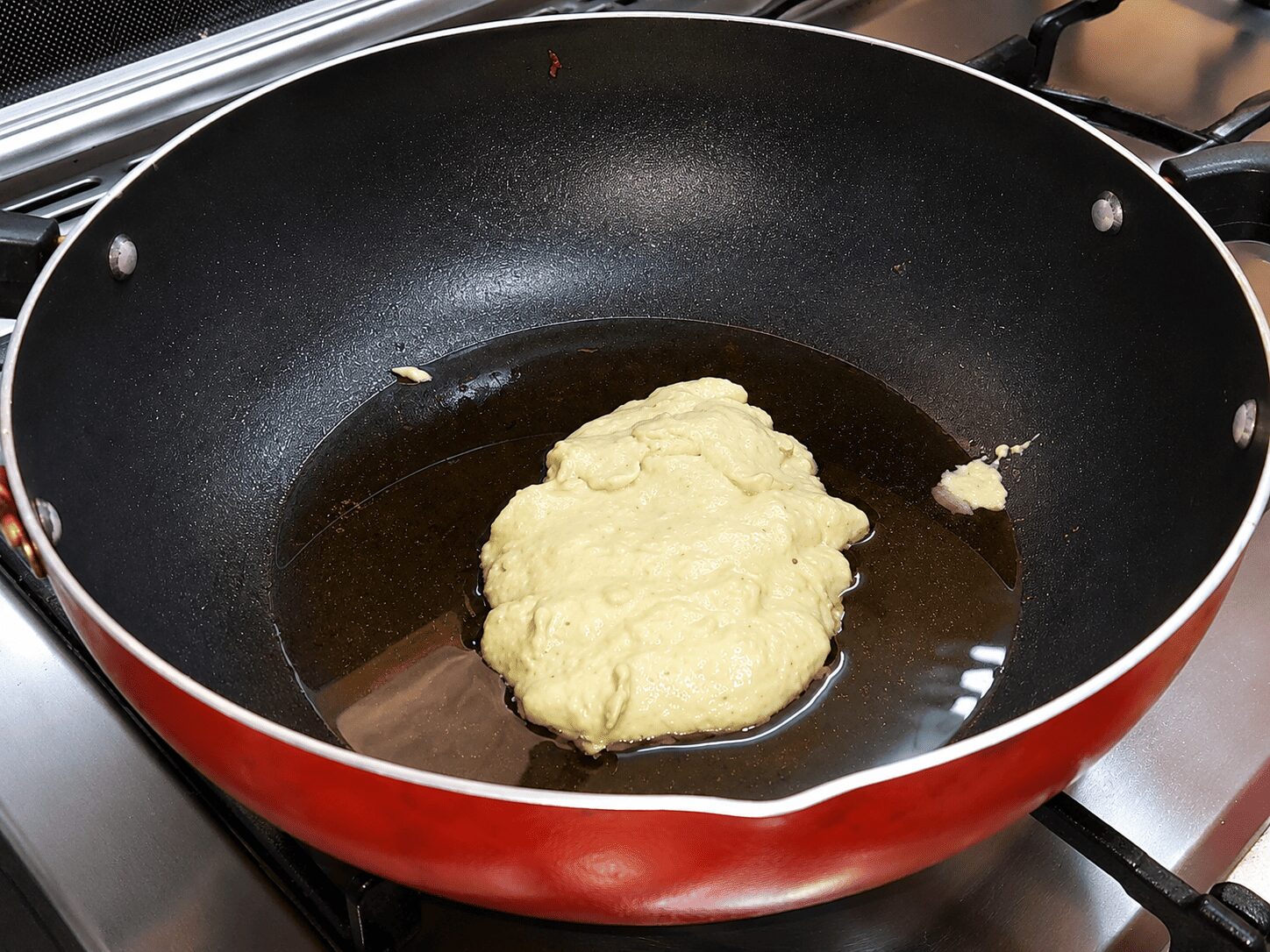
The onion-cashew paste turns a soft, pale light green the moment it hits hot oil — that’s the first sign this gravy is heading somewhere silky rather than rustic. By the time yogurt disappears seamlessly into the roasted masala and the cream cooks in at the end, you’ve got a curry that’s genuinely smooth from edge to edge, no graininess anywhere.
This recipe is demonstrated step-by-step on the Zaika Mazedaar channel, filmed and cooked in a real kitchen. Quick note before we start: if you’re looking for our Egg Malai Curry instead, that one’s built a little differently — it uses an onion-green-chilli paste finished with plain milk, no cashews, no yogurt, no cream. This Reshmi Anda Curry uses a richer onion-cashew-coriander-stem paste, a yogurt-based roasted masala, and a finish of kasuri methi plus actual cream. If you want something further afield in the same egg-curry family, our Chicken Egg Dak Bungalow recipe is worth a look too.
What Is Reshmi Anda Curry?
Reshmi anda curry is built specifically to come out silky, thanks to an onion-cashew paste and a careful yogurt technique. “Reshmi” (silky) is a recognized descriptor on Indian restaurant menus — reshmi kebab, reshmi paneer — and it accurately names what’s distinct about this dish: a smooth, no-grain gravy built from a softened onion-cashew-coriander-stem paste, roasted twice with yogurt until oil separates both times.
The other defining detail is the eggs themselves: half-boiled, not hard-boiled, scored lightly before going into the gravy. That single choice is the real reason the yolks here stay tender rather than turning dry and chalky once they finish cooking in the simmering curry.
Why This Recipe Works (and How It’s Different from Our Egg Malai Curry)
Two techniques carry this dish, and they’re also what separate it from the site’s existing Egg Malai Curry article, despite the creator’s own informal naming overlap in the source video.
First: an onion-cashew-coriander-stem paste, not a plain onion-chilli paste. Softening the onion together with cashews, coriander stems, and green chillies before grinding gives the base both richness and a faint herbaceousness that a simple onion paste doesn’t have. If you like this cashew-forward style, our Anda Korma recipe leans on a similar ground base.
Second: half-boiled eggs, scored before going in. Using half-boiled rather than fully hard-boiled eggs felt like a small detail the first time we tried it — but it’s the real reason the yolks here stay tender instead of turning chalky once they finish cooking through in the hot gravy. Hard-boiled yolks, cooked again in a simmering curry, dry out and turn unpleasantly firm.
Ingredients
For the Onion-Cashew Paste
- 2 tbsp oil
- 1 onion (~250g), roughly sliced
- Coriander stems, a handful (saved specifically for this — extra flavour)
- A few cashews
- 2 green chillies
- Optional: 2–3 garlic cloves + 1 inch ginger, added at the same softening stage
- 2–3 tbsp more oil, for frying the ground paste
- 1 tbsp ginger-garlic paste (if not already added with the onion)
For the Eggs
- 4–5 eggs, half-boiled (not hard-boiled), lightly scored with a knife
Dry Spices
- 1.5 tbsp coriander powder
- 1 tsp cumin powder
- 1 tsp red chilli powder (adjusted down, since green chillies are already in the paste)
- ½ tsp turmeric powder
- Salt, to taste
- 2 tbsp yogurt, at room temperature, whisked smooth
For the Finishing Touches
- ½ cup water plus a little extra, including jar-rinse water
- 1 tsp kasuri methi (home-dried, lightly roasted first)
- A scant ½ tsp garam masala powder
- Fresh coriander, for finishing
- 2 tbsp fresh cream
Ingredient Substitutions
| Ingredient | Substitute | Effect on Taste / Texture |
|---|---|---|
| Fresh cream | Homemade malai / cream skimmed from milk | Nearly identical, a little less processed-tasting — whisk smooth before adding |
| Cashews | Soaked blanched almonds | Slightly drier body and a less rounded sweetness — still works well |
| Coriander stems | Skip if unavailable | Loses a layer of fresh, herbaceous flavour in the paste — not essential, but noticeable |
If you’d rather skip the gravy altogether on a busier day, our quicker Butter Garlic Egg recipe uses many of the same pantry staples.
Mise en Place Checklist
Get all of this ready before turning on the flame. The onion-cashew paste needs to cool before grinding, so plan a few extra minutes for that.
- Onion roughly sliced
- Coriander stems, cashews, and green chillies measured
- Ginger-garlic paste ready (or fresh ginger-garlic, if adding early)
- Dry spices measured into one bowl
- Yogurt whisked smooth and at room temperature
- Eggs half-boiled, peeled, and lightly scored
- Cream measured
- Kasuri methi lightly roasted and ready to crush
- A pan with a lid, ready on the hob
Step-by-Step Method
Soften the onion, coriander stems, cashews, and chillies together
Heat 2 tbsp oil in a pan. Add the roughly sliced onion, coriander stems, a few cashews, and the green chillies together — and ginger-garlic at this stage too, if using fresh. Cover and cook on medium flame just until the onion turns soft and barely starts to take on colour. Don’t let it brown.

Cool and grind into a paste
Remove the softened mixture, let it cool, then grind it into a fine paste.
Fry the paste until light green
Add 2–3 tbsp more oil to the same pan. Add the onion-cashew paste back in and fry for about a minute — you’ll see it turn a soft, light green.

Add the ginger-garlic paste, if not already in
If you haven’t already added ginger-garlic at the softening stage, stir in 1 tbsp ginger-garlic paste now and fry about a minute, until the raw smell is gone.
Add the dry spices and roast until oil separates
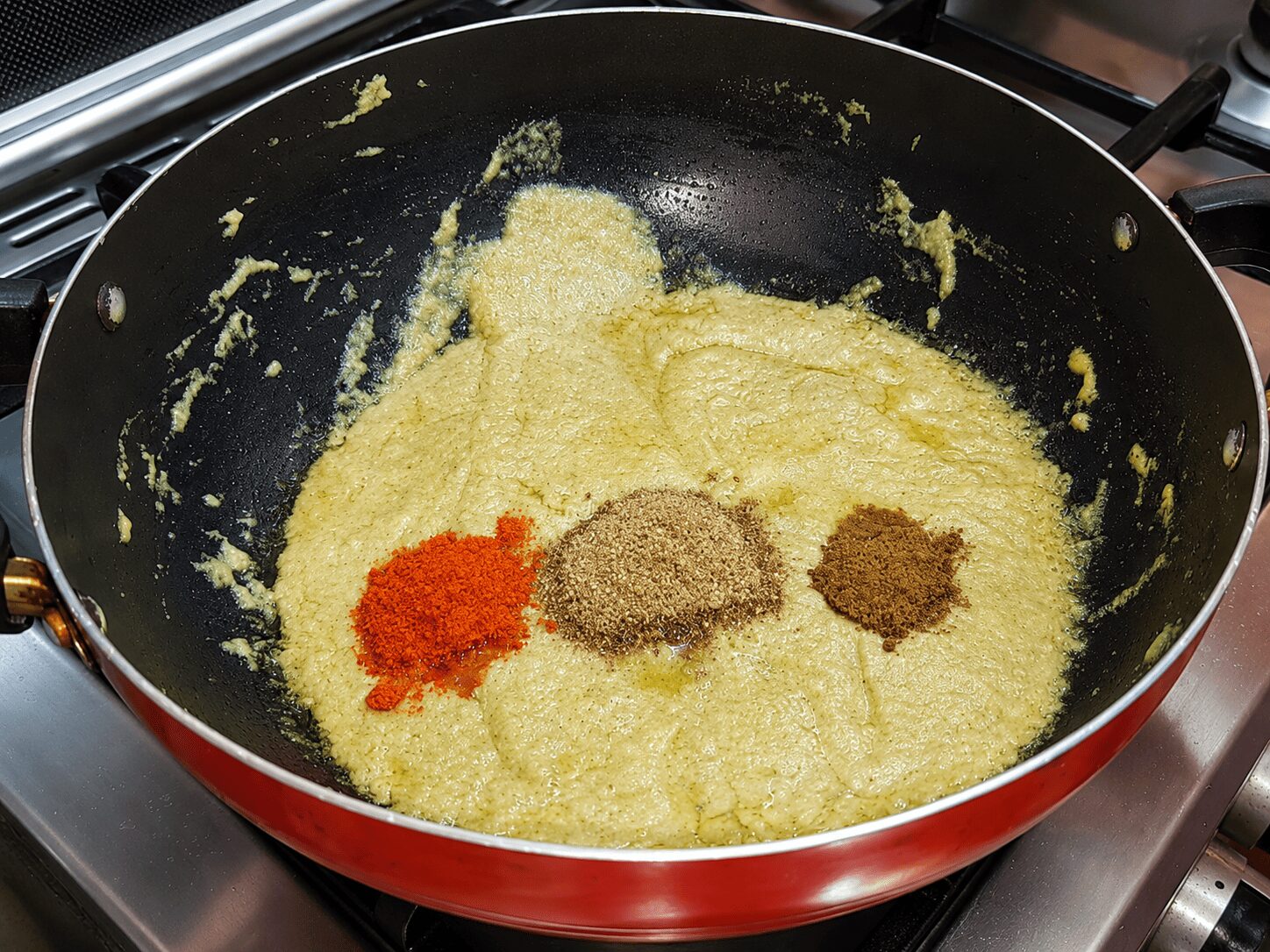
Add the coriander powder, cumin powder, red chilli powder, and turmeric. Cover and roast on low flame for 4–5 minutes, until oil separates and a fragrant aroma develops.

Add the salt
Add salt to taste, if you haven’t already mixed it in with the dry spices.
Whisk in the room-temperature yogurt
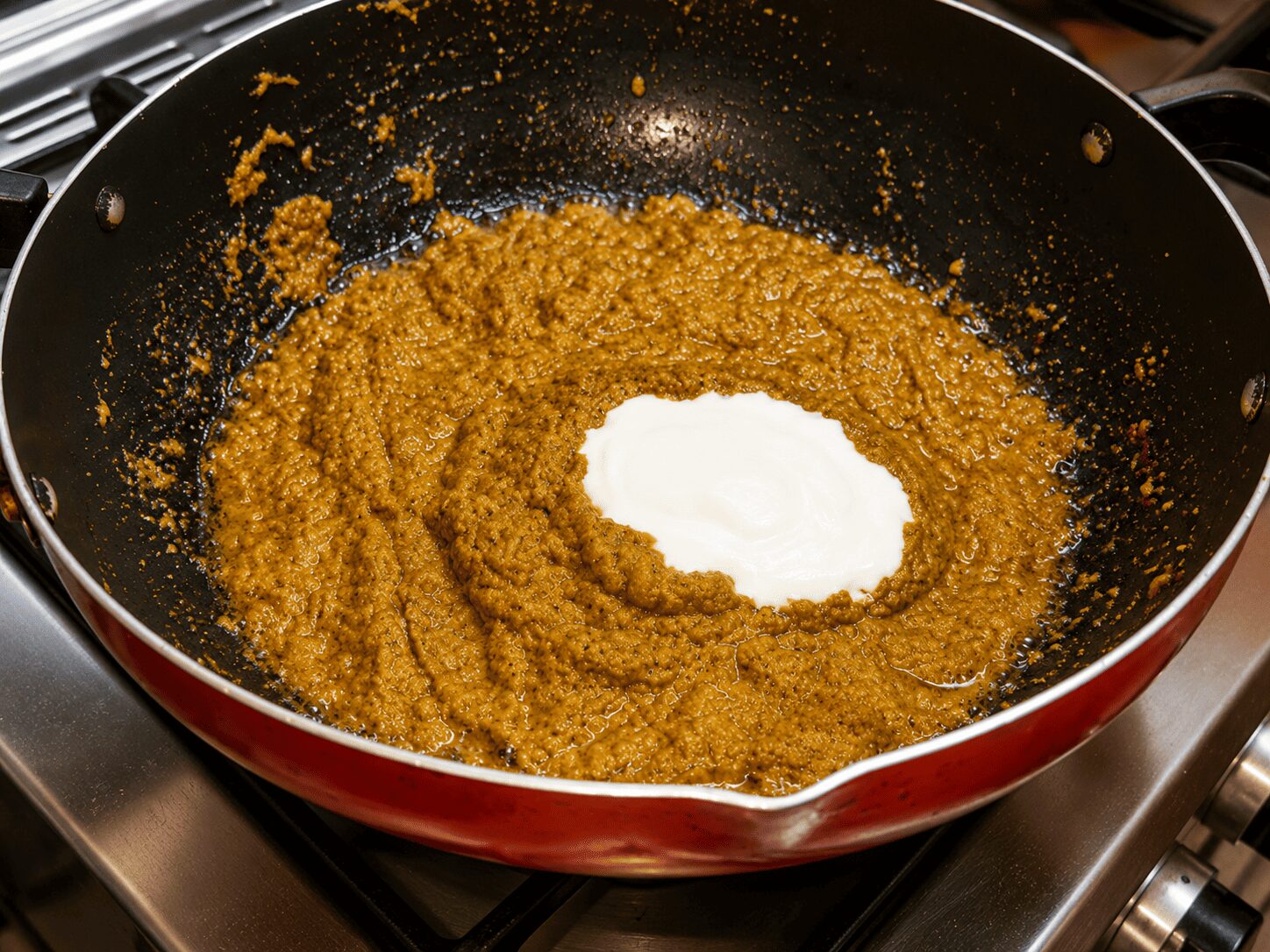
On low flame, add the whisked, room-temperature yogurt and mix it in quickly — this is what keeps the gravy smooth instead of curdled or grainy.

Roast further until oil separates again
Continue roasting until the oil separates a second time. This is the point the gravy turns visibly smooth — genuinely silky, not just thick.
Add the scored, half-boiled eggs
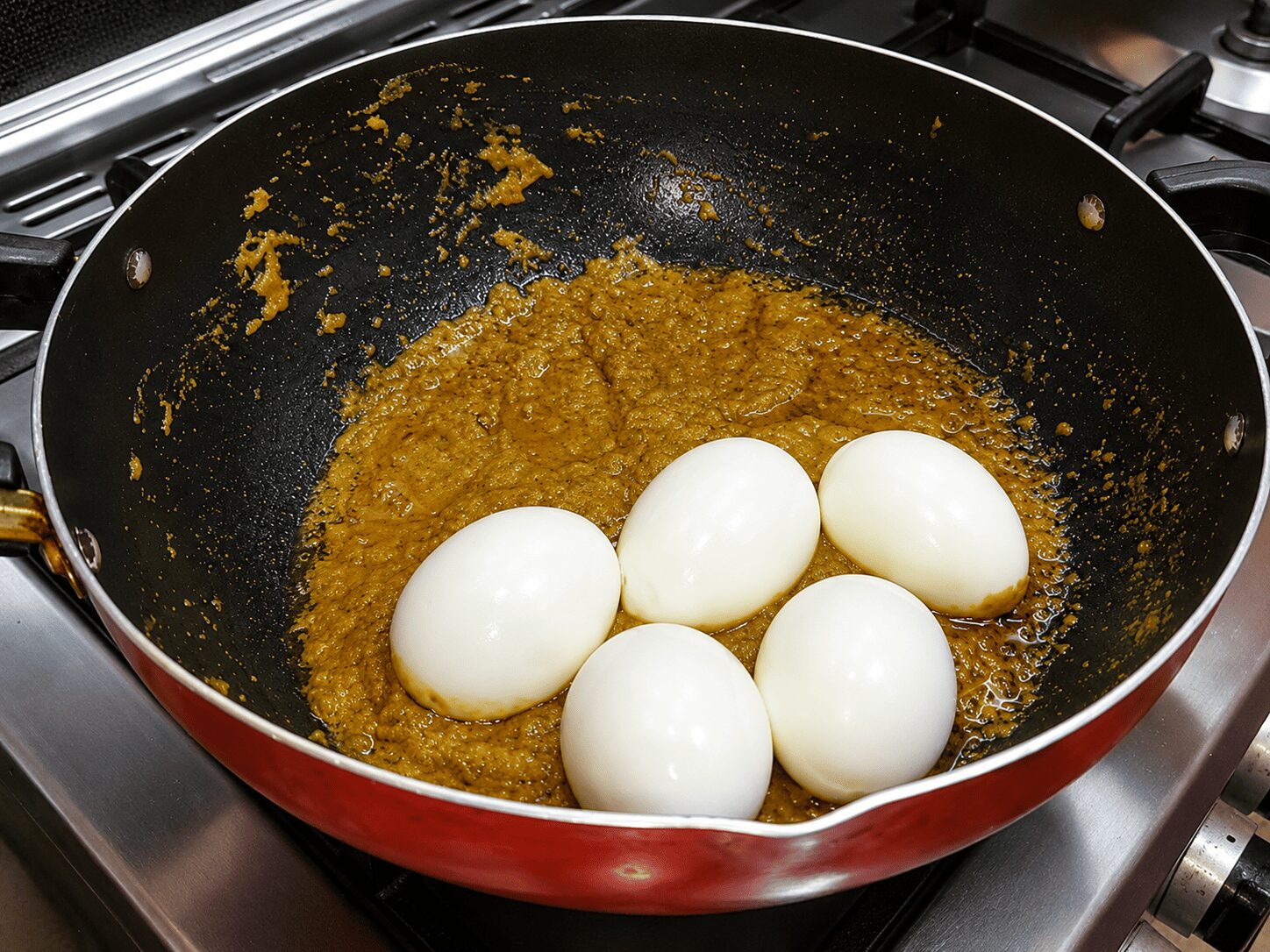
Score the half-boiled eggs lightly with a knife so the masala can penetrate, then mix them gently into the gravy.

Add water and cook covered
Add about ½ cup plus a little extra water — use the same jar you ground the paste in, rinsed with water, so no masala goes to waste. Cover and cook 3–4 minutes on low flame, until oil resurfaces on top.
Stir in kasuri methi, garam masala, and coriander
Stir in the roasted kasuri methi, the garam masala powder, and fresh coriander.
Add the cream
Add the fresh cream and cook a further 2–3 minutes on low flame, so the cream’s raw taste cooks out fully.

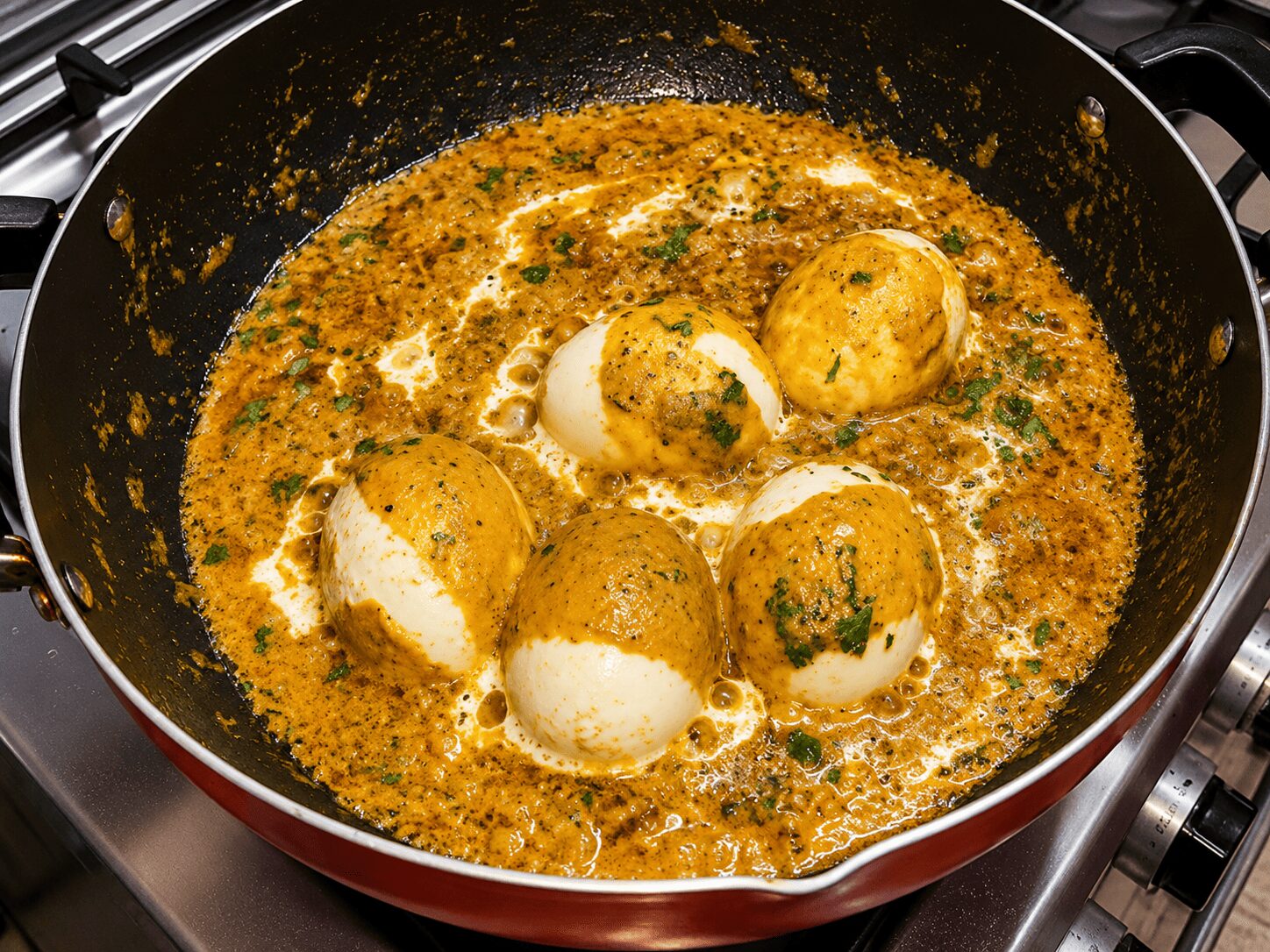
Cover and dish out
Cover briefly, then dish out hot, garnished with fresh coriander. Your reshmi anda curry is ready.

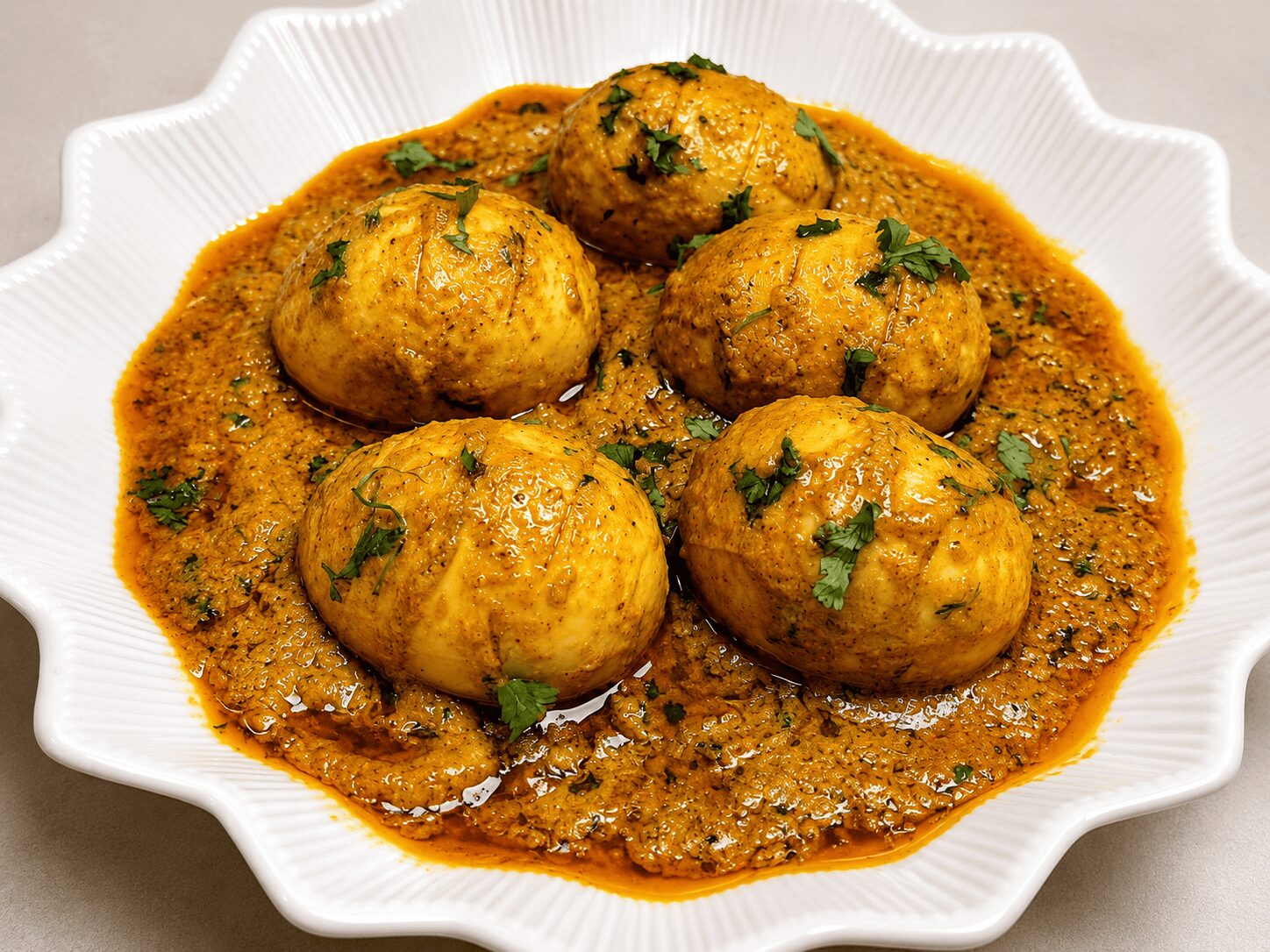
6 Things to Remember for a Perfect Reshmi Anda Curry
- Soften onion, cashews, and coriander stems together before grinding — don’t let the onion brown
- Fry the ground paste briefly until it turns visibly light green
- Roast the masala twice — once after the dry spices, again after the yogurt
- Whisk the yogurt and mix it in fast, on low flame, to avoid curdling
- Use half-boiled, not hard-boiled, eggs — score them before adding
- Finish with kasuri methi and real cream for the restaurant-style touch
Want something looser and more scrambled for a change of pace? Our Anda Ghotala recipe is a good contrast to this dish’s silky gravy.
The One Mistake That Ruins Reshmi Anda Curry
Using fully hard-boiled eggs instead of half-boiled.
It’s the most natural thing in the world to just hard-boil your eggs the way you normally would — but this gravy simmers the eggs further, and a yolk that’s already fully set turns dry and unpleasantly firm by the time it’s done. Half-boiled eggs, by contrast, finish cooking through gently in the hot gravy and come out tender. The fix is simple: boil the eggs only until the yolk is set but still slightly soft in the centre, then let the curry do the rest.
Half-boiled going in. Fully cooked coming out. That’s the whole trick. Getting the boil right matters just as much in other egg dishes — our Turkish Eggs Cilbir recipe lives or dies on a similarly soft yolk.
For Beginners
Don’t worry if you forget a step like salt at the right moment — just add it at the next natural point, the way it’s shown here. This gravy is forgiving about order as long as the key checkpoints (onion barely coloured, paste light green, oil separating twice) are hit.
For Confident Home Cooks
Try using homemade cream or malai skimmed from milk instead of store-bought for a richer, less processed-tasting finish. If you have coriander stems left over from another recipe, this is a good place to use them up — they add a layer of fresh flavour to the paste that’s easy to miss otherwise.
What to Serve Reshmi Anda Curry With
Paratha and hand-rolled roti are both named directly in the source video, and both make sense — the silky gravy clings well to either. If you’d rather wrap the leftovers up, our Anda Paratha Roll recipe turns them into a handheld lunch. For an even richer gravy on your next bread-dipping night, try our Mughlai Shahi Egg Curry recipe.
It’s a good weekend dinner option, and a richer alternative to the site’s existing malai curry when you want something that looks and tastes a little more restaurant-style for guests.
Storage, Reheating & Make-Ahead
| Situation | Guidance |
|---|---|
| Fridge storage (gravy only) | Up to 2 days in an airtight container |
| Fridge storage (with eggs) | Best eaten the same day — reheating firms the egg yolks up further, which can undo some of the half-boiled texture |
| Freezing | Not recommended — the yogurt-cream gravy can separate on thawing |
| Reheating | Gentle reheat on low flame with a splash of water; avoid high microwave heat |
| Make-ahead strategy | The masala base (through Step 8) can be made up to 2 days ahead. Reheat gently, then add fresh half-boiled eggs and finish the remaining steps |
Be honest with yourself about the eggs here — reheating leftovers will firm the yolks further regardless of how carefully you do it, so this dish is genuinely best fresh. The USDA’s guidance on egg doneness and safe handling is a good general reference if you’re unsure about half-boiled eggs being cooked further in a dish. If you’d rather cook a fresh batch than reheat leftovers, our one-pan Egg Shakshuka recipe is a quicker option for the same craving.
Myth vs. Fact: Should You Always Use Hard-Boiled Eggs in Curry?
Eggs in curry should always be fully hard-boiled first — that’s the safest, most reliable way to cook them.
For a gravy that simmers the eggs further, hard-boiling first often backfires: the yolk is already fully set, so the extra time in hot gravy just dries it out. Half-boiled eggs — yolk set but still slightly soft — are the better choice here, since they finish cooking through gently in the curry and come out tender rather than chalky. The egg still ends up fully cooked by the time it’s served; it just gets there more gently. Our Afghani Egg Curry recipe follows the same half-boiled logic in a completely different spice profile.
Nutrition Snapshot (Estimated per serving)
| Nutrient | Estimated Amount |
|---|---|
| Calories | ~290–330 kcal |
| Protein | ~12–15 g |
| Fat | ~21–25 g |
| Carbohydrates | ~10–13 g |
| Sodium | Varies with salt added |
Figures are estimated and will vary based on exact oil quantity, egg size, and cream used. These are not a substitute for individualised nutritional advice. Per-egg nutritional data is available via USDA FoodData Central, and cashew nutrient data via USDA FoodData Central’s cashew entry.
Frequently Asked Questions
What is reshmi anda curry?
Reshmi anda curry is a silky North Indian egg curry built on a softened onion-cashew-coriander-stem paste, roasted with yogurt until the oil separates twice, and finished with kasuri methi and cream. “Reshmi” means silky — a recognized descriptor on Indian restaurant menus — and it accurately describes the gravy’s smooth, no-grain texture.
How is this different from egg malai curry?
Our existing Egg Malai Curry uses an onion-green-chilli paste finished with plain room-temperature milk — no cashews, no yogurt, no cream. This Reshmi Anda Curry uses a richer onion-cashew-coriander-stem paste, a yogurt-based roasted masala, half-boiled eggs, and a cream-and-kasuri-methi finish — a meaningfully different technique and result.
Why use half-boiled eggs instead of hard-boiled?
Half-boiled eggs finish cooking fully once simmered in the gravy, staying tender in the process. Already hard-boiled eggs, cooked again in a hot gravy, turn dry and overly firm in the yolk — half-boiled is the technique that avoids that altogether.
Can I use cream alternatives like malai?
Yes. Homemade malai or cream skimmed from milk works as a direct substitute for store-bought fresh cream, with a slightly less processed taste. Whisk it smooth before adding so it blends into the gravy evenly.
Why does my yogurt curdle in the gravy?
This usually happens when cold yogurt is added too slowly to a hot pan. Whisking the yogurt smooth, bringing it to room temperature first, and mixing it in quickly on low flame are the three things that prevent curdling here.
Can I make this less spicy?
Yes. Reduce the red chilli powder in the dry spice mix, and use fewer or milder green chillies in the onion-cashew paste. The cashew and cream still carry plenty of richness without much heat.
Can I make the gravy ahead and add eggs later?
Yes — this is actually a good approach for meal prep. The masala base keeps well in the fridge for up to 2 days. Reheat gently, then add fresh half-boiled eggs and finish the remaining steps for the best texture.
What’s the best bread to serve with reshmi anda curry?
Paratha and hand-rolled roti are both named directly in the source recipe and pair naturally with the silky gravy. Either works well depending on whether you want something richer (paratha) or simpler (roti).
Conclusion
The single biggest reason this curry’s eggs stay tender instead of chalky has nothing to do with the gravy — it’s how the eggs were boiled in the first place. Pair that half-boiled technique with a properly softened onion-cashew-coriander-stem paste and a careful, room-temperature yogurt step, and you get a gravy that’s genuinely silky from the first bite to the last.
Soften onion, cashews, and coriander stems together before grinding. Fry the paste briefly until light green. Roast the masala twice — once after the spices, again after the yogurt. Whisk the yogurt and mix it in fast. Use half-boiled, not hard-boiled, eggs, and score them before adding. Finish with kasuri methi and real cream.
It’s a solid pick when you want something a little richer than a regular weeknight egg curry — and if rice is more your speed than bread, our Anda Dum Biryani recipe or Anda Korma Biryani recipe both scratch a similar itch.
Leave a Reply