

Zaika Mazedaar · Global Egg Recipes
A Turkish classic given an honest desi twist — green capsicum, a quiet hit of coriander powder, and eggs nestled into a tomato-pepper gravy until just set.
There’s a particular moment in this recipe — right after the lid comes off for the first time — where the egg whites have just set into a soft cloud over a glossy red gravy, and the yolks are still sitting there, deliberately runny, waiting for a spoon to break into them. That’s shakshuka. And once you’ve made it once, the rest of your breakfast routine starts to feel a little plain by comparison.
This recipe is demonstrated step-by-step in our video on the Zaika Mazedaar channel, filmed and cooked in a real kitchen — not assembled from recipe databases. It’s a genuine Turkish dish, built the traditional way, with a few honest desi additions stirred in along the way. It’s also the site’s first of two Turkish-origin egg dishes — our Turkish Eggs (Çılbır) takes a completely different, gravy-free, assembly-style approach if you’d like to compare both.
What Is Shakshuka? (And How This Version Adds a Desi Twist)
Shakshuka is a North African and Middle Eastern dish of eggs poached directly in a spiced tomato-and-pepper sauce, traditionally finished in the same pan it’s served from. It’s eaten across Turkey, Israel, Tunisia, and beyond, usually for breakfast or brunch, and the basic idea — eggs cooked gently in a thick, well-spiced gravy — translates surprisingly well into an Indian kitchen.
This version keeps the real shakshuka technique intact: garlic and ginger fried in stages, a tomato-pepper base cooked down until it’s soft and glossy, and eggs nestled into wells so the yolks stay exactly where you put them. The desi touch comes in two small, named additions — a half teaspoon of coriander powder stirred into the spice mix, and an optional layer of mozzarella melted over the eggs at the halfway point. Neither is traditional. Both are honestly labelled as the part of this recipe that makes it feel like it belongs in an Indian kitchen rather than a borrowed one.
Why This Recipe Works
Shakshuka lives or dies on two things most rushed versions skip.
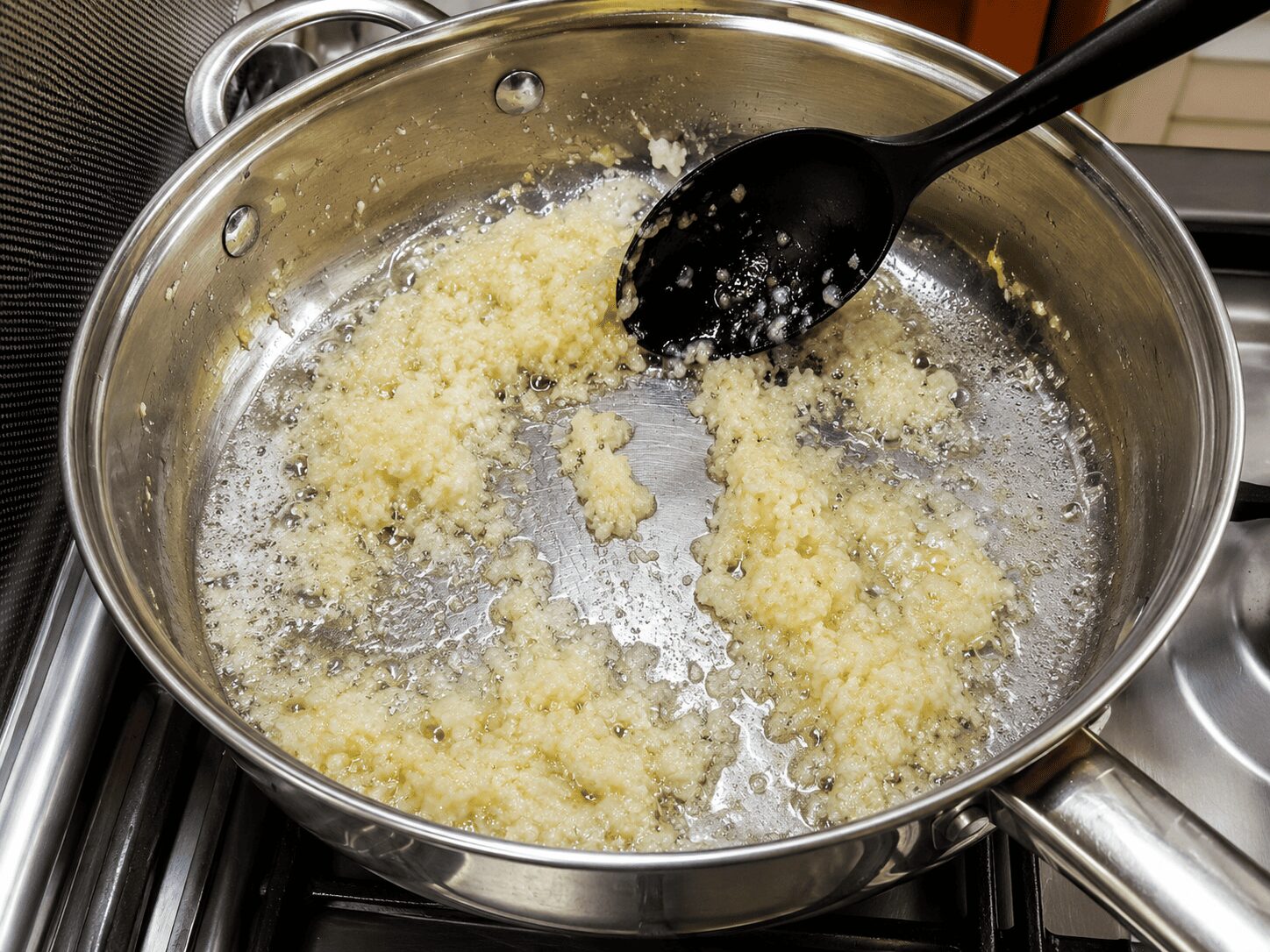
First: garlic and ginger, fried separately, never together. Garlic and ginger don’t cook at the same speed — garlic needs longer over the flame to turn gently golden, while ginger burns and turns bitter if it goes in too early. Frying them one after the other, instead of as a single paste, keeps both aromatics sweet instead of scorched.
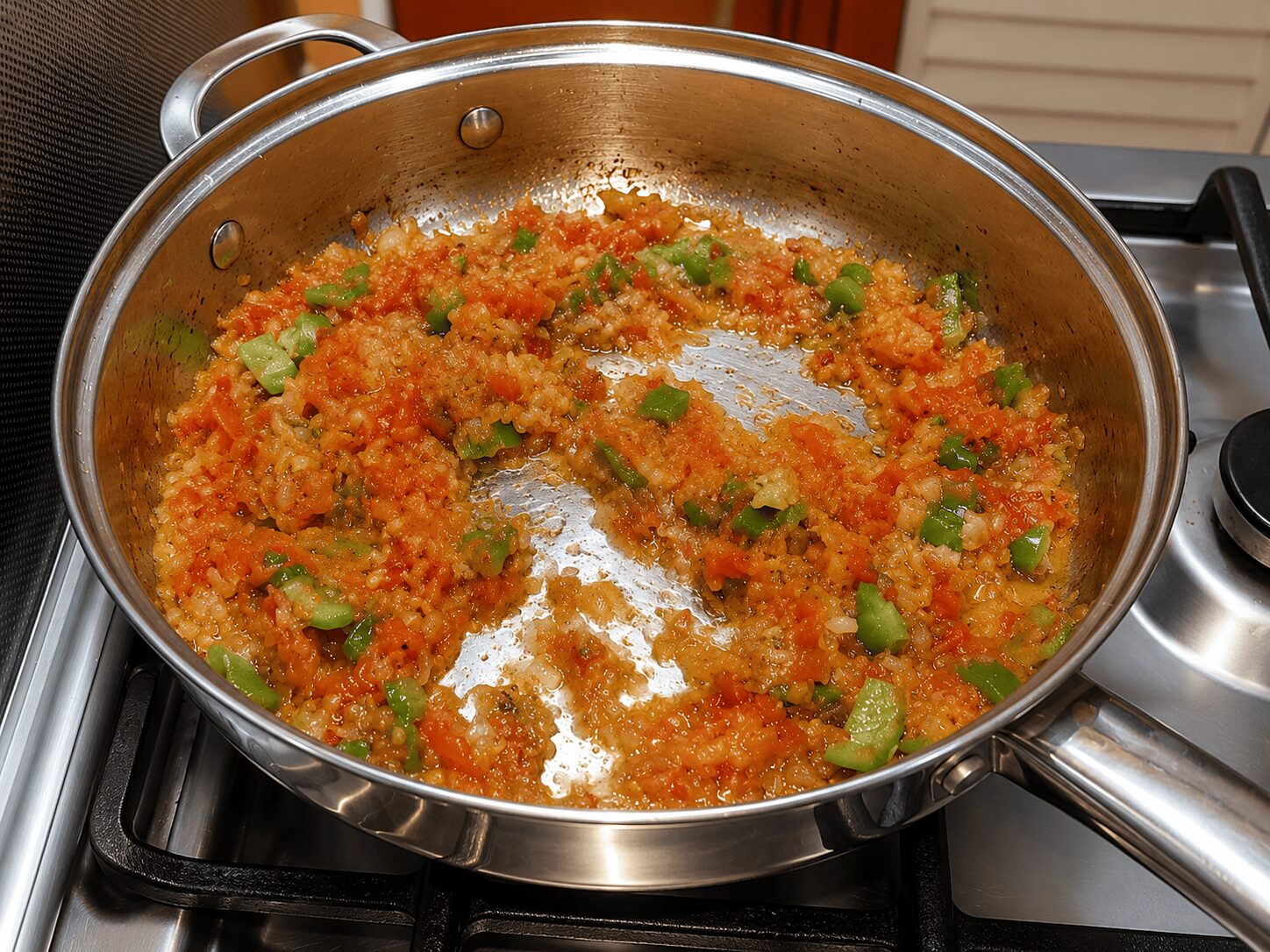
Second: the tomato-capsicum base cooked all the way down. This isn’t a quick five-minute sauce. The capsicum and tomato need to collapse into something completely soft and mushy, with the oil visibly separating at the edges, before the dry spices and eggs ever go in. Rush this stage and the gravy stays thin and raw-tasting under the eggs — get it right, and you have a base that’s genuinely worth poaching an egg in.
Adding coriander powder isn’t traditional shakshuka — but it’s the kind of small touch that makes a borrowed recipe feel like it belongs in your own kitchen.
Ingredients
For the Aromatics
- 3 tbsp oil (in a wide, shallow pan you can cook and serve straight from)
- 3–4 garlic cloves, grated
- ½ inch ginger, grated — added only after the garlic, never with it
For the Vegetable Base
- 1 large onion, grated
- 1 medium green capsicum, chopped (red capsicum is the traditional Turkish choice — see substitutions below)
- 2 medium tomatoes, grated (or ground to a purée)
- 1 tsp salt (added with the tomatoes, to speed up their breakdown)
- A little water, added before the dry spices go in
Dry Spices
- 1 tsp paprika powder (Kashmiri red chilli powder works as a substitute)
- ½ tsp hot red chilli powder
- ½ tsp cumin powder
- ½ tsp coriander powder (the desi touch — fully optional, skip it for a stricter Turkish profile)
- An extra ½ tsp salt, or to taste
- 1 tbsp store-bought tomato paste
- A little water (added just before the eggs, so the gravy spreads slightly and the eggs don’t stick)
For the Eggs & Topping
- 5 eggs (5–6 works well, depending on your pan size), cracked individually into a bowl first
- Salt and black pepper powder, for sprinkling
- Fresh coriander, chopped
- Green chillies, chopped (or left whole if children are eating)
- Mozzarella cheese, a handful — completely optional
Ingredient Substitutions
| Ingredient | Substitute | Effect on Taste / Texture |
|---|---|---|
| Green capsicum | Red capsicum | The traditional Turkish choice — sweeter flavour, deeper red colour. Green is used here mainly for cost and easy availability |
| Tomato paste | 1 extra tomato, or 1 tbsp tomato ketchup | Slightly less concentrated colour and richness, but the gravy still comes together fine |
| Mozzarella cheese | Skip entirely, or use a milder cheese | Loses the rich, melted topping; the eggs and gravy underneath are unaffected |
| Paprika powder | Kashmiri red chilli powder | Near-identical bright red colour with minimal extra heat |
| Coriander powder (desi touch) | Skip entirely | Moves the dish closer to a strictly traditional Turkish shakshuka profile |
Mise en Place Checklist
Get all of this ready before turning on the flame. Shakshuka moves quickly once the gravy’s down, and the eggs need your full attention near the end.
- Garlic and ginger grated separately, kept apart
- Onion grated
- Capsicum chopped
- Tomatoes grated or ground to a purée
- All dry spices measured into one small bowl
- Tomato paste measured (1 tbsp)
- Fresh coriander and green chillies chopped
- Mozzarella grated or shredded, if using
- A small bowl nearby for cracking eggs individually
- Wide, shallow pan you’re happy to serve straight from
Step-by-Step Method
Fry the garlic, then the ginger
Heat 3 tbsp oil in a wide, shallow pan over medium flame. Add the grated garlic and fry until lightly golden. Only once the garlic has turned golden, add the grated ginger.

Cook the grated onion to light pink
Add the grated onion. Cook on medium flame until the raw smell is gone and the onion turns lightly pink — this is noticeably lighter than the deep golden onion used in most Indian gravies, and that’s intentional here.

Add and soften the capsicum
Add the chopped green capsicum. Cook for 2–3 minutes until it softens slightly. Traditional Turkish shakshuka uses red capsicum — green works fine and is what’s used here for cost and availability.
Cook the tomato base down completely
Add the grated tomatoes along with 1 tsp salt — the salt helps the tomatoes break down faster. Cover and cook on medium flame, stirring once or twice, until the tomatoes and capsicum are completely soft and mushy and the oil starts to separate at the edges.

Bloom the spices
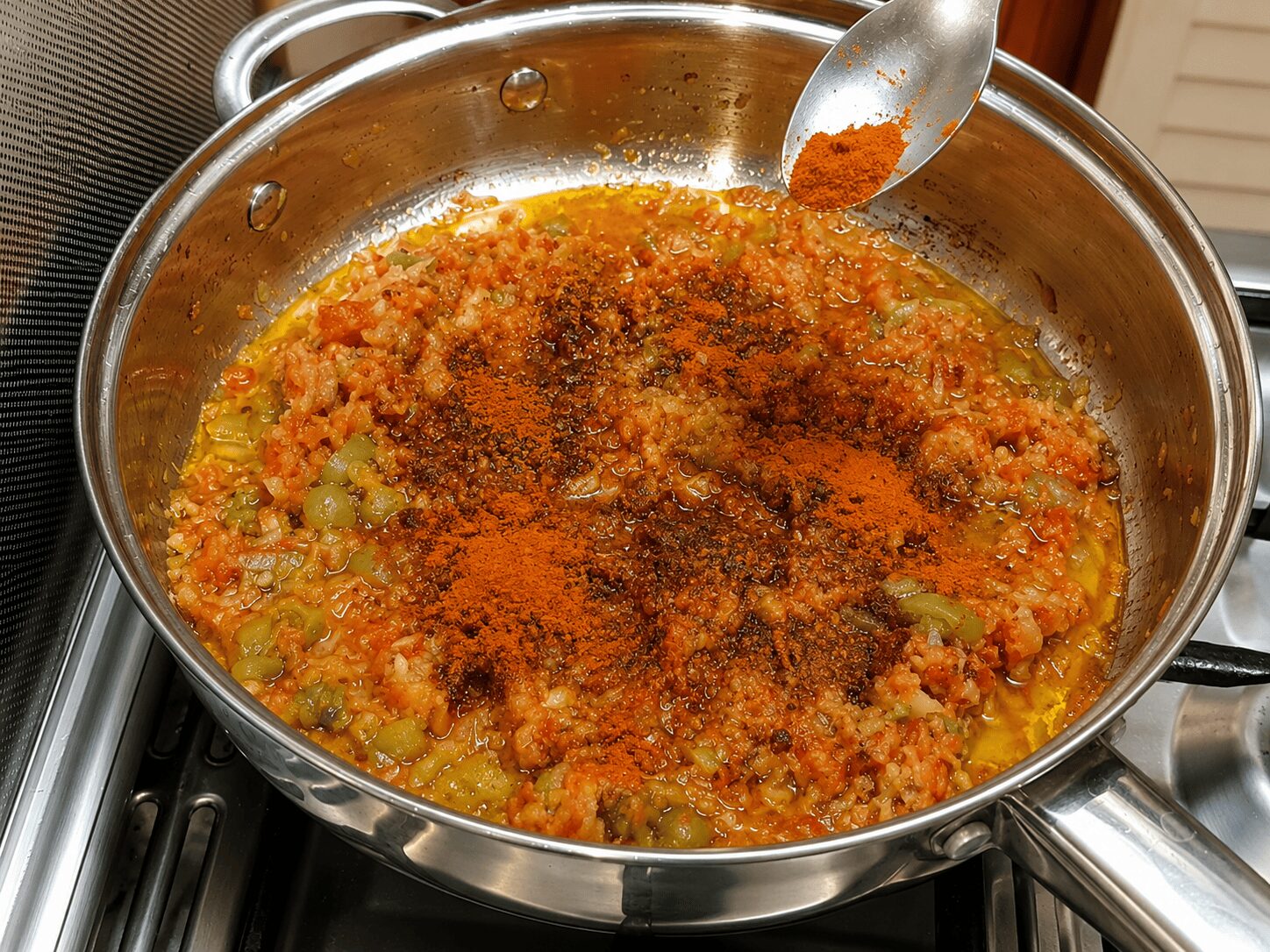
Add a little water first — this stops the dry spices from catching on the hot pan — and reduce to low flame. Stir in 1 tsp paprika powder, ½ tsp hot red chilli powder, ½ tsp cumin powder, and ½ tsp coriander powder (the desi touch; skip it for a stricter Turkish profile). Roast together until the raw spice smell is gone and the gravy smells fragrant. Taste and adjust salt — an extra ½ tsp is often needed here.

Stir in tomato paste and finish the gravy
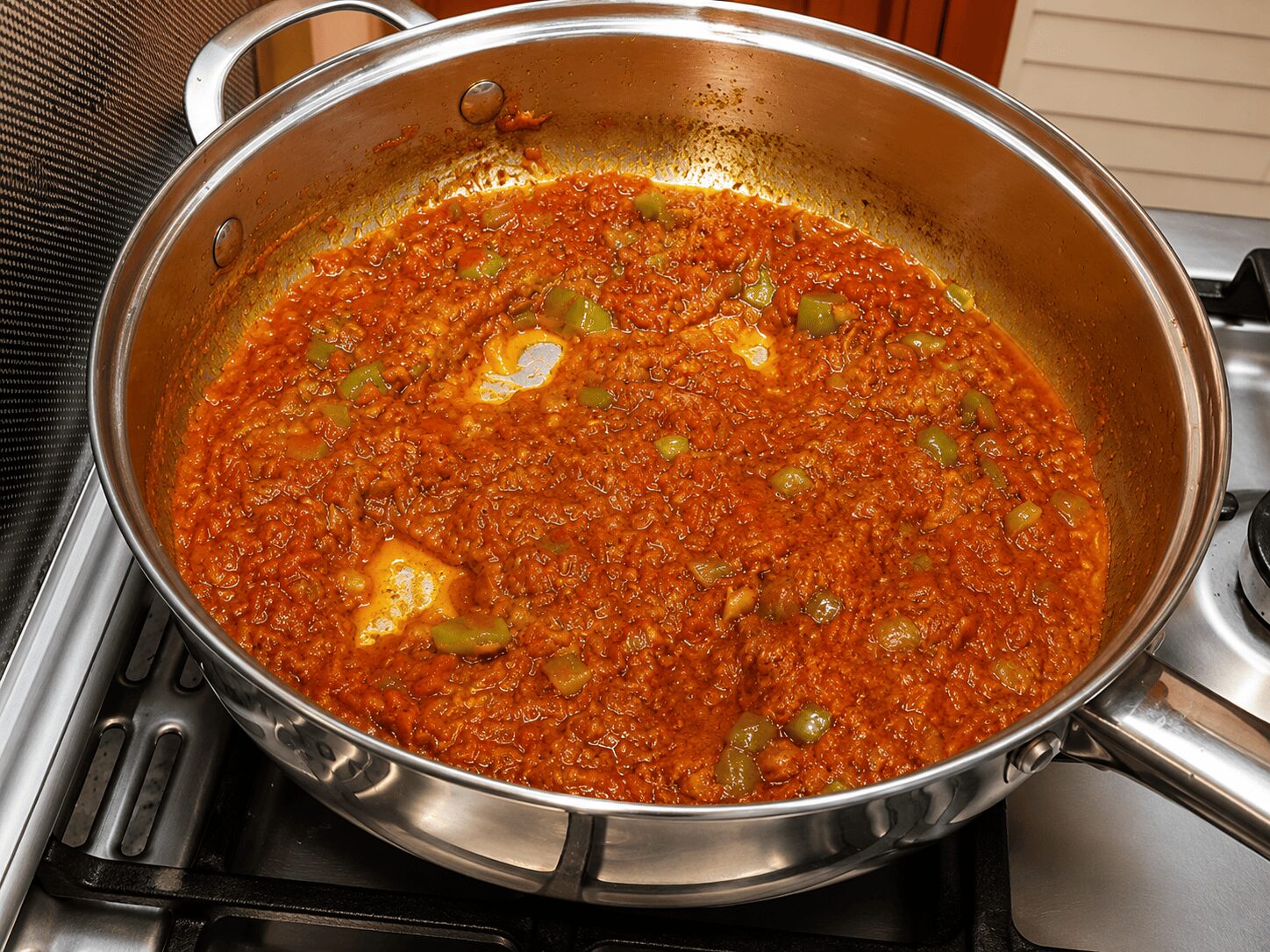
Add 1 tbsp tomato paste (or use 3 tomatoes instead of 2 from the start, or 1 tbsp tomato ketchup, if you don’t have paste). Roast for a further 2–3 minutes until everything melds together and the oil separates again.
Make wells for the eggs
Add a little water to the gravy so it spreads slightly and the eggs won’t stick to the bottom. Using the back of a spoon, gently press out small wells across the surface — one per egg.

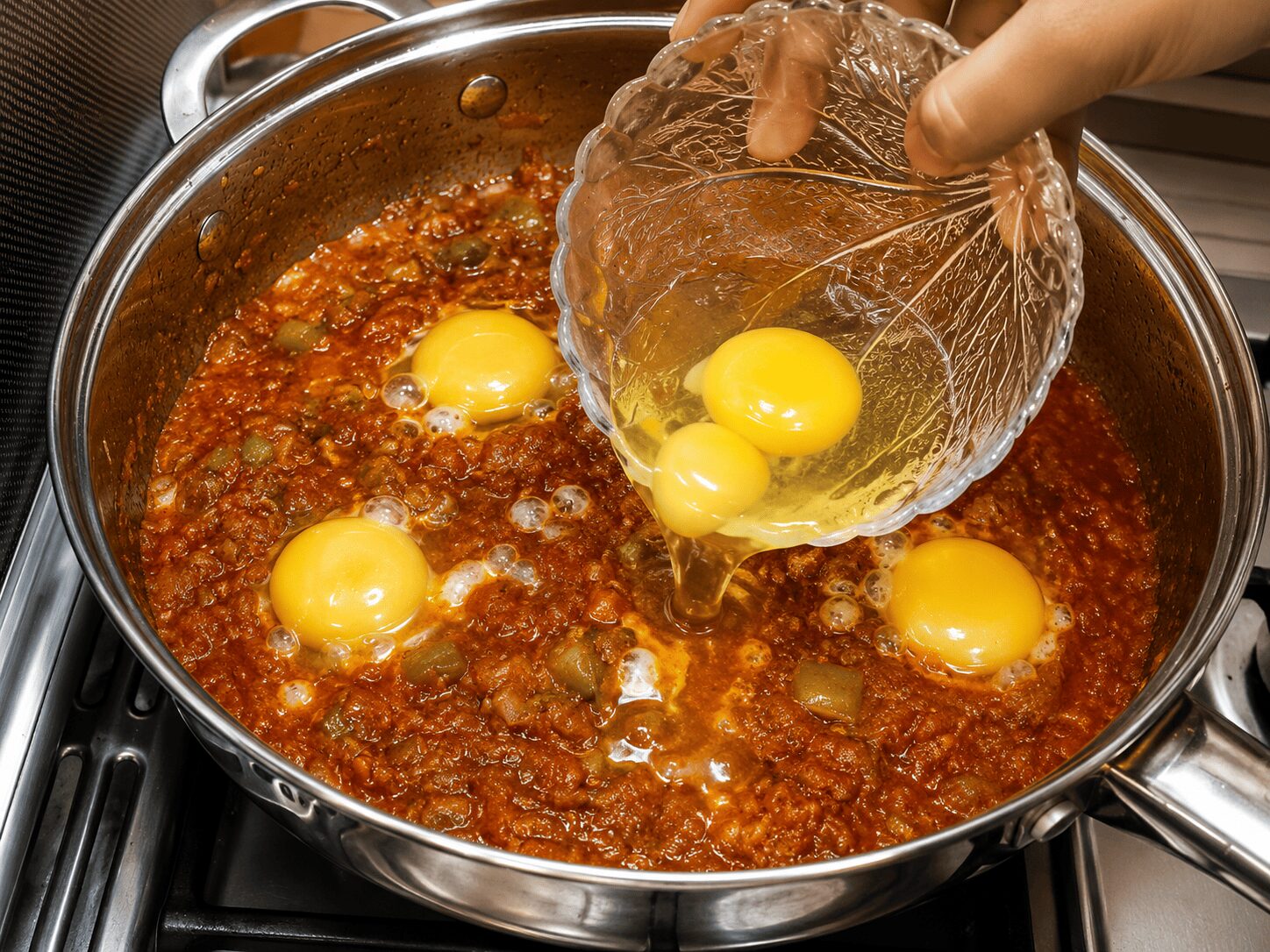
Crack the eggs in, one at a time
Lower the flame. Working one at a time, crack each egg into a small bowl first, inspect it, then slide it gently into its well. Sprinkle salt and black pepper powder over the eggs, then scatter fresh coriander and chopped green chillies on top.
Cover and cook until whites are set
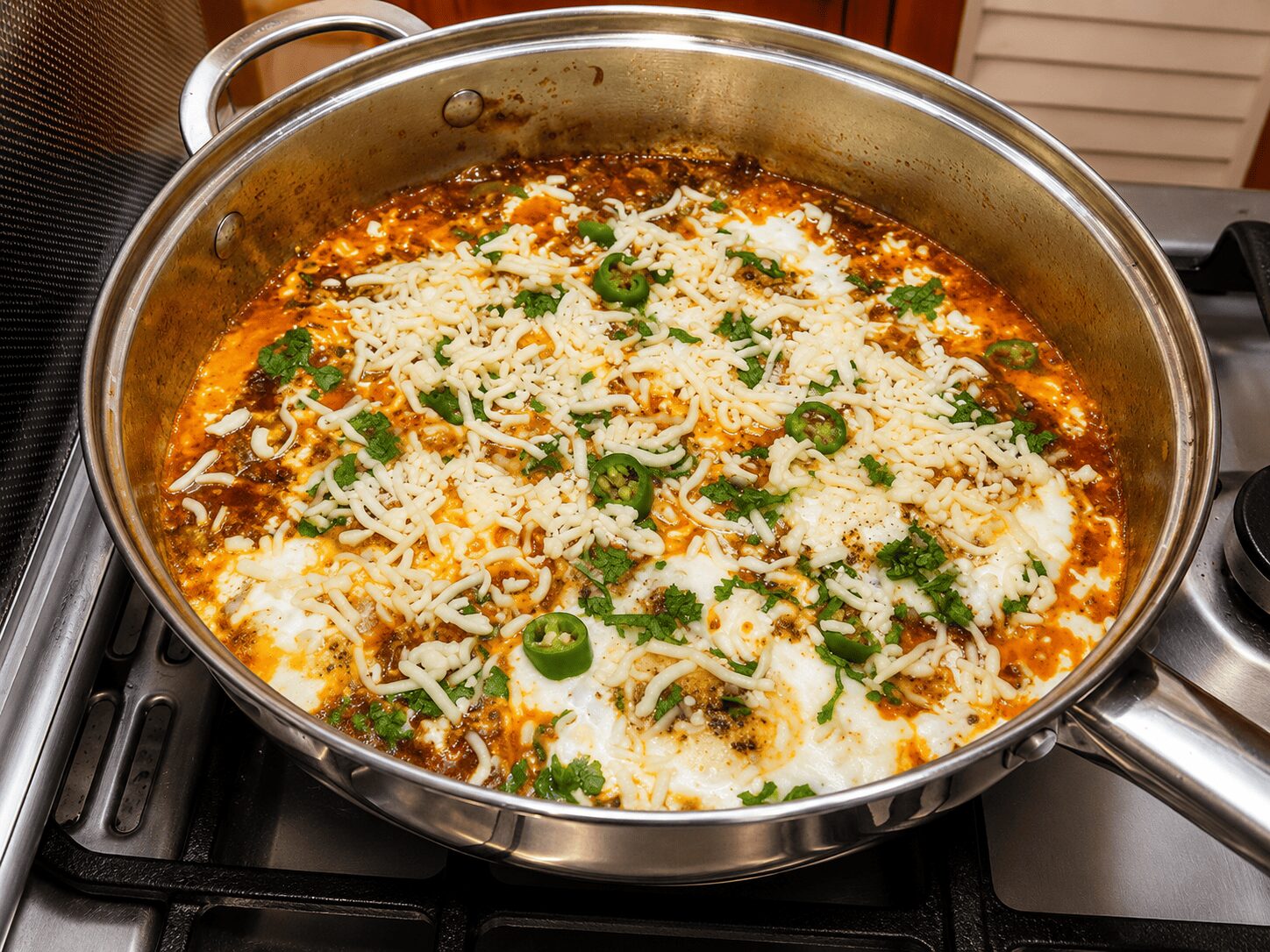
Cover the pan and cook on low flame for 2–3 minutes. Lift the lid — the whites should be set while the yolks are still visibly runny. This is the point to add mozzarella, if using.

Add mozzarella and finish
Scatter mozzarella over the top, if using — this is entirely optional and added purely for richness. Cover again and cook a further 2–3 minutes on low flame, until the yolks are slightly firm but still soft, not fully hard. Turn off the gas and let it sit, lid on, for 1–2 minutes before serving.
Open the lid. Your Egg Shakshuka is ready.

6 Things to Remember for Perfect Egg Shakshuka
- Fry garlic and ginger separately — never together
- Keep the onion light pink, not browned
- Cook the tomato-capsicum base until fully soft and mushy, oil separating
- Make wells in the gravy before adding the eggs
- Crack each egg into a bowl first, never straight into the gravy
- Stop while the yolk is still soft, even if you’re adding mozzarella
The One Mistake That Ruins Shakshuka
Frying garlic and ginger together, or cracking eggs straight into the gravy.
It’s tempting to grate garlic and ginger together and throw them into the pan at once — most recipes do exactly that. But the two cook at different speeds, and ginger turns bitter if it burns before the garlic’s even golden. Add garlic first, let it colour, then add the ginger.
The second version of this mistake happens later: cracking eggs directly into the hot gravy. An occasional spoiled egg ruins the entire pot when it goes straight in. Thirty extra seconds spent cracking each egg into a bowl first protects everything you’ve already cooked.
For Beginners
Don’t worry about getting the wells perfectly even — they’re just there to keep the yolks from merging into each other, not to be a precise grid. As long as each egg has its own little space in the gravy, you’re doing it right.
For Confident Home Cooks
If you can get hold of it, try red capsicum instead of green for a more traditional flavour and a deeper red colour. If you want a stricter Turkish profile, skip the coriander powder entirely — the dish still works perfectly well without the desi touch.
What to Serve Egg Shakshuka With
Shakshuka is built to be scooped, not eaten with a spoon. Puri works beautifully here, and so does a soft, hot paratha — both are demonstrated as pairings for this exact recipe, and our Anda Paratha Roll is a good bread-and-egg combination to make on the same morning. Plain white rice is an unconventional but genuinely delicious option if bread isn’t on hand.
For a proper weekend brunch spread, serve it straight from the pan it cooked in, with extra bread on the side and a simple cucumber salad to cut through the richness. If you want a faster egg dish for a weekday morning instead, our Spanish Garlic Fried Eggs takes under 15 minutes.
Storage, Reheating & Make-Ahead
| Situation | Guidance |
|---|---|
| Best eaten | Fresh, straight off the stove — the yolks are intentionally left soft, and that texture is best right away |
| Fridge storage (gravy only, no eggs) | Up to 2 days in an airtight container |
| Fridge storage (with eggs already set) | Up to 1 day, but expect the yolks to firm up further on reheating |
| Freezing | Not recommended once eggs are in — the gravy alone can be frozen for up to 1 month |
| Reheating | Gentle reheat on low flame with a splash of water; the soft-yolk texture will not be fully recreated, so be honest with yourself about that before reheating |
If you’re planning ahead, make the gravy a day in advance and add fresh eggs just before serving — that’s the closest you’ll get to the just-set texture this dish is known for.
Myth vs. Fact: Does Shakshuka Need Red Capsicum?
You can’t make real shakshuka without red bell peppers — it’s a defining ingredient.
Red capsicum is the traditional choice and does give a sweeter flavour and deeper colour, but green capsicum works perfectly well and is what’s used in this recipe, mainly for cost and easy availability. The real defining elements of shakshuka are the technique — a properly cooked-down tomato-pepper base and eggs gently poached directly in the gravy — not the specific colour of pepper used.
Nutrition Snapshot (Estimated per serving)
| Nutrient | Estimated Amount |
|---|---|
| Calories | ~220–260 kcal |
| Protein | ~10–13 g |
| Fat | ~16–19 g |
| Carbohydrates | ~8–11 g |
| Sodium | Varies with salt added |
Figures are estimated and will vary based on exact oil quantity, egg size, and whether mozzarella is used. These are not a substitute for individualised nutritional advice. Per-egg and per-tomato nutritional data is available via USDA FoodData Central.
Frequently Asked Questions
What is shakshuka?
Shakshuka is a North African and Middle Eastern dish of eggs poached directly in a spiced tomato-and-pepper sauce, typically cooked and served from the same pan. It’s a popular breakfast and brunch dish across Turkey, Israel, Tunisia, and several other countries, and has become a global favourite well beyond its region of origin.
Is this recipe traditional Turkish shakshuka or an Indian twist?
It’s built the traditional way — staggered garlic and ginger, a properly cooked-down tomato-pepper base, eggs nestled into wells — with two honest desi additions: a half teaspoon of coriander powder in the spice mix, and optional mozzarella melted over the eggs. Both are clearly named here, and both are easy to skip if you’d rather keep things closer to the original.
Can I use red capsicum instead of green?
Yes, and it’s actually the more traditional choice — red capsicum gives a sweeter flavour and a deeper red colour. Green capsicum is used in this recipe mainly because it’s cheaper and easier to find; swap it for red any time you have it on hand.
Why fry garlic and ginger separately?
Garlic and ginger cook at different speeds. If you fry them together, the ginger tends to burn before the garlic turns golden, which makes the whole gravy taste slightly bitter. Frying garlic first until lightly golden, then adding the ginger, keeps both aromatics sweet.
Can I skip the mozzarella cheese?
Completely. The mozzarella is added purely to make the dish richer and is not part of traditional shakshuka at all. Skipping it doesn’t change the cooking method — just leave it out at the step where it’s added and continue covering and cooking as instructed.
How do I keep the egg yolks from spreading into each other?
Make small wells in the gravy with the back of a spoon before you add the eggs — one well per egg. This gives each yolk its own contained space, so they stay separate instead of running together as the whites set around them.
Can I make this less spicy?
Yes. Reduce or skip the hot red chilli powder and rely mainly on the paprika (or Kashmiri chilli powder) for colour without much heat. The green chillies on top are also optional — use whole chillies instead of chopped if children are eating, since whole chillies add less heat overall.
What’s the best bread to serve with shakshuka?
Puri and paratha both work wonderfully — both are used as pairings for this exact recipe, and either one is great for scooping up the gravy and yolk together. Plain white rice is a less conventional but genuinely tasty alternative if you’d rather skip bread.
Conclusion
Egg Shakshuka is one of those rare dishes that genuinely earns its cross-cultural identity instead of just borrowing a name. The technique — staggered garlic and ginger, a tomato-pepper base cooked all the way down, eggs nestled gently into their own space — is the real Turkish method, done properly. The coriander powder and optional mozzarella are the small, honestly-labelled touches that make it feel at home in an Indian kitchen too.
Thirty-five minutes from mise en place to table, one pan, no special equipment — and a dish that’s as good for a quiet weekend brunch as it is for introducing something a little different to friends and family. Follow the sensory cues — light pink onion, a fully collapsed tomato-pepper base, whites set with yolks still soft — and you’ll end up with a shakshuka that genuinely tastes like the real thing, with just enough of your own kitchen in it.
There’s one small step before the eggs go in that decides whether each yolk stays exactly where you put it — don’t skip the wells.
Leave a Reply