

Zaika Mazedaar · Mughlai Egg Recipes
Mughlai-style Anda Malai Korma — a pale, ivory gravy built on cashew-almond paste, white pepper, and cream, with no red chilli and no tomato anywhere in sight.
There’s one moment in this recipe where most home cooks go wrong — and it’s the twenty seconds where the onion paste starts to turn. Let it brown even slightly, and the whole gravy shifts from a pale, restaurant-style ivory to something that just looks like an ordinary korma. Catch that moment with a splash of water, and you get the real thing: a gravy that stays genuinely white, even as it thickens around cashews, almonds, and cream.
This recipe is demonstrated step-by-step in our video on the Zaika Mazedaar channel, filmed and cooked in a real kitchen — not assembled from recipe databases.
What Is Egg White Korma?
Egg White Korma — also called anda malai korma — is a Mughlai-style egg curry defined by what it deliberately leaves out: no red chilli, no tomato, nothing that would push the gravy toward red or orange. The colour comes entirely from a pale onion-garlic-ginger-chilli paste cooked just until its raw smell disappears, then deliberately stopped with a splash of water before it can brown, plus a cashew-almond paste and a finish of fresh cream. White pepper stands in for red chilli, adding warmth without adding colour — the Mughlai choice for exactly this reason.
Why This Recipe Works (and How It Differs from Our Egg Malai Curry and Reshmi Anda Cashew Curry)
The site already has a few other white-and-creamy egg dishes, and it’s worth being upfront about how this one is different. Our Egg Malai Curry uses an onion and green chilli paste base with room-temperature milk stirred in — no cream, no cashews, no yogurt — making it the lighter, faster, more everyday option of the group. Our Reshmi Anda Cashew Curry blends an onion-cashew-garlic-ginger paste smooth and builds on a yogurt base, landing somewhere silky and medium-rich — its name, reshmi, literally means silky, chosen specifically to avoid confusion with Malai Curry. If you’d rather stay closer to a classic restaurant-style gravy, our Anda Korma is the more traditional, tomato-based cousin of this white version.
Egg White Korma is the most deliberately restrained of the three. There’s no red colour at all, from any source. The onion paste is cooked only to a pale gold, stopped early with a splash of water rather than left to brown. White pepper replaces red chilli entirely. And the richness comes from a cashew-and-almond paste plus a proper finish of fresh cream — the genuine Mughlai restaurant korma profile, built on richness rather than heat or colour.
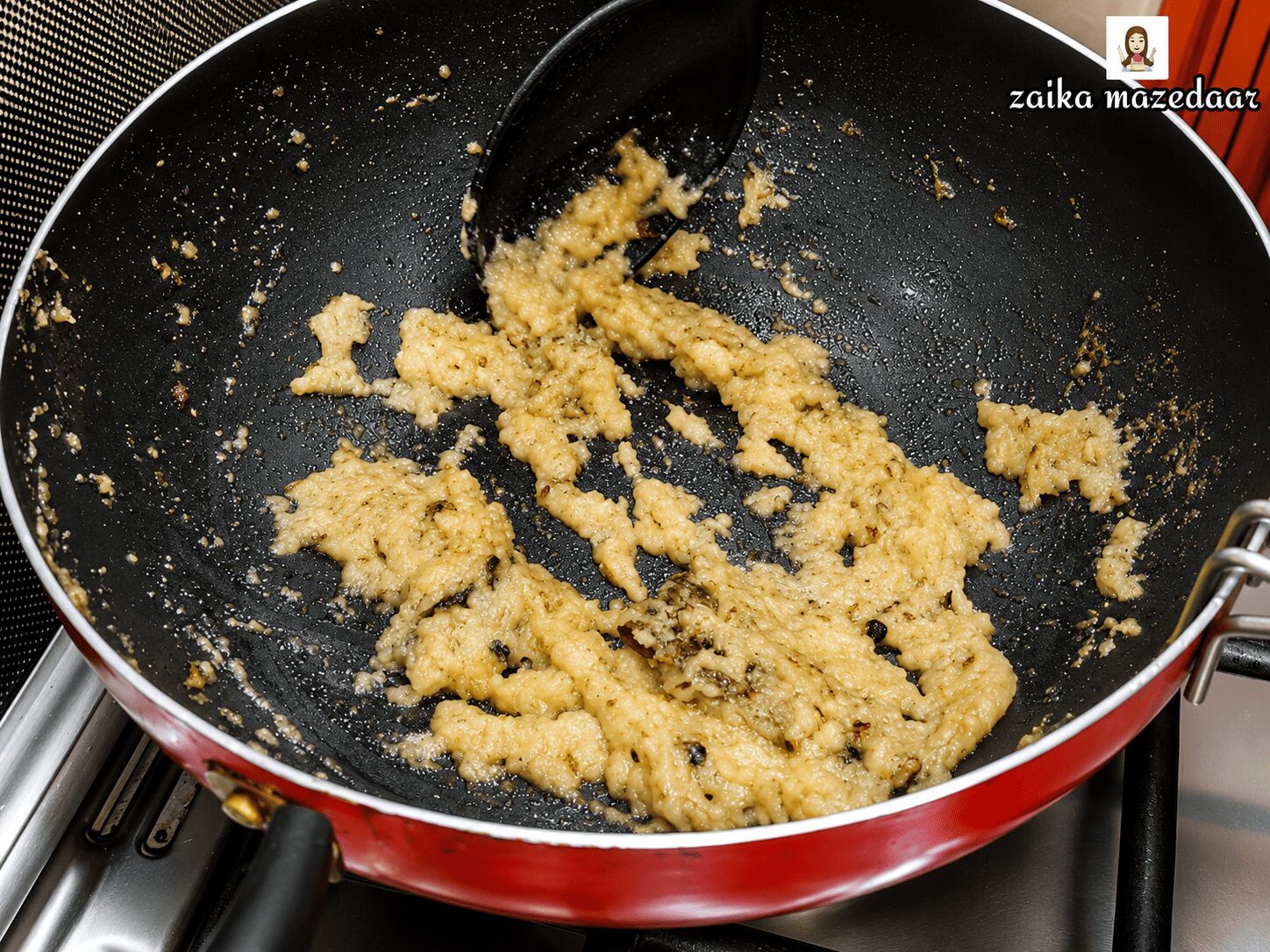
First: the pale-onion technique. The onion-garlic-ginger-chilli paste is cooked on medium flame only until it just begins to change colour — at that exact point, 2–3 tablespoons of water go in to stop the cooking dead. Skip this step, or wait too long, and the paste browns, taking the whole gravy with it.
Second: room-temperature yogurt, added only on low flame. Both conditions are required together. Cold yogurt added to a hot pan splits almost immediately; yogurt added on anything above low flame does too, regardless of temperature.
There’s one small trick that makes a noticeable difference here: cooking the cream for a full 2–3 minutes once it’s stirred in, rather than just folding it through and moving on. Skip that, and a faint raw-cream taste lingers under everything else.
Ingredients
For the Nuts Paste
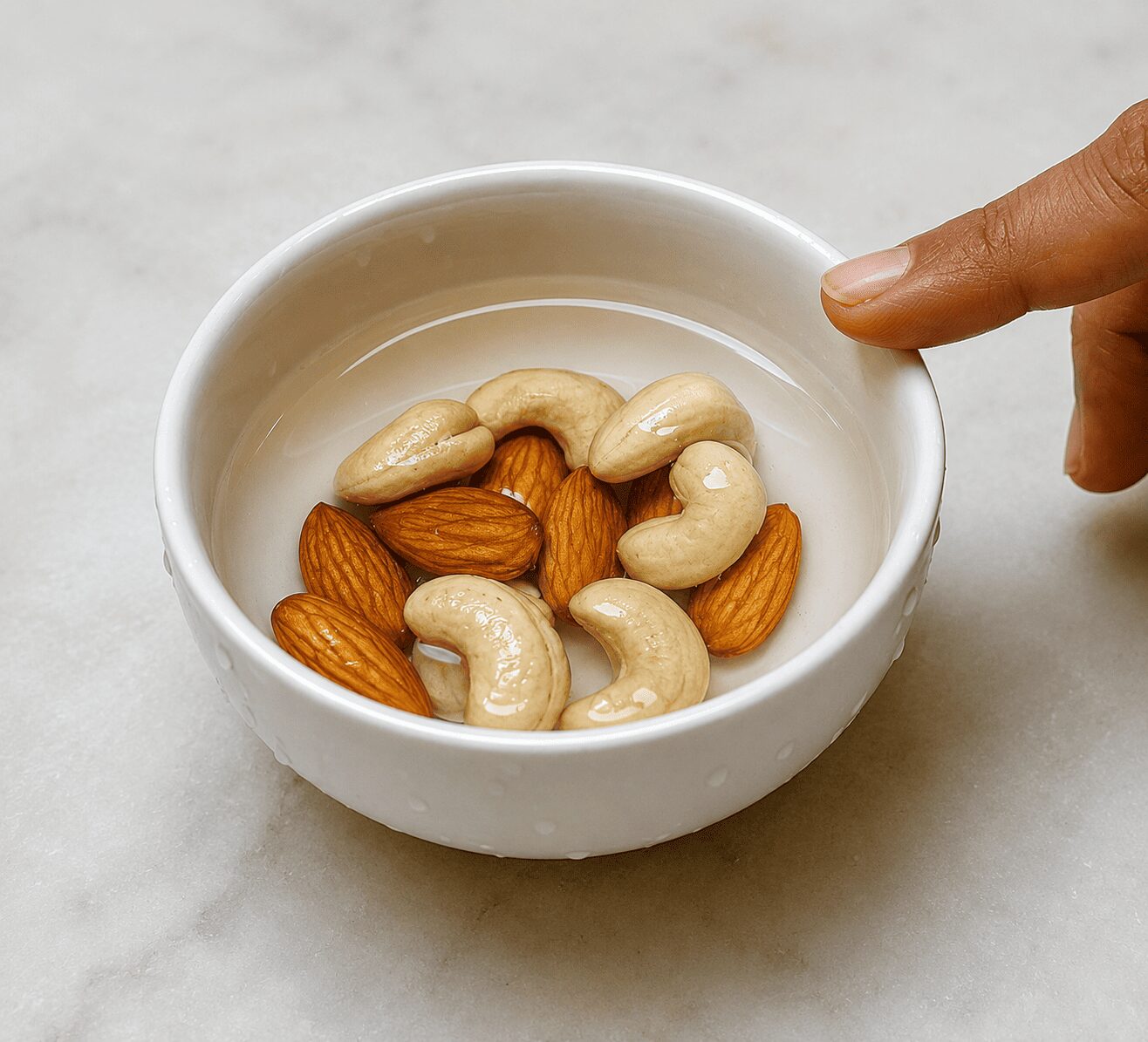
- Cashews (kaaju), soaked 15–20 minutes
- Almonds (badam), soaked 15–20 minutes, skin removed after soaking (roughly equal parts cashew to almond — exact ratio isn’t critical)
For the Eggs
- 4–5 boiled eggs, scored (cut) before frying
- 2 tbsp oil, for frying the eggs (frying is optional, but the eggs hold up better visually in the gravy this way)
Whole Spices
- ½ tsp cumin seeds (jeera)
- A few black peppercorns (kali mirch)
- Cloves (laung), a few
- Green cardamom (hari elaichi), a few pods
- 1 bay leaf (tez patta)
- Cinnamon (daalchini), a small piece
Dry Spices
- 1 medium onion, blended with a little garlic, ginger, and green chilli into a paste
- 1½ tsp coriander powder (dhaniya powder)
- ½ tsp cumin powder (jeera powder)
- ½ tsp white pepper (safed mirch) (black pepper powder works as a substitute — no red chilli goes into this recipe at all)
- 3 tbsp yogurt, well-beaten, at room temperature
- Salt, to taste
- Water, as needed for consistency
For the Finish
- 3 tsp fresh cream (or home-made malai)
- ½ tsp garam masala powder
- 1 tsp kasuri methi (dried fenugreek leaves), crushed by hand
- A tiny pinch of sugar (completely optional — rounds out the flavour, restaurant-style)
- Fresh coriander, for garnish
Ingredient Substitutions
| Ingredient | Substitute | Effect on Taste / Texture |
|---|---|---|
| Cashew + almond paste | Cashew paste only | Almonds add a slightly different creaminess; a single-nut version is fine |
| Fresh cream | Home-made malai | Functionally identical — use the same quantity |
| White pepper | Black pepper | Flavour is similar, but black pepper adds visible dark specks — an aesthetic difference in a dish defined by staying pale |
| Kasuri methi | Fresh fenugreek leaves, very sparingly | Fresh fenugreek is much stronger than dried — use far less than the dried equivalent |
| Both nuts (if unavailable) | Skip entirely, add a little extra cream | Texture and richness will differ slightly, but the gravy is still recognisably a korma |
Mise en Place Checklist
Get all of this ready before turning on the flame. Soaking the nuts and bringing the yogurt and cream to room temperature ahead of time genuinely matters here — both protect against a split or grainy gravy later.
- Cashews and almonds soaking (15–20 minutes), almond skins removed after soaking
- Onion-garlic-ginger-chilli paste blended and set aside
- Eggs boiled and scored
- Yogurt taken out of the fridge early so it reaches room temperature
- Cream taken out of the fridge early too
- All dry spices measured into one small bowl
- Kasuri methi crushed by hand, ready to add
- Fresh coriander washed and chopped
- Pan ready on the hob
Step-by-Step Method
Blend the pastes, then fry the eggs
Blend the onion, garlic, ginger, and green chilli with a little water into a paste; set aside. Blend the soaked, skinned cashews and almonds into a separate paste; set aside. Heat 2 tbsp oil in a pan, fry the scored eggs on medium flame for 4–5 minutes until a light brown coating forms. Remove to a plate.


Temper the whole spices
Add 2 tbsp more oil to the same pan. Add the cumin seeds, black peppercorns, cloves, green cardamom, bay leaf, and cinnamon. Fry for 30–40 seconds, until the cumin just changes colour.
Cook the onion paste — and stop it before it browns
Add the onion-garlic-ginger-chilli paste. Cook on medium flame, watching closely. As soon as it begins to change colour, add 2–3 tbsp water immediately to stop the cooking. This is the step that keeps the korma white.

Add the dry spices
Stir in the coriander powder, cumin powder, and white pepper. No red chilli powder and no tomato go into this recipe at all. Roast briefly until fragrant.
Add room-temperature yogurt on low flame
Lower the flame fully. Add the well-beaten, room-temperature yogurt, stirring constantly. Cook until the raw yogurt smell is gone and the oil begins to separate.
Add the cashew-almond paste and bhuno
Add the cashew-almond paste, a little water to adjust consistency, and salt to taste. Cover and cook on medium flame for 7–8 minutes, until the masala is well-cooked, the oil resurfaces, and the whole-spice aroma fully develops.
Loosen the gravy and add the cream
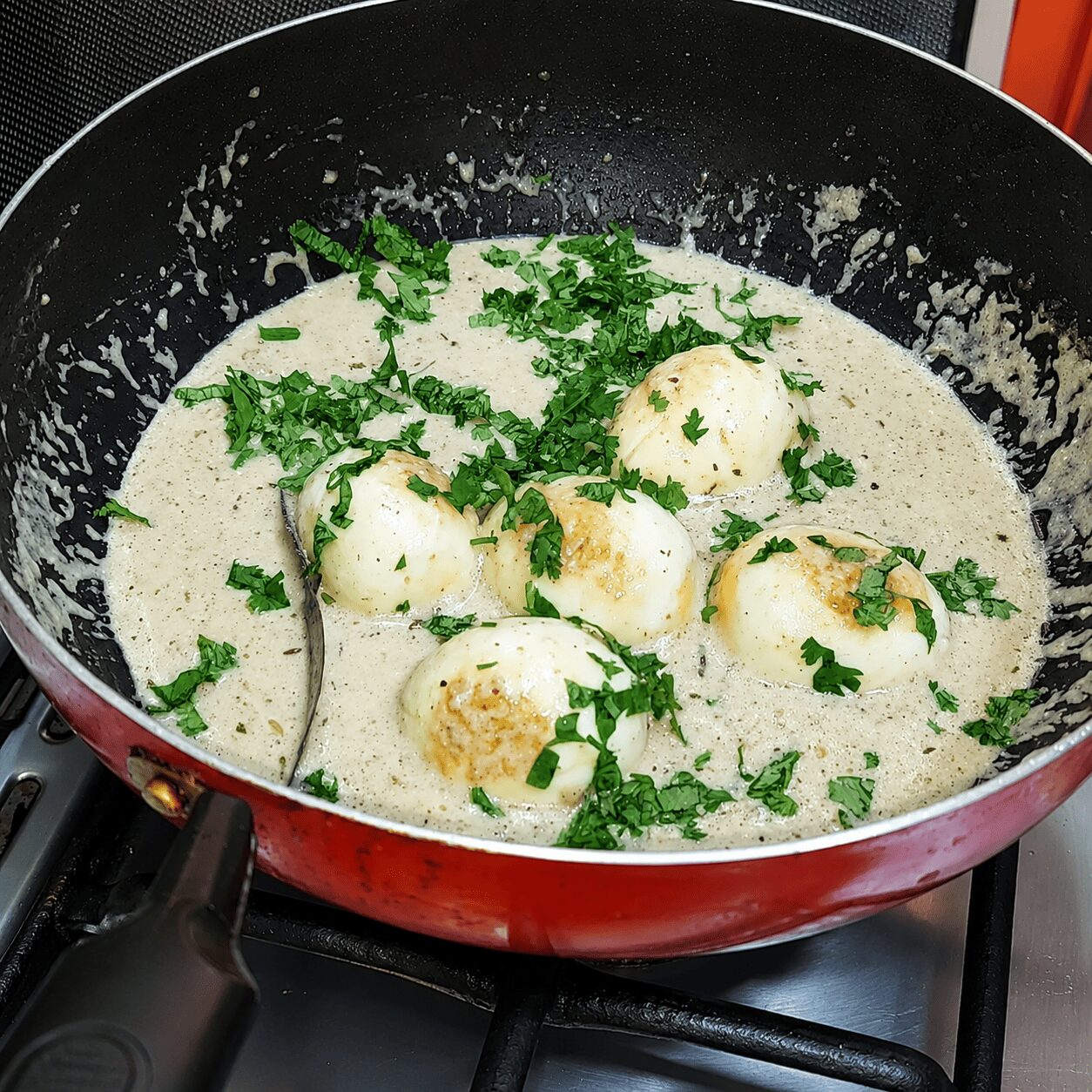
Add water again to reach your preferred gravy thickness. Stir in the cream, garam masala powder, kasuri methi, and the optional pinch of sugar. Mix well and cook the cream for a full 2–3 minutes — don’t skip this.
Add the eggs and finish
Add the fried eggs and fresh coriander. Mix gently. Cover and cook on low flame for 3–4 minutes, so the gravy absorbs into the cuts in the eggs and the oil resurfaces. Dish out.

6 Things That Keep This Korma White and Silky
- Soak the nuts before you start anything else — 15–20 minutes
- Take yogurt and cream out of the fridge early, so they reach room temperature
- Stop the onion paste from browning with a splash of water the moment it starts to deepen
- Use white pepper, not red chilli — anywhere in this recipe
- Add yogurt on LOW flame only, never higher
- Cook the cream for 2–3 full minutes before adding the eggs
The One Mistake That Turns White Korma Beige
Letting the onion paste brown.
Most curries actively want a browned onion base — this one specifically doesn’t. The water-stop technique exists precisely to interrupt that browning the moment it begins. Wait too long, even by twenty or thirty seconds, and the whole gravy shifts from a genuine pale ivory to a beige that just looks like an ordinary korma.
Two related mistakes round this out: adding cold yogurt on anything above low flame, which splits the gravy almost immediately, and skipping the 2–3 minute cream-cooking step, which leaves a raw, cloying smell behind in the finished dish.
For Beginners
If sourcing or soaking nuts feels like too much for a first attempt, skip the cashew and almond paste entirely and add a touch more cream instead. The gravy will be slightly less rich and the texture a little smoother rather than velvety, but it will still be a genuine white korma.
For Confident Home Cooks
Add a small pinch of javitri (mace) along with the whole spices at the start for a more complex, layered Mughlai aroma. It’s not used in the original recipe, but it sits naturally alongside the existing whole-spice blend.
What to Serve Egg White Korma With
Naan is the natural match for a gravy this rich, and sheermal — the slightly sweet, saffron-tinted Mughlai flatbread — is an even more fitting pairing if you want to lean fully into the dish’s restaurant-style identity. Plain basmati or jeera rice both work well too, especially for a quieter weeknight version of the same meal.
This is genuinely a dinner-party dish — it looks and tastes restaurant-level while staying entirely home-cooked, and it makes a graceful non-meat alternative to a white chicken korma when you’re planning a mixed-diet table. If you’re building out a bigger spread, our Anda Dum Biryani pairs beautifully alongside it, and Anglo-Indian fans may also enjoy our Chicken Egg Dak Bungalow for a second rich, egg-forward main on the table.
Got leftover gravy the next day? Don’t waste it — spoon it into a roti or paratha the way we do in our Anda Paratha Roll, which turns a small amount of leftover curry into a completely different, portable meal.
Storage, Reheating & Make-Ahead
| Situation | Guidance |
|---|---|
| Fridge storage | Up to 2 days in an airtight container |
| Freezing | Not recommended — the cream-and-nut gravy tends to separate on thawing |
| Reheating | Gentle reheat on the stovetop with a splash of water; avoid microwaving on high, since cream-based gravies can split under high, uneven heat |
| Make-ahead strategy | The base gravy (through the cashew-almond and cream stage) can be made a day ahead and refrigerated; reheat gently, then add fresh fried eggs just before serving |
Always reheat on the stovetop rather than the microwave if you can — it gives you the control needed to keep a cream-based gravy from splitting.
Myth vs. Fact: Do You Need Both Cashews AND Almonds, or Can You Use Just One?
A proper korma absolutely needs both cashews and almonds together — that’s what makes the paste work.
Either nut works fine on its own. If you only have one of the two, use just that one — the gravy will still come together with good body and richness. If you have neither, skip both entirely and add a little extra cream instead. The flavour and texture will differ slightly each way, but none of these variations stops the dish from being a recognisable, genuine white korma.
Egg Malai Curry vs. Reshmi Anda Cashew Curry vs. Egg White Korma
If none of these three feel quite right for the occasion, our Mughlai Shahi Egg Curry is worth a look too — it leans further into whole-spice richness with a fuller, more festive gravy, sitting alongside this trio as a fourth Mughlai-style option.
| Feature | Egg Malai Curry | Reshmi Anda Cashew Curry | Egg White Korma |
|---|---|---|---|
| Base | Onion + green chilli paste | Onion-cashew-garlic-ginger paste, blended smooth | Onion-garlic-ginger-chilli paste, deliberately kept pale |
| Chilli type | Green chilli | Green chilli | White pepper — no red chilli at all |
| Nuts | None | Cashew | Cashew + almond |
| Cream / dairy | Room-temperature milk | Yogurt | Yogurt + fresh cream |
| Colour | Light, milky | Silky, medium-rich | Pale ivory, no red or orange tones |
| Complexity | Simple, quick | Moderate | More involved — two pastes, two temperature-sensitive stages |
| Best served with | Roti, plain rice | Naan, jeera rice | Naan, sheermal, basmati rice |
Nutrition Snapshot (Estimated per serving)
| Nutrient | Estimated Amount |
|---|---|
| Calories | ~310–350 kcal |
| Protein | ~12–15 g |
| Fat | ~24–28 g |
| Carbohydrates | ~9–12 g |
| Sodium | Varies with salt added |
Figures are estimated and will vary based on exact oil quantity, egg size, and the cashew-to-almond ratio used. These are not a substitute for individualised nutritional advice. Per-egg and cashew/almond nutritional data is available via USDA FoodData Central.
Frequently Asked Questions
What is egg white korma?
Egg white korma — also called anda malai korma — is a Mughlai-style egg curry built on a pale onion base, cashew-almond paste, white pepper, and a fresh cream finish. It contains no red chilli and no tomato, which is what keeps the gravy pale ivory rather than red or orange.
Why is this korma “white” — what keeps the colour pale?
Three things, together: the onion-garlic-ginger-chilli paste is cooked only until it just starts to change colour, then stopped immediately with a splash of water; white pepper replaces red chilli entirely; and no tomato goes into the gravy at any stage. Remove any one of those three, and the gravy starts drifting toward a more typical korma colour.
Why use white pepper instead of red chilli?
White pepper adds genuine warmth and a mild background heat without contributing any colour at all, which is exactly why it’s the traditional Mughlai choice for a dish meant to stay pale. Red chilli would add both heat and a reddish tint, undoing the entire point of a white korma.
Can I skip the cashew and almond paste?
Yes. If you only have one of the two nuts, use just that one. If you have neither, skip both entirely and add a little extra cream in their place. The texture and richness will differ slightly, but the gravy will still be a genuine white korma.
How do I stop the yogurt from splitting when I add it?
Two conditions, both required at once: bring the yogurt to room temperature before adding it, and make sure the flame is on low when it goes in. Either condition alone isn’t reliable — you need the yogurt warm enough and the heat gentle enough at the same time, with constant stirring as it goes in.
What’s the difference between this, egg malai curry, and reshmi anda curry?
Egg Malai Curry uses an onion-green chilli base with room-temperature milk — no cream, no cashews, no yogurt — making it the lightest and quickest of the three. Reshmi Anda Cashew Curry blends an onion-cashew-garlic-ginger paste with a yogurt base for a silky, medium-rich result. Egg White Korma is the most restrained: no red colour anywhere, a deliberately pale onion base, white pepper instead of red chilli, and cashew-almond paste plus cream for richness.
Can I use store-bought cream or does it have to be fresh?
Store-bought fresh cream works perfectly well, and home-made malai is an equally good substitute in the same quantity. What matters more than the source is cooking the cream for a full 2–3 minutes once it’s added, regardless of which one you use, to cook off any raw or cloying taste.
What’s the best bread to serve with a white korma?
Naan is the easy, reliable choice, and sheermal — a slightly sweet, saffron-tinted Mughlai flatbread — is the more traditional match if you want to lean into the dish’s restaurant-style identity. Plain basmati or jeera rice both work well too, for a simpler weeknight version.
Conclusion
Egg White Korma is a good reminder of an older Mughlai instinct: building depth through richness — nuts, cream, white pepper — rather than through heat or colour. Once you understand the pale-onion technique, the water-stop that keeps it from browning, it opens up a register of Indian cooking that most home cooks never quite get to, because most recipes don’t ask you to actively resist the urge to brown your onions.
Forty-five minutes from mise en place to table, two pastes, two temperature-sensitive moments to watch for — and a dish that looks and tastes like something from a Mughlai restaurant menu while staying entirely home-cooked. Follow the sequence — pale onion stopped with water, room-temperature yogurt on low flame, cream cooked properly rather than just stirred in — and the gravy will stay exactly as ivory and silky as it’s meant to be.
Score the eggs before frying, let the cream cook its full two to three minutes, and trust the pale colour even when every instinct says to brown things further. That restraint is the entire dish.
Leave a Reply