

Zaika Mazedaar · Mughlai Curries
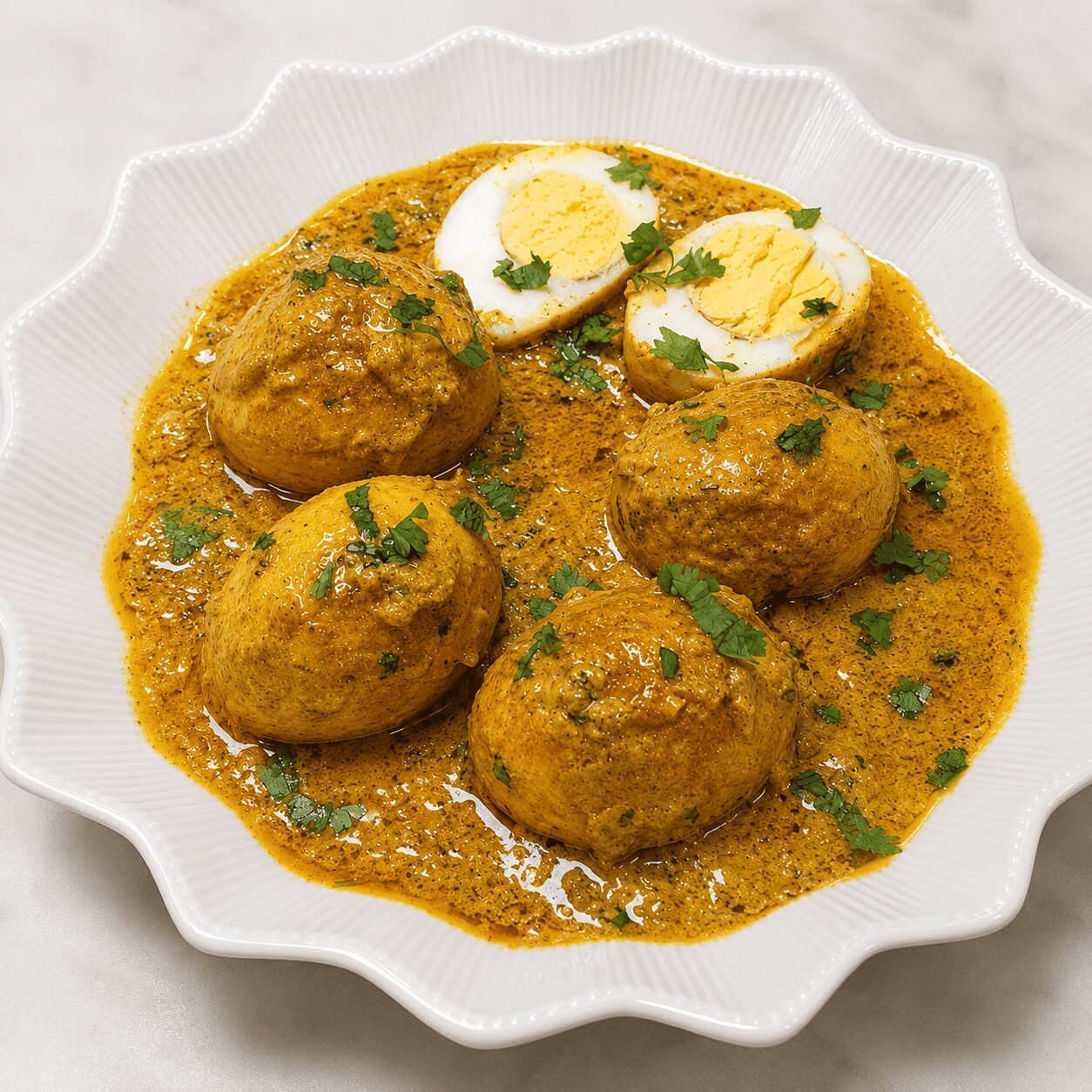
Scored, fried eggs in a rich cashew-and-sesame-seed gravy, finished with a yogurt-spice base rested to room temperature — a real Mughlai-style “shahi” curry, built with a practical poppy-seed swap.
The first thing that gives this curry away as something a little more royal than a weeknight egg curry is the paste — cashews and white sesame seeds, soaked and ground together into a rich, shahi-style base. Add a yogurt-spice mixture that’s deliberately rested until it reaches room temperature before it ever touches the pan, and you’ve got a gravy that’s smooth, thick, and genuinely restaurant-grade.
This recipe is demonstrated step-by-step on the Zaika Mazedaar channel, filmed and cooked in a real kitchen. Quick housekeeping note before we dive in: if you’ve come here looking for our Anda Korma recipe instead, that’s a different dish built a little differently — ghee-fried eggs, a separate onion-cashew-chilli paste, and a yogurt mixture combined cold before the flame goes back on (the “degi korma” technique). This Mughlai Shahi Egg Curry uses oil instead of ghee, scored (not pricked) eggs, and a yogurt-spice mixture rested at room temperature rather than mixed in cold. If Mughlai-style rice is more your mood, our Muradabadi Anda Yakhni Pulao recipe is built around the same slow-cooked spice base.
What Is Mughlai Shahi Egg Curry?
Mughlai shahi egg curry is built using a Mughlai-style cashew-and-seed paste, with sesame standing in for poppy seeds where they aren’t easy to find. “Shahi” simply means royal or rich in the context of North Indian restaurant cooking, and the description holds up here — the cashew-sesame paste gives the gravy real body, while a yogurt-spice base roasted in twice (once after the yogurt goes in, again after the paste) builds depth without ever turning the curry thin or soupy.
The eggs are boiled, lightly scored with a knife, and fried until golden before they ever meet the gravy — the scoring lets the masala soak into the egg rather than leaving the inside bland once everything simmers together.
Why This Recipe Works (and How It’s Different from Our Anda Korma)
Two techniques set this apart from a regular egg curry — and from the site’s existing Anda Korma article, despite the creator’s own informal naming overlap in the source video.
First: a cashew-sesame “shahi” paste, not a single-nut paste. Traditional Mughlai cooking often calls for poppy seeds (khaskhas) ground alongside cashews for body and a faint nuttiness. Where poppy seeds aren’t locally available, white sesame seeds are a genuinely workable substitute — close enough in size and flavour that the gravy’s character barely shifts.
Second: the yogurt-spice mixture rests at room temperature, not cold. Unlike the Anda Korma’s cold-combined “degi korma” technique, here the yogurt and dry spices are mixed together and left to sit until they reach room temperature before joining the hot pan. This both deepens the spice flavour and helps prevent the yogurt from curdling or splitting the moment it hits the heat — a different sequence with a genuinely different final texture from the Anda Korma, even though both dishes get loosely called “korma” by the creator in her own videos.
Ingredients
For the Cashew-Sesame Paste
- 10–12 cashews, soaked
- 1 tsp white sesame seeds, soaked alongside the cashews (traditional khaskhas/poppy seeds can be used instead, if available)
For the Eggs
- 4–5 eggs, boiled and lightly scored with a knife
- Oil, for frying
Whole Spices & Onion Base
- 2 tbsp oil, plus 2 more tbsp for the gravy
- 1 bay leaf (tej patta)
- ½ tsp cumin seeds
- 1-inch cinnamon stick (dalchini)
- 2 small onions, grated
- 1 tsp ginger-garlic paste
For the Yogurt-Spice Base
- 1 tsp coriander powder
- ½ tsp cumin powder
- ½ tsp turmeric powder
- 1 tsp red chilli powder (adjust to taste)
- Salt, to taste
- 3 tbsp thick yogurt, whisked (use 4 tbsp if your yogurt is thinner)
For Finishing
- Water, to rinse the yogurt bowl and grinding jar (nothing wasted)
- 1 tbsp fresh cream
- 2–3 tbsp water, to adjust gravy consistency
- 2 green chillies, for flavour and aroma
- 1 tsp kasuri methi (dried fenugreek leaves), roasted
- ½ tsp garam masala powder
- Fresh coriander, for finishing
- ¼ tsp sugar (optional, for a restaurant-style balance)
Ingredient Substitutions
| Ingredient | Substitute | Effect on Taste / Texture |
|---|---|---|
| White sesame seeds | Poppy seeds (khaskhas) | The traditional choice; very similar flavour and thickening power if you can source them |
| 3 tbsp thick yogurt | 4 tbsp thinner yogurt | Use the larger amount if your yogurt isn’t thick-set, to keep the spice-to-liquid ratio balanced |
| Fresh cream | Malai / cream skimmed from milk | Nearly identical richness; whisk smooth first so it blends in evenly |
| Ginger-garlic paste | Fresh grated ginger + garlic (equal parts) | Stronger raw flavour; fry slightly longer to mellow it |
Want something far quicker on a weekday? Our Butter Garlic Egg recipe shares a few of these pantry staples without the long roast.
Mise en Place Checklist
Get all of this ready before turning on the flame. The yogurt-spice mixture needs a short resting window, so plan for that.
- Cashews and sesame seeds soaking together
- Eggs boiled and lightly scored
- Onions grated
- Ginger-garlic paste measured
- Yogurt-spice mixture combined and resting at room temperature
- Cream measured
- Green chillies and fresh coriander on hand
- Kasuri methi roasted lightly and ready to crush
- A wide kadhai or pan, ready on the hob
Step-by-Step Method
Soak the cashews and sesame seeds together
Soak the cashews and 1 tsp white sesame seeds together so they soften enough to grind into a fine paste later.

Score and fry the eggs
Lightly score the boiled eggs with a knife — this lets masala soak into the egg once it joins the gravy, rather than leaving the inside bland. Fry on medium flame until a nice golden colour develops, then remove and set aside.


Temper the whole spices
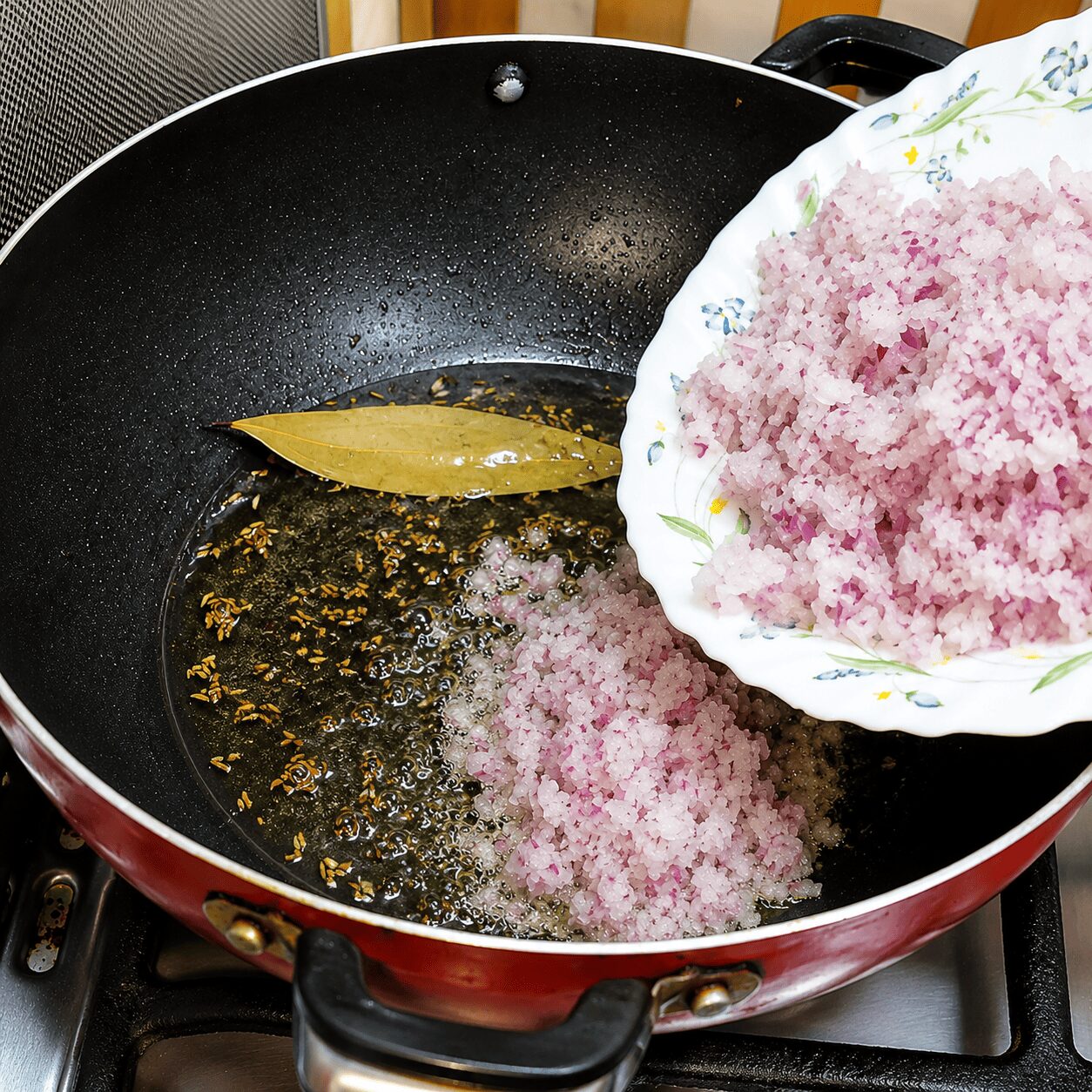
In the same pan, add 2 tbsp oil. Add the bay leaf, cumin seeds, and cinnamon stick, and fry for 30 seconds until fragrant.
Fry the grated onion light golden
Add the grated onions and cook on medium flame until light golden — not deeply browned. While the onion fries, move on to the next step in parallel.

Mix and rest the yogurt-spice paste
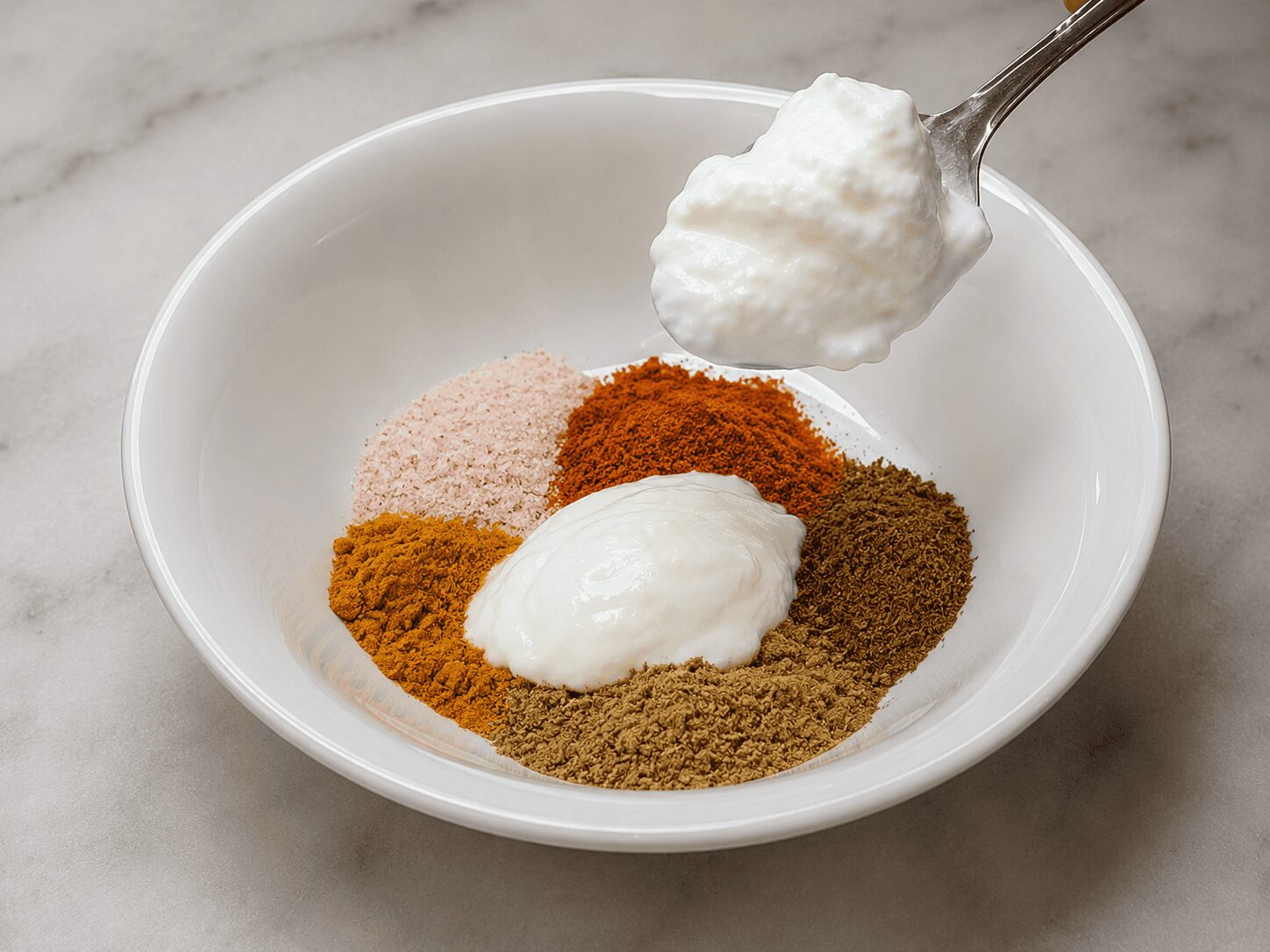
In a bowl, combine the coriander powder, cumin powder, turmeric, red chilli powder, salt, and whisked yogurt. Set this aside and let it come to room temperature while the onion finishes frying.

Add the ginger-garlic paste
Once the onion is light golden, add the ginger-garlic paste and fry for 30–40 seconds, until the raw smell is gone.
Stir in the room-temperature yogurt-spice mixture
Lower the flame and stir the rested yogurt-spice mixture into the onion quickly, so it incorporates smoothly without curdling.
Roast until oil separates, twice
Roast on medium flame until the oil visibly separates. Rinse the empty yogurt bowl with a little water and add that back in, so nothing’s wasted — then continue roasting until oil resurfaces fully on the gravy’s surface.

Lower the flame and stir in the cashew-sesame paste
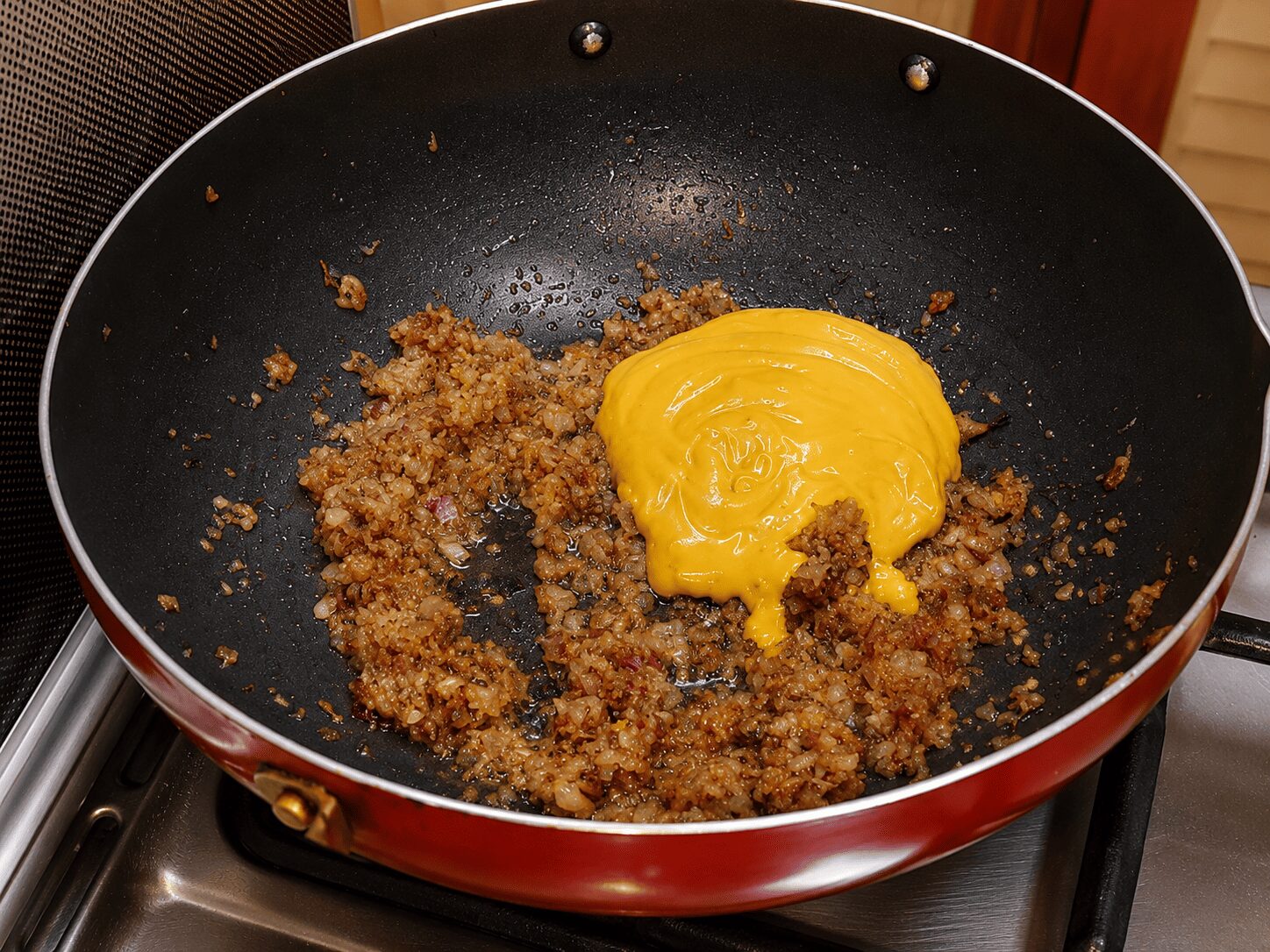
Grind the soaked cashews and sesame seeds into a fine paste. Lower the flame before adding it — it catches and burns at the bottom quickly compared to the rest of the masala. Stir it in, then rinse the grinding jar with 2 tbsp water and add that back too.

Add the cream
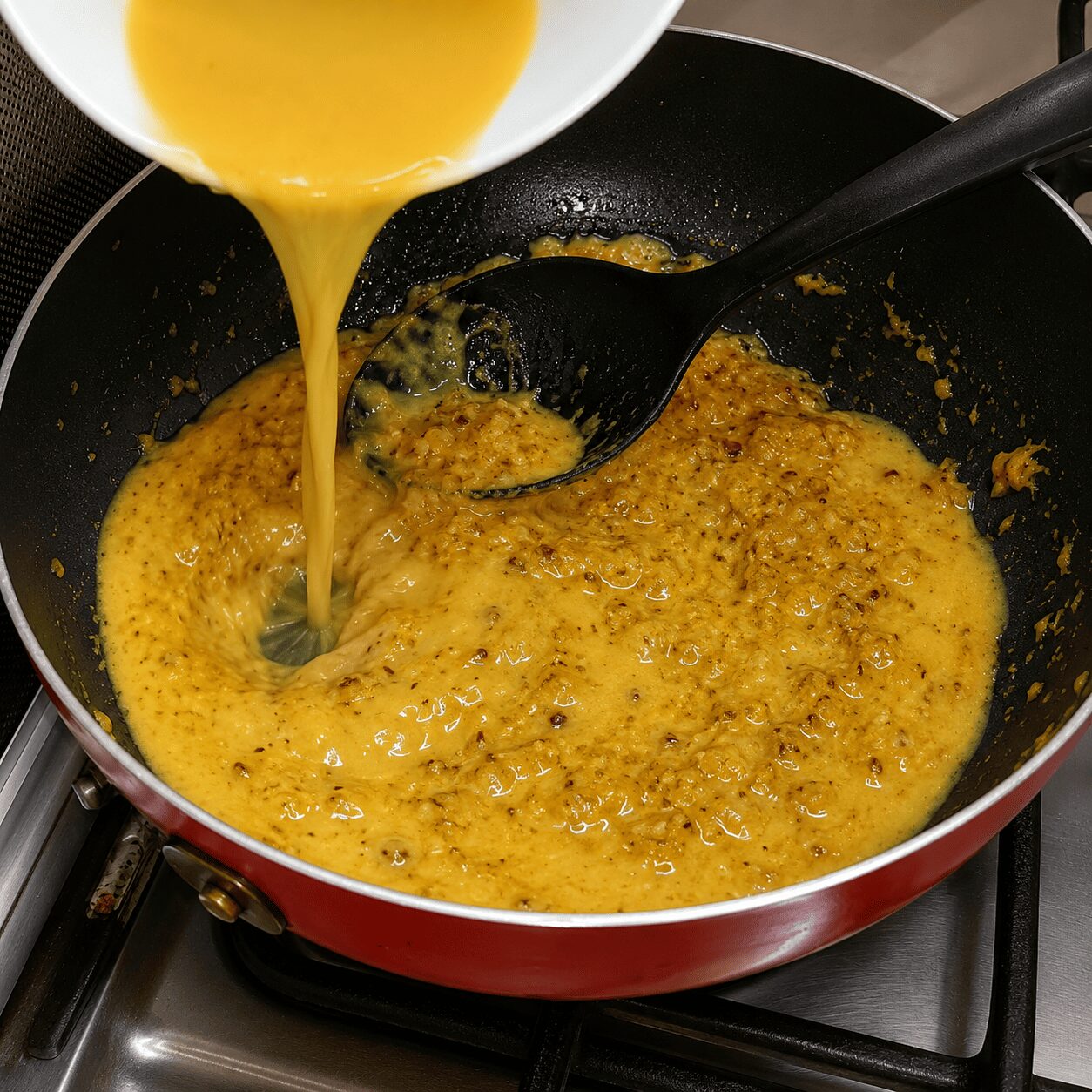
Stir in 1 tbsp fresh cream and cook for 2–3 minutes, specifically so the cream’s raw taste cooks out fully.
Adjust the consistency and add green chillies
If the gravy looks too thick, loosen it with 2–3 tbsp water — but don’t thin it down to a broth-like consistency the way a korma is sometimes served. This curry is meant to stay a little thicker. Add the green chillies purely for a light flavour and aroma boost.
Add the fried eggs back in
Gently add the fried, scored eggs into the gravy, spacing them evenly so each one is coated.
Finish and cover
Stir in the roasted kasuri methi, garam masala powder, fresh coriander, and the optional ¼ tsp sugar. Cover and cook for 2–3 minutes more, until oil resurfaces on top and the eggs absorb a little of the masala flavour.

6 Things to Remember for Perfect Mughlai Shahi Egg Curry
- Soak cashews and sesame seeds together early — sesame stands in well for poppy seeds when they’re unavailable
- Score the eggs before frying so the masala flavour can penetrate later
- Rest the yogurt-spice mixture to room temperature before it joins the hot pan
- Roast the masala until oil separates twice — once after the yogurt, again after the cashew-sesame paste
- Lower the flame before adding the cashew-sesame paste — it burns fast on high heat
- Keep the final gravy thick, not broth-like
Prefer a simpler weeknight gravy over this occasion-worthy one? Our Egg Butter Masala recipe is the easier everyday version of the same rich-curry idea.
The One Mistake That Ruins Mughlai Shahi Egg Curry
Adding the cashew-sesame paste on too high a flame.
It’s easy to forget to lower the heat between steps, especially once the gravy is smelling good and you’re moving quickly. But the cashew-sesame paste catches and burns at the bottom of the pan far faster than the rest of the masala — and once it scorches, that bitterness spreads through the whole gravy and can’t really be fixed. The second most common slip is skipping the yogurt-resting step entirely and adding cold yogurt straight from the fridge, which is the fastest way to end up with a curdled, grainy gravy instead of a smooth one.
Lower the flame before the paste goes in. Let the yogurt mixture sit until it’s no longer cold. Both take patience, neither takes extra effort. Temperature control matters just as much in simpler egg dishes — our Turkish Eggs Cilbir recipe is a good example of how much a gentle hand changes the result.
For Beginners
Don’t rush the yogurt-resting step — it’s brief but genuinely useful. If your kitchen runs cold, give it a few extra minutes. You’re looking for the yogurt mixture to feel neutral to the touch, not chilled, before it goes anywhere near the hot pan.
For Confident Home Cooks
If you can source real poppy seeds (khaskhas), try swapping them in for the sesame seeds for an even closer match to the traditional version — the flavour shifts subtly toward something nuttier and more classically Mughlai. You can also adjust the cream-to-water ratio slightly for a richer or lighter finish, depending on what you’re serving it with.
What to Serve Mughlai Shahi Egg Curry With
Naan is the obvious pairing here — the rich, thick gravy is built for scooping, and if you’d rather wrap leftovers up the next day, our Anda Paratha Roll recipe is a good use for them. For a more complete weekend spread, our Anda Korma Biryani recipe rounds things out nicely without competing with the gravy’s richness.
This is a strong special-occasion or weekend dinner upgrade — the kind of egg curry that feels like it belongs on a slightly more festive table than a regular weeknight one.
Storage, Reheating & Make-Ahead
| Situation | Guidance |
|---|---|
| Fridge storage (gravy only) | Up to 2 days in an airtight container |
| Fridge storage (with eggs) | Best eaten within a day — egg texture firms up further on reheating |
| Freezing | Not recommended — the yogurt-cream gravy tends to separate on thawing |
| Reheating | Gentle reheat on low flame with a splash of water; avoid high microwave heat, which can split a yogurt-and-cream-based gravy |
| Make-ahead strategy | The masala base (through Step 10) can be made up to 2 days ahead. Reheat gently, then add the fried eggs fresh and finish the last few steps |
A yogurt-and-cream gravy like this one needs a gentle hand when reheating — high, fast heat is what causes splitting. The USDA’s general guidance on leftovers and food safety covers the cooling and reheating principles that apply here. If reheating gently isn’t appealing, our one-pan Egg Shakshuka recipe is a quicker fresh-cooked alternative for the same craving.
Myth vs. Fact: Does Mughlai Curry Require Poppy Seeds?
If you don’t have poppy seeds (khaskhas), you can’t make a real Mughlai-style curry — they’re essential to the dish.
Poppy seeds are the traditional choice in many Mughlai pastes, but they’re not the only option. White sesame seeds, ground alongside cashews, give a very close result — similar body, a comparable faint nuttiness, and a gravy that still earns the “shahi” description. If poppy seeds aren’t sold near you, sesame is a genuinely workable swap rather than a compromise.
Nutrition Snapshot (Estimated per serving)
| Nutrient | Estimated Amount |
|---|---|
| Calories | ~310–350 kcal |
| Protein | ~13–16 g |
| Fat | ~23–27 g |
| Carbohydrates | ~11–14 g |
| Sodium | Varies with salt added |
Figures are estimated and will vary based on exact oil quantity, egg size, and cream used. These are not a substitute for individualised nutritional advice. Per-egg nutritional data is available via USDA FoodData Central, and cashew nutrient data via USDA FoodData Central’s cashew entry.
Frequently Asked Questions
What is Mughlai shahi egg curry?
Mughlai shahi egg curry is a rich North Indian egg curry built on a cashew-and-sesame-seed “shahi” paste, with the sesame standing in for traditional poppy seeds. Scored, fried eggs simmer in a yogurt-spice gravy that’s roasted twice until the oil separates, finished with cream, kasuri methi, and garam masala for a thick, restaurant-style result.
How is this different from anda korma?
Our existing Anda Korma uses ghee, pricked eggs, a separate onion-cashew-chilli paste, and a yogurt-spice mixture combined cold before the flame resumes — the “degi korma” technique. This Mughlai Shahi Egg Curry uses oil, scored eggs, a cashew-sesame paste added late on low flame, and a yogurt-spice mixture rested at room temperature rather than cold. They’re genuinely different recipes despite sharing informal naming.
Can I use poppy seeds instead of sesame seeds?
Yes — poppy seeds (khaskhas) are actually the traditional choice in this style of paste. Use them in the same quantity as the sesame seeds if you can source them. The flavour will shift slightly toward something nuttier and more classically Mughlai, but either version works well.
Why rest the yogurt-spice mixture before adding it?
Mixing the spices into yogurt and letting it sit until it reaches room temperature intensifies the spice flavour and helps prevent the yogurt from curdling or the spices from scorching the moment they hit the hot pan. It’s a brief step, but it does real work for both texture and taste.
Why does my gravy look curdled?
This usually happens when cold yogurt is added directly to a very hot pan, or when the flame is too high while the yogurt is roasting in. Letting the yogurt-spice mixture come to room temperature first, and keeping the flame moderate to low while it roasts, are the two best ways to avoid this.
Can I make this less rich/lighter?
Yes. Reduce the cream slightly or skip it entirely — the cashew-sesame paste still carries most of the richness and body on its own. You can also use a thinner yogurt for a lighter overall gravy, adjusting the quantity per the substitution table above.
Can I make this less spicy?
Easily. Reduce the red chilli powder in the yogurt-spice base, and use the green chillies purely for aroma rather than heat — or leave them out entirely. The cashew-sesame paste and cream will still carry plenty of flavour without much heat.
What’s the best bread or rice to serve with Mughlai egg curry?
Naan is the most natural pairing for a thick, rich gravy like this one. Hand-rolled roti and paratha both work well too, and jeera rice makes a good simpler alternative if you’d rather skip the bread.
Conclusion
Mughlai shahi egg curry earns its “royal” framing honestly — not through rare ingredients, but through a cashew-sesame paste that stands in capably for poppy seeds, and a yogurt-spice base that’s given the small courtesy of resting before it meets the heat.
Soak the cashews and sesame seeds together early. Score the eggs before frying. Rest the yogurt-spice mixture to room temperature. Roast the masala until oil separates twice — once after the yogurt, again after the cashew-sesame paste. Lower the flame before that paste goes in. Keep the final gravy thick, not broth-like. Follow that sequence and you’ll have a curry that tastes like considerably more effort went into it than actually did.
It’s a strong pick when you want something richer than a regular weeknight curry — our silky Reshmi Anda Cashew Curry recipe sits in the same category, and our Anda Dum Biryani recipe makes a good centrepiece for a festive spread built around this one. If you want to keep exploring beyond the usual gravies, our Chicken Egg Dak Bungalow recipe is another regional favourite worth trying next.
Leave a Reply