

Zaika Mazedaar · North Indian Curries
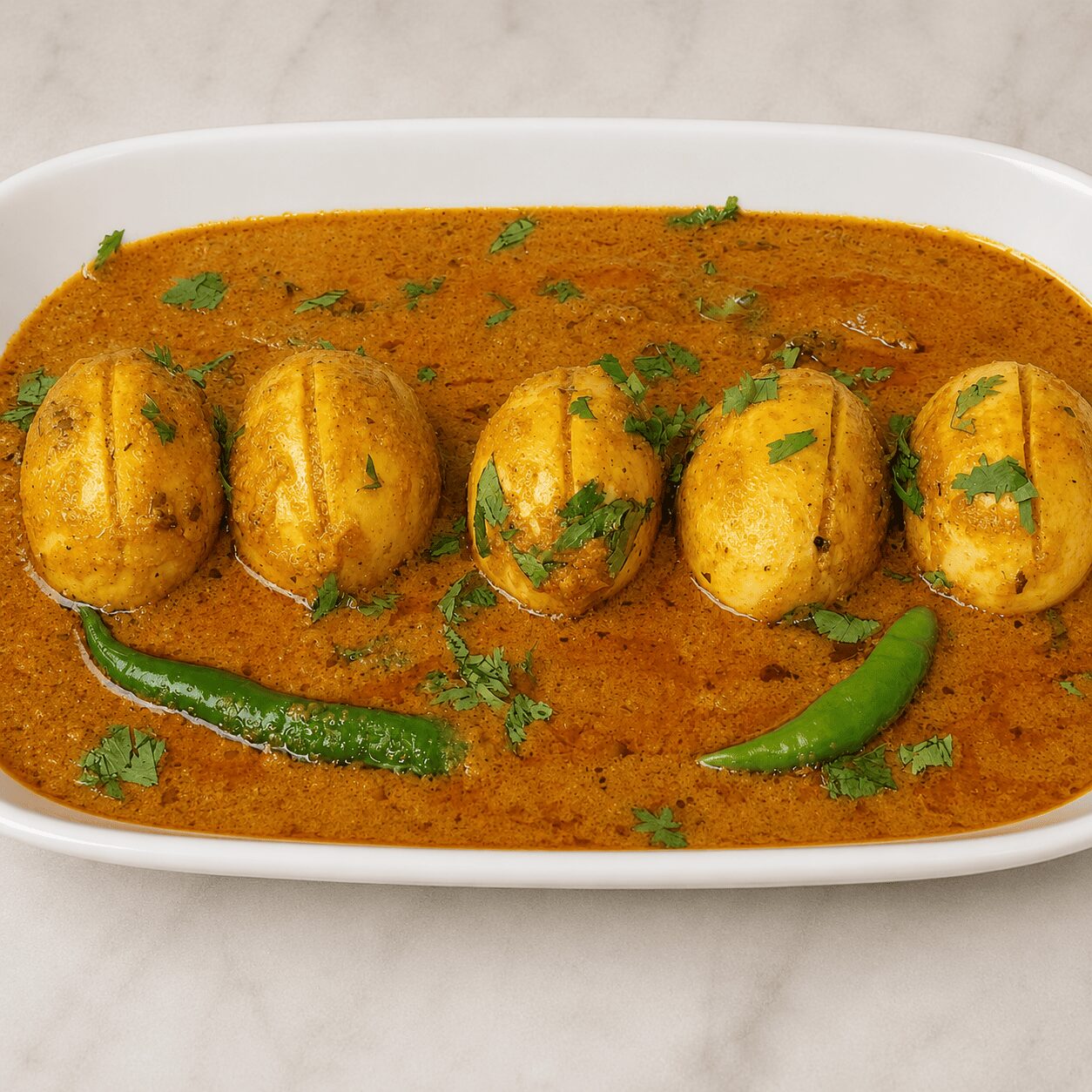
A blended tomato-cashew-onion gravy, eggs scored and pan-fried before they ever meet the masala, and a real butter-and-cream finish — restaurant-style egg butter masala at home, no food colour needed.
If you love butter chicken but don’t always want to wait on chicken, egg butter masala (anda makhni masala) gets you to nearly the same place — glossy tomato gravy, real butter, real cream, that restaurant-red colour — in under an hour, for a fraction of the cost. And here’s the honest part most recipes leave out: that red colour doesn’t have to come from a bottle of food colouring. A spoonful of Kashmiri chilli powder does the same job, naturally.
This recipe is demonstrated step-by-step in our video on the Zaika Mazedaar channel, filmed and cooked in a real kitchen, not assembled from a recipe database. If you’re new here, our egg recipes roundup is a good place to see everything else we’ve tested with eggs, and our restaurant-style recipes at home collection has more dishes built around this same purée-and-finish logic.
What Is Egg Butter Masala?
Egg butter masala (also called anda makhni masala) is a North Indian egg curry built on the same purée-and-cream logic as butter chicken, applied to hard-boiled eggs instead of tandoori chicken. Three things define it: the onion, tomato, ginger, garlic, and cashews are simmered together in water until soft, then blended into one smooth purée rather than left as a textured paste; the eggs are hard-boiled, scored, and pan-fried with turmeric and chilli before they ever touch the gravy; and the dish is finished with actual butter and cream together, not just a token spoonful of one or the other.
The result is a gravy that’s smoother and more unified than a typical onion-tomato egg curry, with eggs that have a faintly crisp, coloured skin and a flavour that’s worked its way into the centre rather than just sitting on the surface.
Why This Recipe Works (and How It’s Different From Our Egg Lababdar and Egg Malai Curry)
This is now the third creamy egg gravy on the site, so it’s worth being upfront about what actually sets it apart. Our egg lababdar keeps its grated onion and tomato-cashew paste cooked down separately and never blended into one smooth purée — it stays a little textured. This recipe takes the opposite route: everything goes into one pan, simmers together, and gets blended into a single, glossy purée before any frying starts. Our egg malai curry, on the other hand, skips tomato entirely and uses milk instead of cream or butter — a lighter, paler gravy with a completely different flavour profile. If gravy-style egg curry with a separate base is more your speed, egg lababdar takes that route; if you’d rather skip butter and cream altogether, egg malai curry is the lighter, milk-based option.
The second distinguishing move is what happens to the eggs before they ever see the gravy. Most egg curry recipes either crack eggs in raw or just halve boiled ones. Here, the boiled eggs are scored with knife cuts, rubbed with turmeric and chilli, and pan-fried until the skin turns lightly crisp and coloured — built using the same logic this channel uses for scoring eggs in its dum biryani, just applied here to a gravy instead of layered rice.
And third: the finish is genuine butter plus cream, stirred in together near the end, the same purée-and-cream technique restaurants rely on for butter chicken — applied here to eggs instead of tandoori chicken.
But there’s a reason the eggs in this version don’t taste bland in the middle — and it happens before they ever touch the gravy.
Ingredients
For the Tomato-Cashew Purée
- ¾ cup water (used to simmer the base — no oil at this stage)
- 1 large onion, roughly sliced
- 3 medium tomatoes (or 2, if using large ones)
- A 2-inch piece of ginger
- 6–7 garlic cloves
- 3 dried red chillies (a spicy variety; adjust to taste)
- 12–15 cashews
- 1 tsp kasuri methi (dried fenugreek leaves)
For the Eggs
- 5 eggs, hard-boiled
- 4–5 tbsp oil, for frying
- ½ tsp turmeric powder
- ½ tsp red chilli powder
Dry Spices
- 1 tsp coriander powder
- 1 tsp cumin powder
- ½ tsp garam masala powder
- ¾ tsp Kashmiri red chilli powder (optional — for natural colour, not heat)
For the Finish
- 4 tbsp yogurt, brought to room temperature
- 1 tbsp butter
- 4 tbsp fresh cream
- ¾ tsp salt, or to taste
- ½ cup warm water (if the gravy needs thinning near the end)
- ½ tsp sugar (optional — the restaurant-style rounding touch)
- ½ tsp kasuri methi, crushed by hand, added near the end
- Fresh coriander, to garnish
Ingredient Substitutions
| Ingredient | Substitute | Effect on Taste / Texture |
|---|---|---|
| Fresh cream | Full-fat yogurt, whisked smooth | Tangier and slightly thinner; whisk well so it doesn’t sit grainy in the gravy |
| Butter | Extra oil or ghee | Noticeably less rich and rounded; ghee is the closer of the two substitutes |
| Dried red chillies | Kashmiri chilli powder | Milder, more colour-forward, less raw heat in the base purée |
| Cashews | Soaked blanched almonds | Slightly less sweet and a touch drier-bodied, but still blends smooth |
| Kasuri methi | Skip, or add a pinch of dried mint | Loses the characteristic bitter-aromatic top note; not a true match |
Mise en Place Checklist
Get all of this ready before the flame goes on. This recipe has two separate components — the purée and the eggs — so a little organisation up front keeps the stove time moving smoothly.
- Onion roughly sliced
- Tomatoes, ginger, garlic measured and ready
- Dried red chillies and cashews measured
- 5 eggs, hard-boiled and peeled
- Dry spices (coriander, cumin, garam masala, Kashmiri chilli) measured into one bowl
- Yogurt removed from the fridge early so it reaches room temperature
- Butter and cream measured
- Fresh coriander washed and roughly chopped
- Blender or mixer jar nearby for the purée
- A pan you can also use for frying the eggs afterward, to save on washing up
Step-by-Step Method
Simmer the purée base
In a pan, add ¾ cup water. Add the sliced onion, tomatoes, ginger, garlic, dried red chillies, and cashews. Stir in 1 tsp kasuri methi. Mix everything together, cover, and cook on low flame for 4–5 minutes, until everything is completely soft and mushy.

Blend to a smooth purée
Turn off the gas and let the mixture cool slightly. Transfer to a blender and blend into a fine, smooth purée. Set it aside.
Score the boiled eggs
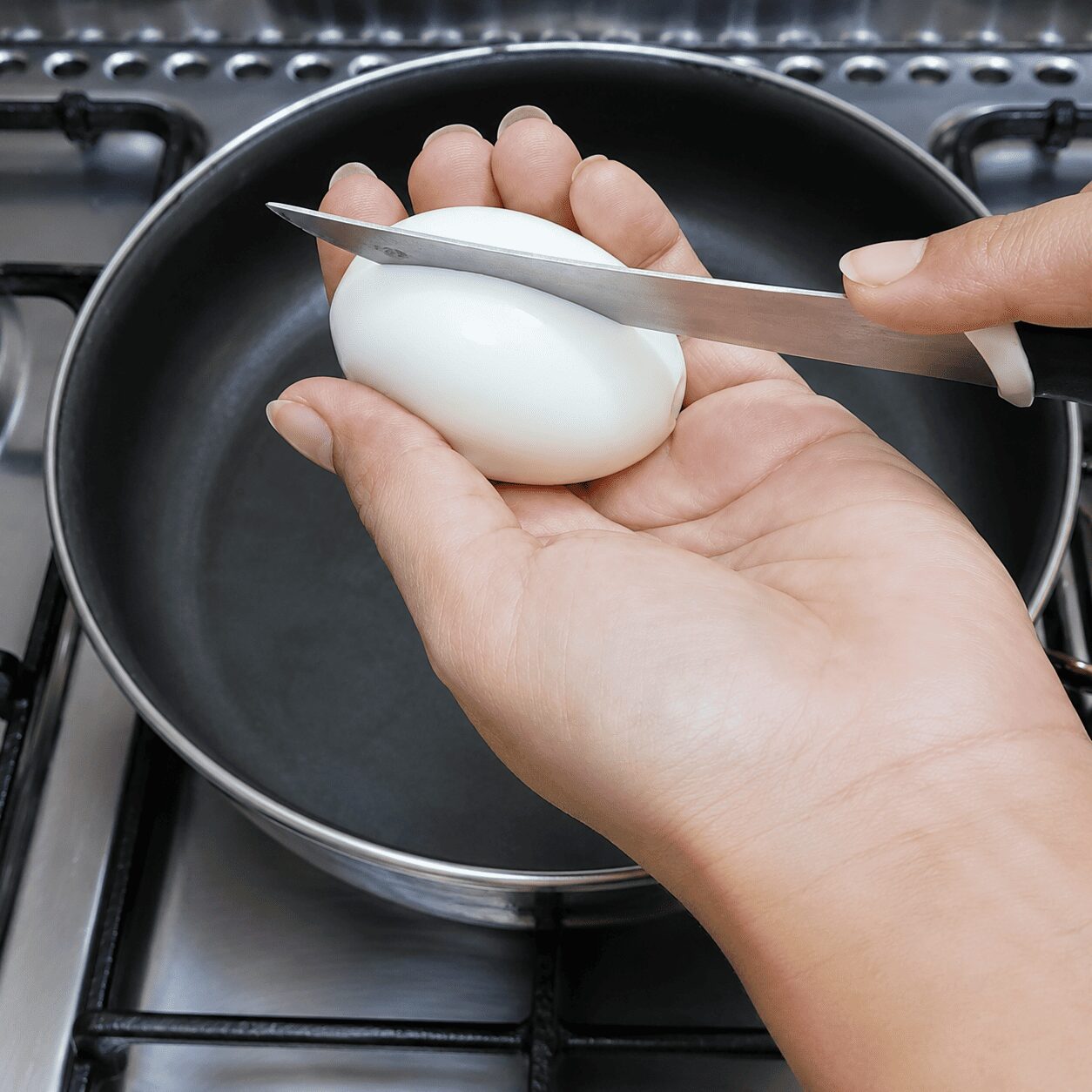
Take your 5 hard-boiled eggs and make 3–4 long cuts into each one with a knife.

Fry the eggs
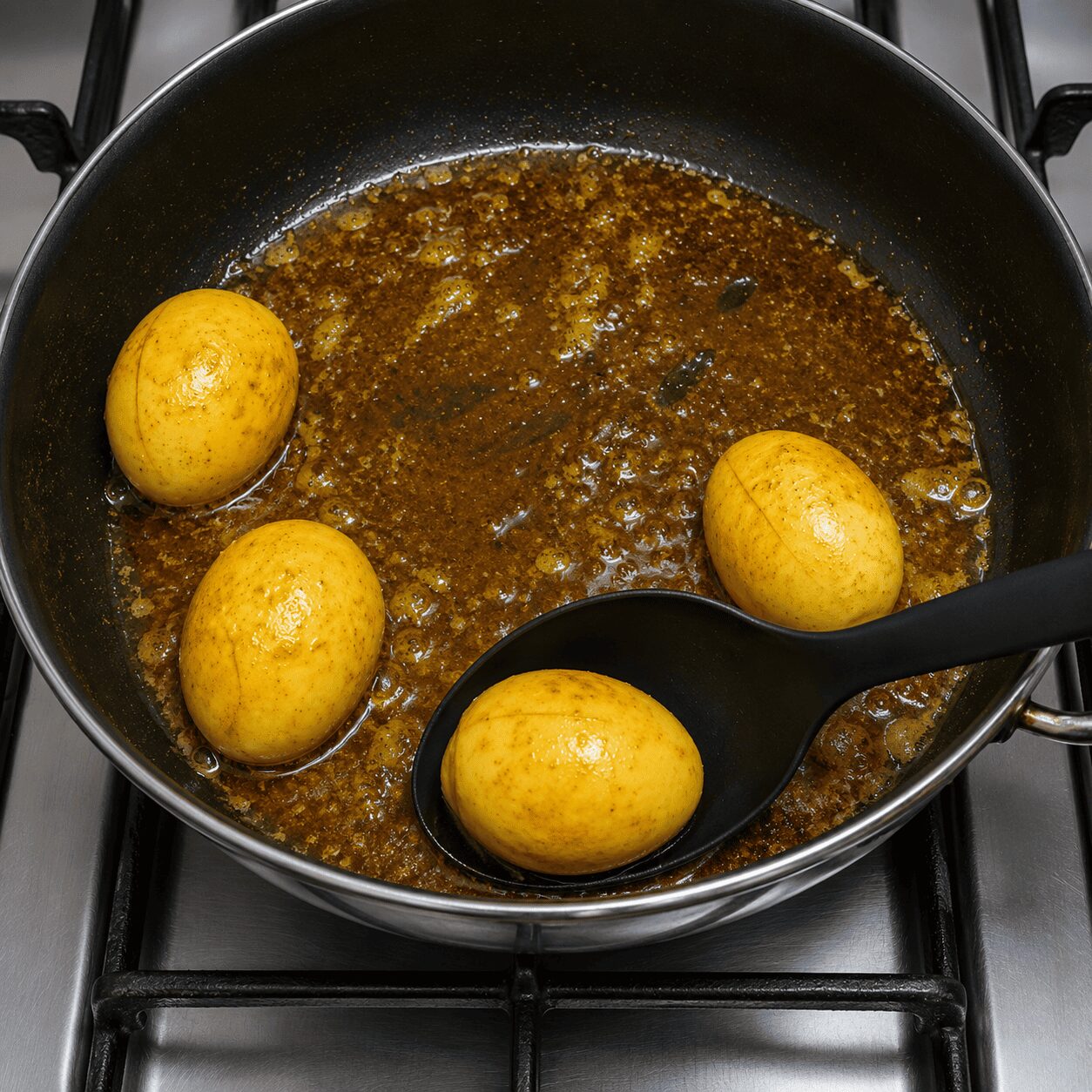
Heat 4–5 tbsp oil in the same pan. Add the scored eggs along with ½ tsp turmeric powder and ½ tsp red chilli powder. Fry on medium-to-low flame for 2–3 minutes, until the eggs are nicely coloured and the skin turns lightly crispy. Remove and set aside on a plate.

Cook the yogurt and roast the dry spices
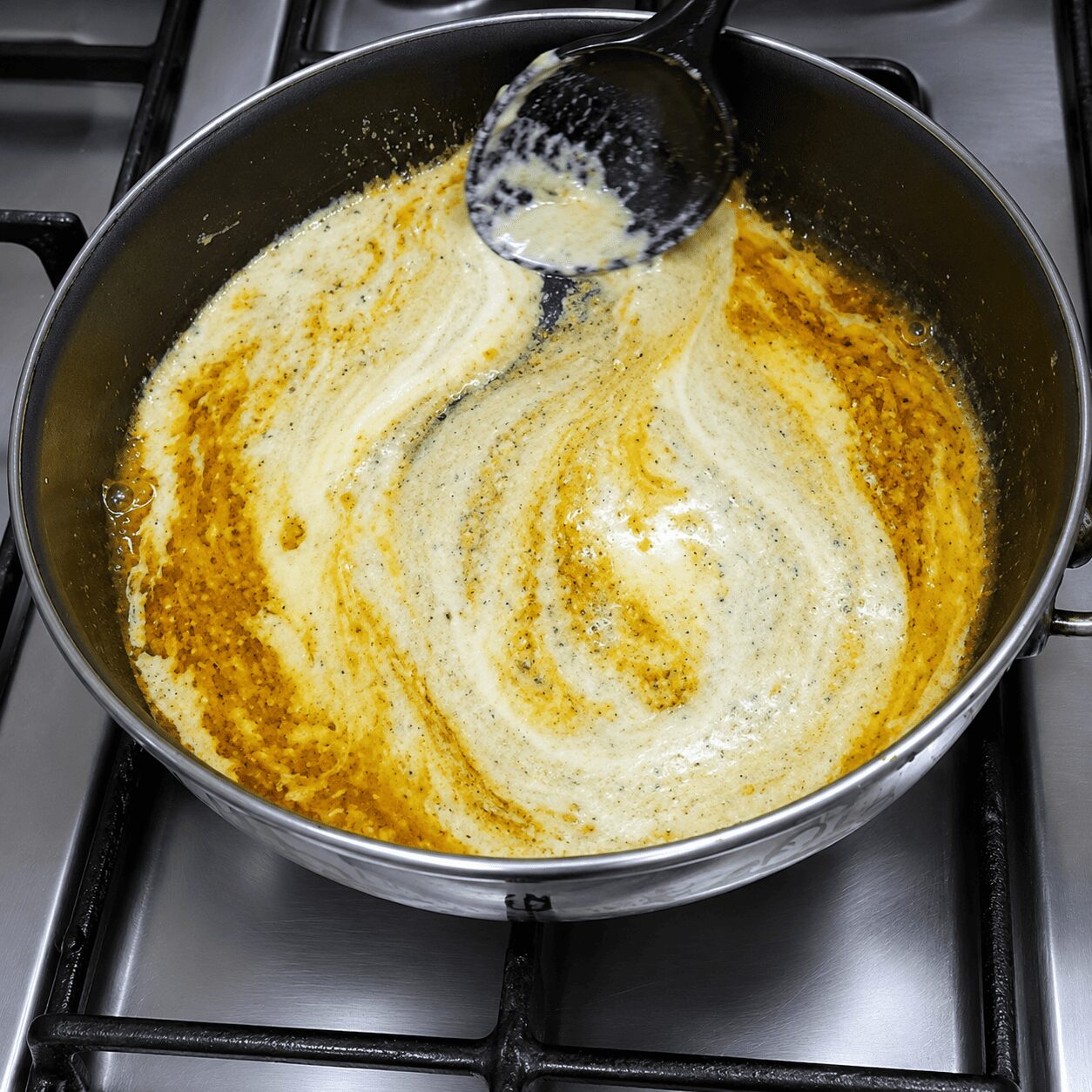
In the same leftover oil, add 4 tbsp room-temperature yogurt. Cook on low flame for 2–3 minutes. Then add 1 tsp coriander powder, 1 tsp cumin powder, and ½ tsp garam masala powder. Roast everything together with the yogurt until the raw smell of the spices is gone.

Add the purée and cook it down
Add the blended onion-tomato-cashew purée and mix it thoroughly with the roasted yogurt-spice base. Stir in ¾ tsp Kashmiri red chilli powder for colour. Cover and cook on low flame for 5–6 minutes, stirring occasionally since it can splatter, until oil starts surfacing on top.
Add the fried eggs back in
Add the fried eggs into the gravy and mix gently, making sure each one is coated.
Stir in butter, cream, and salt
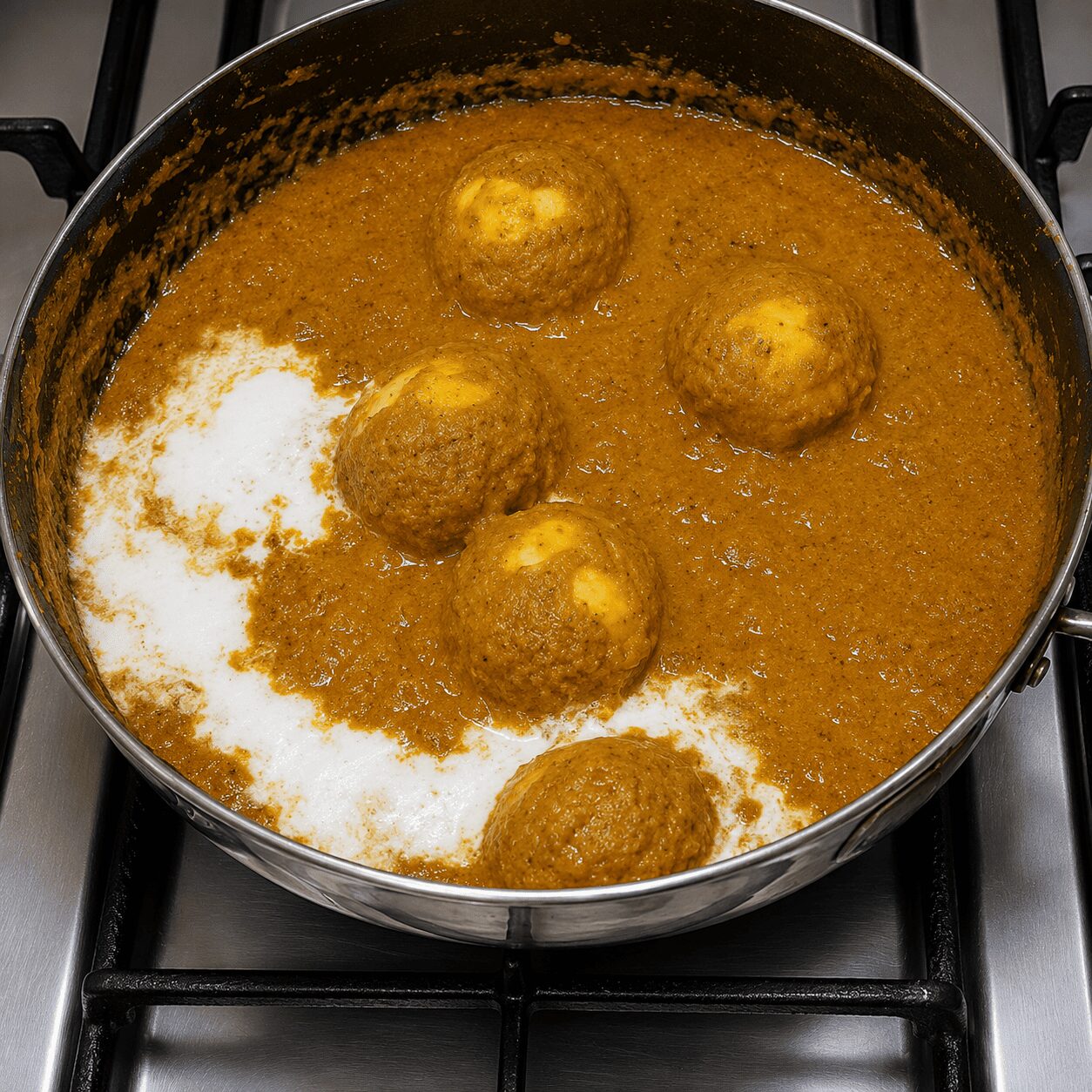
Add 1 tbsp butter and 4 tbsp cream — adjust both up or down to your taste. Add ¾ tsp salt and taste, adjusting as needed. Mix everything together, cover, and cook a further 3–4 minutes.

Thin if needed, then add sugar and kasuri methi
If the masala looks too thick, stir in about ½ cup warm water. Add ½ tsp sugar (optional) and ½ tsp kasuri methi, crushed by hand. Mix gently, cover again, and cook for 3–4 minutes, or until oil resurfaces on top.
Garnish and finish
Add fresh coriander to taste and mix it in. Cover briefly once more to let the oil resurface a final time. Turn off the gas, and your egg butter masala is ready to dish out.

6 Things to Remember for a Perfect Egg Butter Masala
- Blend the purée smooth — onion, tomato, ginger, garlic, and cashews simmered together, then blended into one purée, not left textured
- Score the eggs with 3–4 cuts before frying, so the gravy’s flavour gets into the centre
- Bring yogurt to room temperature before it goes into hot oil, so it doesn’t split
- Use Kashmiri chilli powder instead of food colour for a natural restaurant-red
- Don’t expect a true dum — the covered cook after adding the eggs is just for frying the masala properly
- Finish with real butter, cream, and a pinch of sugar for that rounded restaurant flavour
The One Mistake That Ruins Egg Butter Masala
Skipping the egg-scoring step.
It’s tempting to just fry the boiled eggs as they are — it saves thirty seconds and they look fine either way. But without those 3–4 knife cuts, the gravy’s flavour never makes it past the egg’s surface. You end up with eggs that taste flat and a little bland right in the centre, even sitting in a genuinely good gravy. The fix takes seconds: score before you fry, every time.
A close second mistake: adding yogurt straight from the fridge into hot oil. Cold yogurt is far more likely to split. Bring it to room temperature first, and mix it in the moment it hits the pan.
For Beginners
Don’t worry about getting the exact thickness on your first try. If the gravy looks too thick near the end, thin it with warm water — exactly as demonstrated, about ½ cup, added gradually until it looks right to you. The sensory cues (oil resurfacing, raw spice smell gone) matter more than hitting an exact consistency.
For Confident Home Cooks
Adjust the dried red chilli count in the purée for more heat — three is already a spicy variety in this recipe, so go up cautiously. For an even richer, more restaurant-style result, finish with a touch more cream than the recipe calls for, stirred in right at the end so it doesn’t fully cook down.
What to Serve Egg Butter Masala With
This is a weekend dinner dish, in the best sense — a little more involved than a weeknight curry, with a payoff that looks and tastes like something you’d order. A soft naan is the obvious match for mopping up a butter-and-cream gravy this glossy. Paratha works just as well if naan isn’t on hand. And this pairs just as well with simple jeera rice as it does with naan, for a lighter, rice-forward plate.
It’s also a good one for kids, since the heat is genuinely adjustable down to almost nothing while the butter-and-cream body stays intact — a mild, restaurant-style gravy that doesn’t depend on chilli for its appeal.
Storage, Reheating & Make-Ahead
| Situation | Guidance |
|---|---|
| Fridge storage | Up to 2 days in an airtight container |
| Freezing | Not recommended — the butter-cream gravy can separate on thawing, and the eggs turn rubbery |
| Reheating | Gentle reheat on low flame with a splash of water, stirring occasionally; avoid high microwave heat, which can toughen the eggs |
| Make-ahead strategy | Make the gravy through step 9 up to a day ahead and refrigerate. Reheat gently, then add the fried eggs fresh and finish with coriander before serving |
Because this dish contains both dairy and cooked eggs, it’s worth reheating it thoroughly — until it’s steaming hot all the way through — rather than just warming it briefly. The FDA’s guidance on egg safety recommends refrigerating leftover egg dishes promptly and reheating them fully before serving again.
Myth vs. Fact: Does Egg Butter Masala Need Food Colouring?
You need artificial food colour to get that deep restaurant-red on egg butter masala — it’s what every dhaba and restaurant kitchen uses.
Plenty of restaurant kitchens do reach for food colour, but it isn’t structurally necessary. Kashmiri red chilli powder delivers a comparable depth of red with almost none of the heat of a regular chilli powder, which is exactly why it’s used here instead. Many restaurant-style butter-based gravies lean on Kashmiri chilli for colour rather than dye for the same reason — it’s a natural, flavour-neutral way to get the look without an artificial additive.
Nutrition Snapshot (Estimated per serving)
| Nutrient | Estimated Amount |
|---|---|
| Calories | ~320–360 kcal |
| Protein | ~13–16 g |
| Fat | ~25–29 g |
| Carbohydrates | ~12–15 g |
| Sodium | Varies with salt added |
Figures are estimated and will vary based on exact oil, butter, and cream quantities, egg size, and how much gravy lands in a single serving. These are not a substitute for individualised nutritional advice. Per-egg nutritional data is available via USDA FoodData Central.
Frequently Asked Questions
What is egg butter masala?
Egg butter masala (anda makhni masala) is a North Indian egg curry built on the same purée-and-cream technique as butter chicken. Onion, tomato, ginger, garlic, and cashews are simmered together and blended into a smooth purée, hard-boiled eggs are scored and pan-fried before going into the gravy, and the dish is finished with real butter and cream.
How is it different from egg lababdar or egg malai curry?
Egg lababdar keeps its grated onion and tomato-cashew paste cooked down separately, never blended into one smooth purée, and uses raw eggs cracked directly into the gravy. Egg malai curry uses no tomato at all, finishing with milk rather than cream or butter, and uses simply halved boiled eggs. Egg butter masala blends everything into one purée, scores and pan-fries its eggs first, and finishes with both butter and cream together — three distinct choices that set it apart from both.
Why score the eggs before frying?
Scoring the boiled eggs with 3–4 knife cuts lets the turmeric-chilli marinade and, later, the gravy’s flavour absorb into the egg itself rather than just sitting on the surface. Without it, the eggs can taste noticeably bland in the centre even when the gravy around them is well-seasoned.
Can I skip the butter and cream for a lighter version?
Yes. The tomato-cashew purée already provides most of the body and richness. Whisked full-fat yogurt is a reasonable substitute for the cream, and a little extra oil or ghee can stand in for the butter, though the gravy will be noticeably lighter and slightly tangier rather than as rounded and rich.
How do I get the restaurant-red colour without food colouring?
Kashmiri red chilli powder, stirred in along with the regular spices, gives a deep red colour with very little added heat — that’s exactly what this recipe uses instead of the artificial food colour many restaurants and dhabas rely on for the same look.
Can I make this less spicy?
Easily. Reduce the number of dried red chillies in the purée, or swap one out for an extra cashew or two to keep the body the same. The red chilli powder used to fry the eggs can also be reduced — the dish still looks and tastes complete with significantly less heat, especially once the butter and cream are stirred in.
What’s the best bread or rice to serve it with?
Naan and paratha both work well for mopping up the gravy. Jeera rice is an equally good match if you’d rather keep things rice-forward — the simple cumin rice doesn’t compete with the richness of the butter-cream base.
Can I make the gravy ahead and add the eggs later?
Yes. Make and refrigerate the gravy up to a day ahead, through the point just before the eggs go in. Reheat it gently on low flame, then add freshly fried eggs and finish with the sugar, kasuri methi, and coriander right before serving for the best texture.
Conclusion
Egg butter masala earns its place next to butter chicken on a restaurant menu — and it does it in about fifty minutes, with five eggs and a handful of pantry spices. The blended purée gives it a smoother body than a typical egg curry, the scored and fried eggs make sure the flavour goes all the way through, and the butter-cream finish does the rest.
None of it is difficult. It just asks you to trust the sequence: simmer, blend, score, fry, roast, cook down, finish. Follow the sensory cues over the clock — oil resurfacing on top, raw spice smell gone, eggs nicely coloured — and you’ll have a gravy that earns the name makhni honestly, food colour or not.
Pin it: Craving butter chicken but want it faster, cheaper, and just as creamy? This egg butter masala recipe (anda makhni masala) blends a tomato-cashew-onion purée smooth, scores and pan-fries hard-boiled eggs until the skin turns lightly crisp, and finishes with real butter and cream — no food colouring needed, just Kashmiri chilli powder for that restaurant-red look. It’s a restaurant-style egg curry that comes together in under an hour, perfect with naan, paratha, or jeera rice. Save this recipe for your next anda makhni masala craving, easy egg curry with cream and butter night, or whenever you want a creamy egg butter curry without turning on the oven.
Leave a Reply