

Zaika Mazedaar · International Egg Recipes
A four-step Turkish breakfast — garlic yogurt, herb oil, chilli butter, and soft eggs — made simple, no poaching required. Filmed and tested at home.
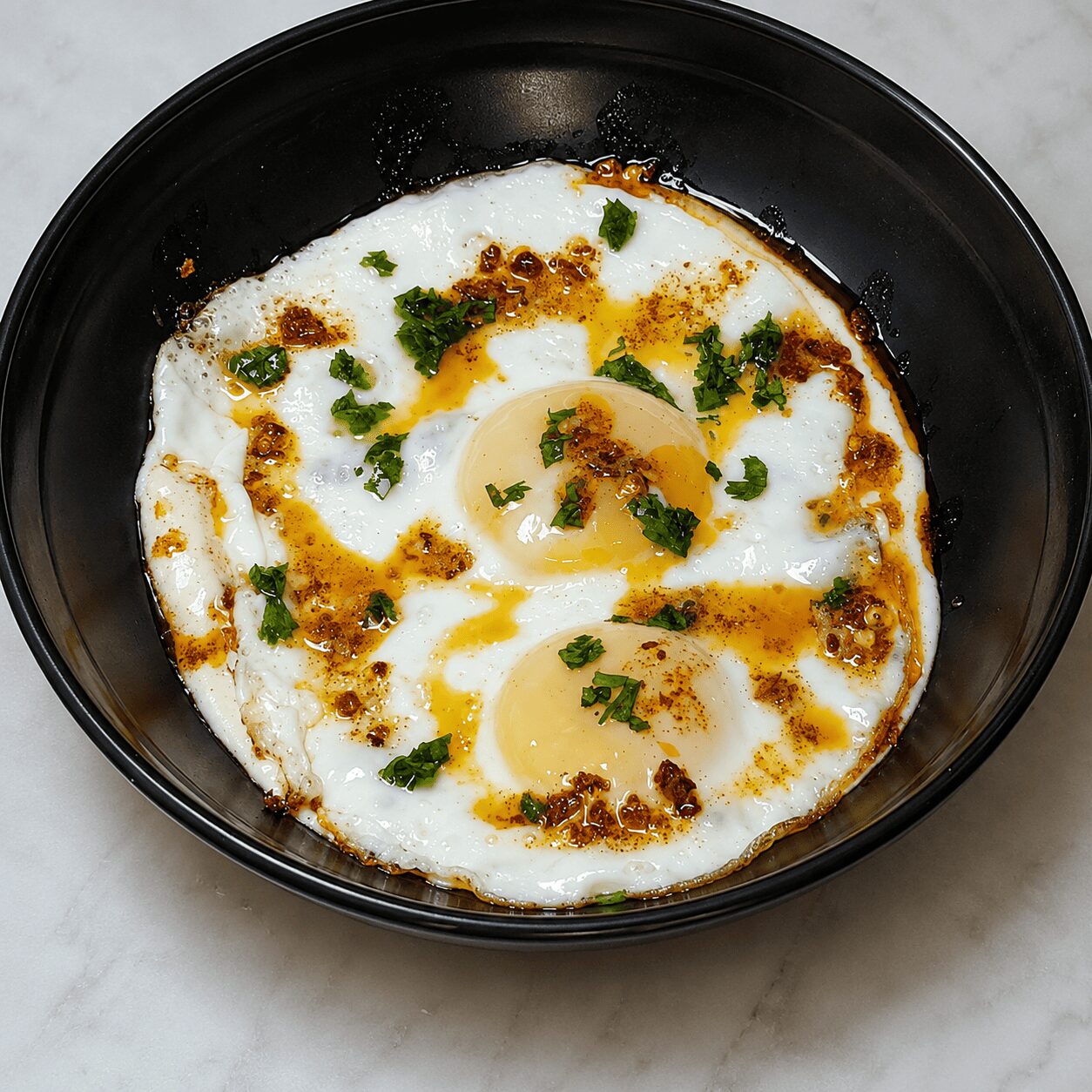
Cool, garlicky yogurt on the plate. A drizzle of herb-scented olive oil. A pool of butter that’s been sitting with chilli flakes just long enough to turn a deep, fragrant red. And on top of everything, two eggs with fully set whites and yolks that are still deliberately, unapologetically soft. That’s Turkish eggs — Çılbır — and it’s one of those dishes where the sum is considerably more than its parts.
The garlic in that yogurt is doing more work than four ingredients should reasonably be able to do — it’s the first thing people notice. Combined with the way the chilli butter blooms into the olive oil and soaks slowly into the yogurt beneath, the whole plate becomes something you’ll want to eat with bread and absolutely nothing else. For more egg recipes to explore, the site’s egg recipes collection covers everything from quick weeknight cooks to international dishes.
This recipe is demonstrated step-by-step in the Zaika Mazedaar YouTube channel — filmed and tested in a real home kitchen. The version here uses a gently-cooked egg method instead of the traditional poached egg, which makes the dish genuinely accessible for anyone who finds poaching difficult or unreliable.
What Is Çılbır (And How It Compares to Our Shakshuka)?
Çılbır (pronounced roughly “chul-BUR”) is a traditional Turkish breakfast dish: eggs served over garlicky yogurt, drizzled with spiced butter, often with fresh herbs. It appears in Ottoman culinary records as far back as the 15th century and has been part of Turkish breakfast culture for a very long time. For more on its origins and traditional presentation, The Spruce Eats has a good overview of the dish’s background and traditional context.
Çılbır is the site’s second Turkish-origin dish, after Egg Shakshuka — which takes a completely different, gravy-based approach. Both genuinely represent Turkish breakfast and egg traditions, but they are nothing alike to cook or eat. Shakshuka is a tomato-and-pepper gravy with eggs poached directly into a cooked sauce. Çılbır has no gravy and no cooking-down stage at all — it’s four separate components (garlic yogurt, herb oil, chilli butter, and softly-cooked eggs) assembled together on a plate. Same country of origin, completely different dish. Worth being clear about that for anyone exploring both.
Why This Recipe Works
Çılbır’s four-component structure looks elaborate on paper, but each component takes less than three minutes to prepare — and three of them can be made well ahead of the eggs. The yogurt base is just mixing. The herb oil is just mixing. The chilli butter is just melting. The eggs are the only time-sensitive part, and they take two minutes on low flame. If you have all three other components ready before you start the eggs, this dish is practically impossible to get wrong.
The traditional version uses poached eggs — a technique that gives a beautiful, membrane-less egg that sits cleanly in the yogurt. This recipe deliberately demonstrates an easier alternative: eggs gently cooked covered on low flame in a little olive oil, until the whites are fully set and the yolk stays soft. The result is just as good to eat, considerably more reliable to produce, and — importantly — doesn’t require the specific skill set that poaching demands. If you’d like to try the traditional poached-egg method, the site will cover that technique separately; this version is offered specifically for readers who want Çılbır without the learning curve.
One other note: unlike every gravy-style egg dish on this site, Çılbır is not a curry. There’s no masala, no cooking-down stage, no tadka. It’s an assembly dish with a very short cooking window. That distinction matters both for how you approach it and for how you’ll want to eat it — immediately, with good bread, while everything is still at the right temperature.
Ingredients
For the Garlic Yogurt Base
- 3 tbsp thick yogurt — not thin or watery; see tip below if that’s all you have
- 1 garlic clove, finely grated
- 2 pinches salt
- A little paprika powder (mild heat — black pepper or Kashmiri/degi chilli powder works as a substitute)
For the Parsley Oil
- 1 tbsp olive oil (Turkish cooking uses olive oil specifically)
- 1 tsp finely chopped fresh parsley — or fresh coriander (a direct, genuinely workable substitute)
For the Chilli Butter
- 1 tbsp unsalted butter (if using salted butter, reduce salt elsewhere in the dish accordingly)
- ½ tsp crushed red chilli flakes
- ½ tsp paprika powder (same substitutes as above apply)
For the Eggs
- A little olive oil (for the pan)
- 2 eggs
- A light sprinkle of salt
To serve: Good bread or a soft bun — Turkish eggs want something to soak up the yogurt and oils. Nothing else is needed.
Ingredient Substitutions
| Ingredient | Substitute | Effect on Taste / Texture |
|---|---|---|
| Fresh parsley | Fresh coriander (hara dhaniya) | The creator’s own suggested substitute — genuinely works; flavour is different but complementary to the yogurt base; not a compromise to apologize for |
| Paprika powder | Black pepper or Kashmiri/degi chilli powder | Black pepper adds sharpness without colour; Kashmiri chilli adds colour with minimal heat — a slightly closer match to paprika’s mild character |
| Thick yogurt | Thin yogurt, strained through a sieve until thickened | Works perfectly once strained — see tip below; don’t use thin yogurt un-strained as it makes the base watery and the dish collapses visually |
| Unsalted butter | Salted butter | Fine to use — simply reduce or skip the pinch of salt in the yogurt base to compensate |
| Olive oil (herb oil) | Any mild-flavoured oil | Olive oil is specifically traditional here and its fruity flavour contributes to the dish’s character; a neutral oil will be blander but functional |
Mise en Place Checklist
Three of the four components can be prepared completely before the eggs start. The eggs are the last thing made — always. Get everything else ready first.
- Yogurt confirmed thick — or already straining if needed
- Garlic clove finely grated, ready to mix into yogurt
- Parsley (or coriander) finely chopped
- Olive oil measured for both the herb oil and the egg pan
- Butter measured and in a small saucepan
- Chilli flakes and paprika measured together
- Yogurt brought to room temperature (not fridge-cold — it should be cool but not cold when plated)
- Serving plate or bowl ready on the counter before the eggs start
- Bread ready to serve immediately once the eggs are done
Step-by-Step Method
Four short components. The first three are made in sequence and set aside. The eggs are made last, always — they are the most time-sensitive part.
Component 1 — Garlic Yogurt Base
Mix the garlic yogurt
Add 3 tbsp thick yogurt to a small bowl. Finely grate in 1 garlic clove and add it directly to the yogurt. Add 2 pinches of salt and a little paprika powder. Mix everything together well until fully combined and smooth. Set aside at room temperature — not in the fridge.

Component 2 — Parsley Oil
Mix the herb oil
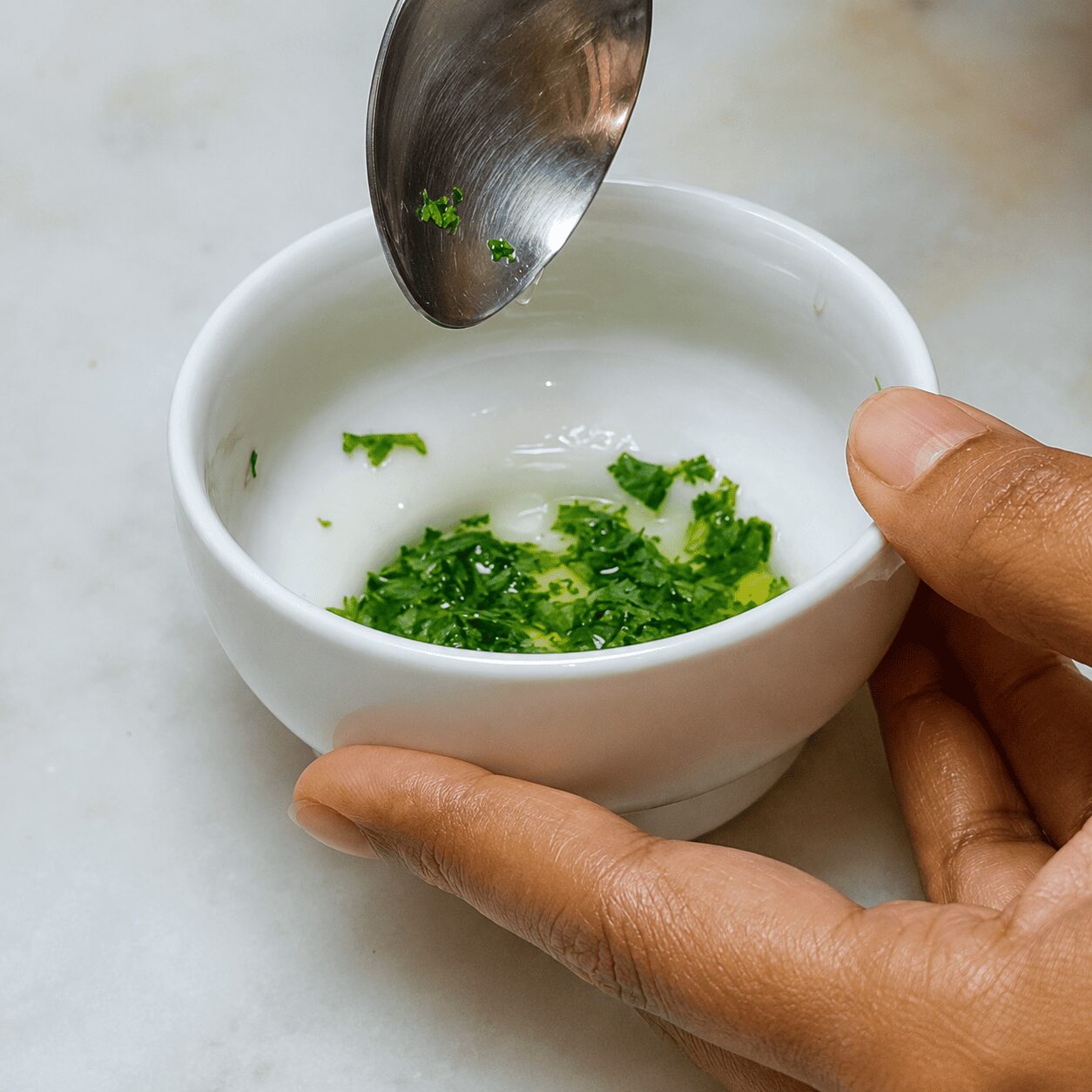
Combine 1 tbsp olive oil and 1 tsp finely chopped fresh parsley (or coriander) in a small bowl or ramekin. Mix and set aside. This is purely an infusion — the oil sits with the herb long enough to absorb its fragrance before it goes on the plate.

Component 3 — Chilli Butter
Melt the butter with chilli and paprika
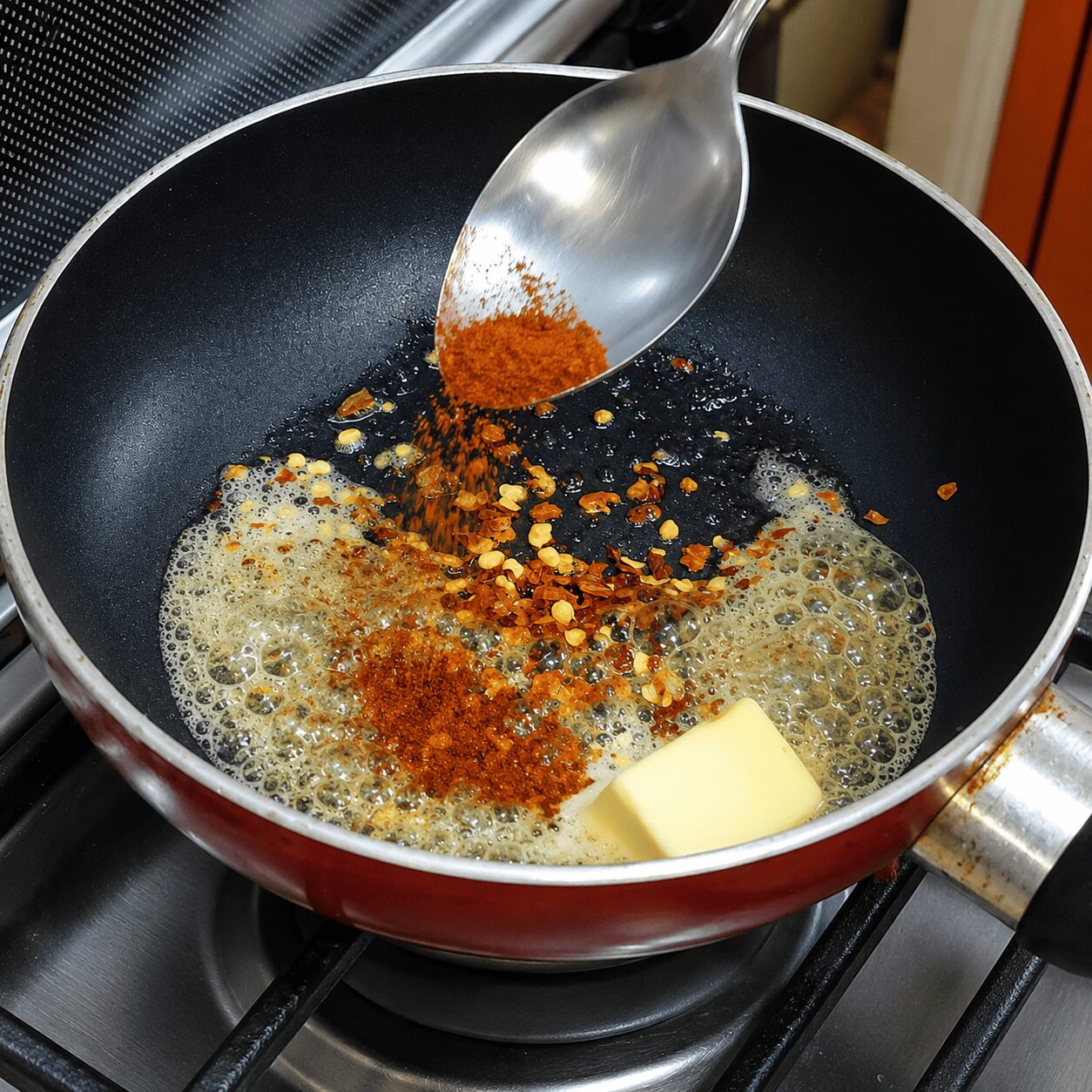
Place 1 tbsp unsalted butter in a small saucepan over low flame. Once the butter has melted, add ½ tsp crushed red chilli flakes and ½ tsp paprika powder. Stir once and cook only until everything is combined and the butter has taken on a deep red-orange colour. Turn off the heat immediately. Do not let it brown or burn.

Component 4 — The Eggs
Gently cook the eggs — covered, on low flame
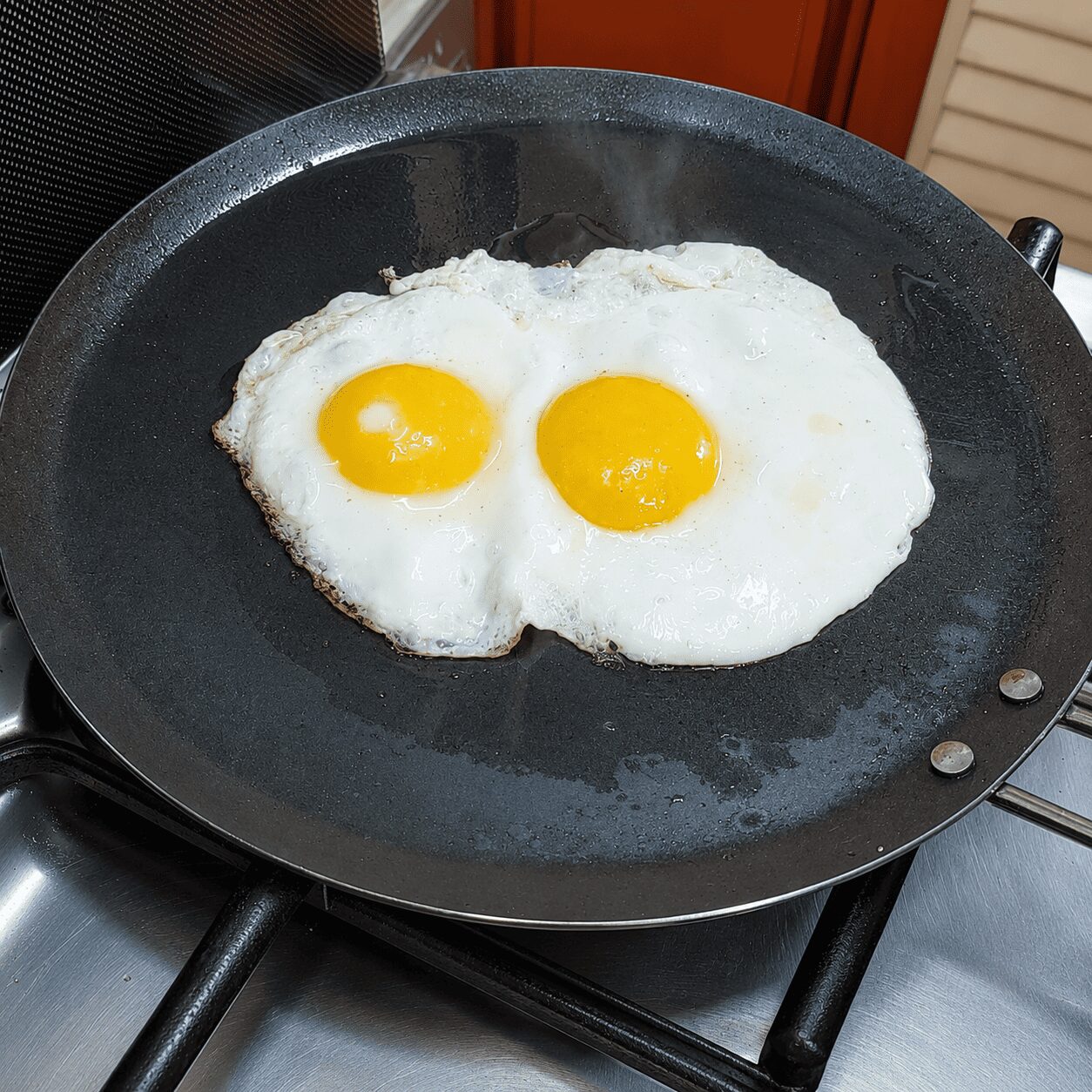
Heat a little olive oil in a small pan over low flame. Once warm, crack in 2 eggs directly. Add a light sprinkle of salt. Cover the pan and cook on low flame for 2 minutes. The whites should be fully set; the yolks must remain soft and still slightly runny. Do not cook further than this — the soft yolk is not incidental, it is the entire point of this dish’s texture.

Assembly
Spread the yogurt on the plate
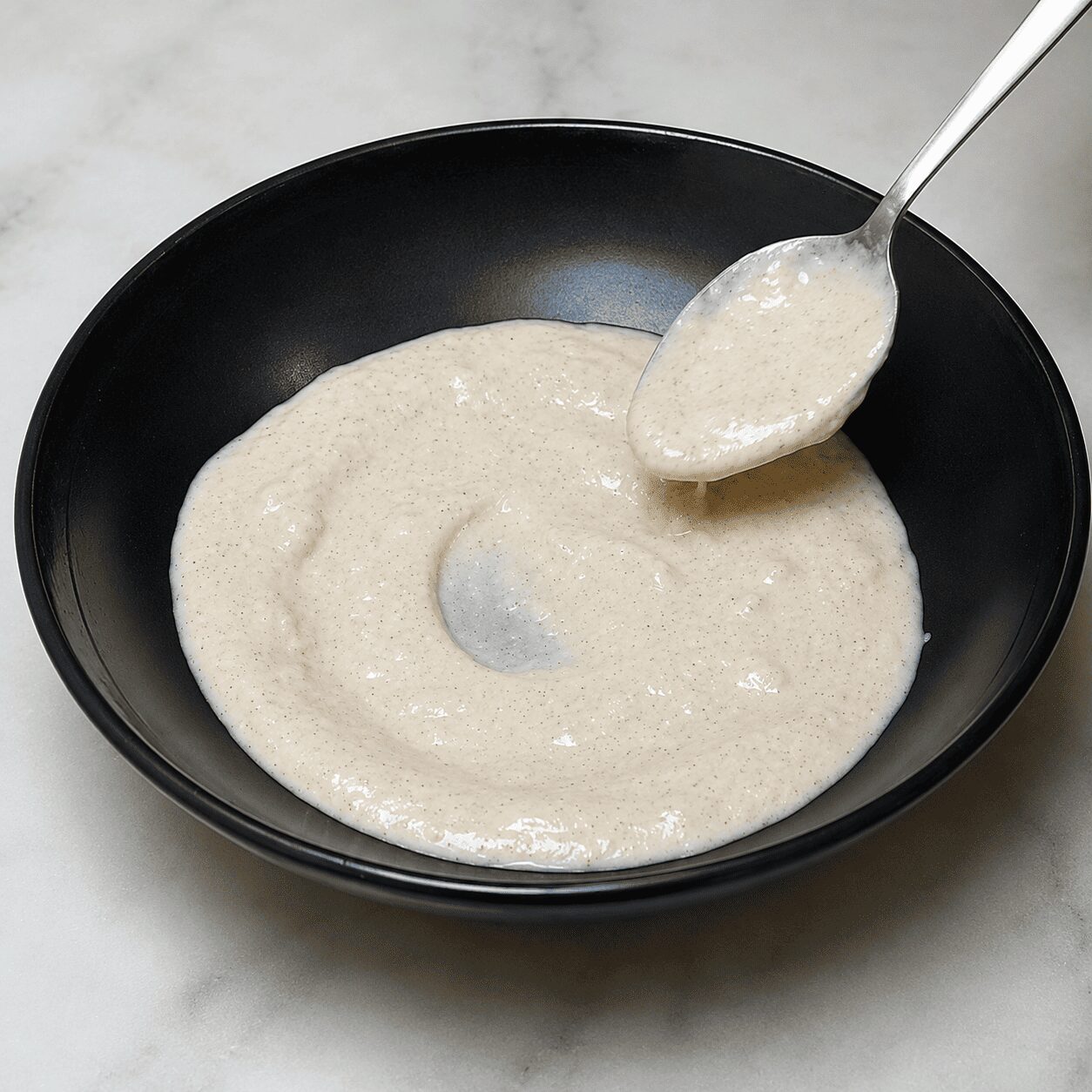
Spoon the garlic yogurt onto your serving plate or bowl. Use the back of a spoon to spread it across the surface in an even layer — not thick in the centre and bare at the edges, but distributed so every bite will have yogurt beneath it. This is the base the rest of the dish sits on.

Drizzle both oils over the yogurt, add eggs, drizzle again
Drop the parsley oil across the yogurt in small drops — not one big pour in the centre, but scattered lightly across the surface. Do the same with the chilli butter. Then place the two soft-cooked eggs on top of the yogurt. Finally, drizzle a little of both the parsley oil and the chilli butter directly over the eggs themselves. Serve immediately with bread.

5 Things to Remember for Perfect Turkish Eggs (Çılbır)
- Use thick yogurt — or strain thin yogurt before you start; watery yogurt makes the dish collapse
- Prepare all three other components before you start the eggs — the eggs take 2 minutes and cannot wait
- Cook the eggs on low flame, covered — the steam does the work; high heat toughens the whites and risks overcooking the yolk
- Melt the chilli butter gently and stop immediately once combined — overheated butter goes bitter
- Assemble and serve immediately — this dish does not wait; the soft yolk and warm oils on cool yogurt are the whole point
The Two Mistakes That Most Often Affect This Dish
Using thin yogurt without straining it.
Thin yogurt on the plate looks fine for about 30 seconds — and then the warm eggs hit it and it becomes a watery pool. The structural integrity of the base is gone, and the whole dish separates visually and texturally. It’s an easy fix: strain it first. Twenty minutes through a sieve is all it takes. There’s no reason to let thin yogurt be a blocker — just plan for it.
Starting the eggs before the other three components are fully ready.
The eggs are done in two minutes and need to go straight to the plate from the pan. If the yogurt isn’t spread, the oils aren’t ready, and the butter is still solidifying when the eggs come off the heat, you either rush the plating and make a mess or wait and let the eggs overcook. Get everything else fully prepared — yogurt spread, oils measured, butter melted and off the heat — and only then put the eggs on.
For Beginners
This gently-cooked egg method is intentionally easier than poaching — don’t feel like you’re missing out by using it. Poached eggs are the traditional choice for Çılbır, but they require a specific skill set and particular water conditions to do reliably. This covered low-flame method produces a set white and a soft, runny yolk through steam, which is everything the dish needs. If this is your first time making Turkish eggs, the covered method is the one to start with. Master the dish first; explore poaching separately if you’re curious.
For Confident Home Cooks
If you’re comfortable with poaching, try the traditional method for a closer match to Çılbır’s classic presentation. A poached egg has no crispy edges and sits very cleanly in the yogurt — the texture is slightly different from the covered method and arguably more elegant. Add a splash of white vinegar to gently simmering water, create a gentle whirlpool, and lower a cracked egg in from a small bowl. Two to three minutes for a set white with a runny yolk. For both the technique rationale and a walkthrough of the process, Serious Eats has a thorough guide to poaching eggs reliably.
What to Serve Turkish Eggs With
Bread. That’s it — and that’s not limiting, it’s the whole point. The yogurt and oils need something to carry them, and the combination of garlic-scented yogurt, chilli butter, and soft egg was always designed to be eaten with bread in hand. A soft bun works well; so does a crusty white loaf with some pull to it. Toasted sourdough is excellent if you want more texture. What you want to avoid is anything very dense or heavily flavoured — the dish itself is doing a lot, and neutral, absorbent bread is the right companion. For another quick, pan-first egg breakfast, our Spanish Garlic Fried Eggs is worth exploring next.
Storage & Make-Ahead
| Situation | Guidance |
|---|---|
| Eating immediately | Always the best option — serve straight from the pan; the soft yolk and warm-meets-cool contrast are central to the dish |
| Storing leftovers | Not recommended — the eggs continue to cook in residual heat and the yolk sets firm; the yogurt base weeps when refrigerated and the assembled dish doesn’t reheat well |
| Making ahead (partially) | The yogurt base and herb oil can be made several hours ahead and kept at cool room temperature; the chilli butter can be made ahead and gently rewarmed. Only the eggs must be made fresh — immediately before serving |
| Reheating | Not recommended for the assembled dish; if you must, gently warm leftover eggs in a covered pan on very low heat for 1 minute only — the yolk will be fully set and the texture different, but the dish remains edible |
This is genuinely a make-and-eat-immediately dish. Plan the components ahead if needed, but always cook the eggs fresh.
Myth vs. Fact: Do Turkish Eggs Have to Be Poached?
You can’t make proper Çılbır without poached eggs — if the eggs aren’t poached, it isn’t the real dish.
Traditionally, yes — Çılbır is made with poached eggs, and that gives the dish a very specific, clean, membrane-free texture. But the reason poached eggs work in Çılbır is not poaching for its own sake — it’s a set white and a runny yolk, cooked without any fat that might interfere with the yogurt base below. A covered, gently steam-cooked egg achieves both of those things. It’s a different method to the same end. The creator of this recipe explicitly chose this approach for accessibility and explicitly offered to demonstrate poaching separately — that’s an honest framing, not an apology. If your soft egg has a fully set white and a still-runny yolk, you have made Çılbır in all the ways that matter on the plate.
Nutrition Snapshot (Estimated per serving — 1 person)
| Nutrient | Estimated Amount |
|---|---|
| Calories | ~280–340 kcal |
| Protein | ~13–16 g |
| Fat | ~22–26 g |
| Carbohydrates | ~5–8 g |
| Sodium | Varies with salt added |
Figures are estimated and will vary based on yogurt fat content, exact oil and butter quantities, and egg size. These are not a substitute for individualised nutritional advice. Per-egg nutritional data is available via USDA FoodData Central; yogurt data is available at the same source.
Note on soft/runny egg yolks: this recipe deliberately keeps the yolk soft. If you are immunocompromised, pregnant, elderly, or cooking for young children, a fully cooked yolk is advisable. The USDA FSIS egg safety guidance covers safe cooking temperatures for eggs in detail.
Frequently Asked Questions
What is Çılbır (Turkish eggs)?
Çılbır is a traditional Turkish breakfast dish — eggs served over garlicky yogurt and drizzled with spiced butter. It appears in Ottoman culinary records as far back as the 15th century and has been part of Turkish breakfast culture for a very long time. This recipe demonstrates an accessible home version using gently steam-cooked eggs instead of the traditional poached ones. The site’s egg recipes collection has more dishes from different traditions, including our Afghani Egg Curry.
Do I have to poach the eggs for this recipe?
No. The traditional Çılbır uses poached eggs, but the goal is a set white and a soft, still-runny yolk — and a covered low-flame method achieves exactly that, through steam rather than poaching liquid. This recipe deliberately demonstrates the easier method and the creator explicitly offered to cover poaching separately for anyone who wants to try the traditional approach. If your egg has a set white and a runny yolk, you have made what this dish needs.
Can I use coriander instead of parsley?
Yes — the creator herself suggests it as a direct substitute. Fresh coriander in the herb oil gives a different flavour from parsley (more aromatic, slightly citrusy) but it’s genuinely complementary to the garlic yogurt base and the chilli butter. It’s not a compromise; it’s a regional adaptation that works well. Parsley is the traditional choice; coriander is a perfectly good one for anyone cooking in a kitchen where parsley isn’t easily available.
What if I only have thin, watery yogurt?
Strain it. Set a fine sieve or a piece of muslin over a bowl, add the thin yogurt, and leave it for 20–30 minutes to let the excess water drain through. What remains in the sieve is thick, creamy yogurt — exactly what you need. This is the same process used to make Greek-style yogurt at home. Don’t skip this if your yogurt is watery; thin yogurt on the plate will separate when the warm eggs hit it and the dish won’t hold together.
Can I use black pepper instead of paprika?
Yes. Black pepper adds heat and sharpness without contributing colour, so the finished dish will look paler (no orange-red hue in the butter or yogurt). Kashmiri or degi chilli powder is a closer match to paprika — similar mild heat, similar deep colour — and the creator specifically mentions it as an alternative in the video. Regular red chilli powder also works if you want more heat, but go carefully.
How is this different from shakshuka?
Both are genuinely Turkish in origin, but they are completely different dishes. Shakshuka is a tomato-and-pepper gravy with eggs cooked directly into a simmered sauce — rich, warming, and heavily spiced. Çılbır has no gravy and no simmering at all: it’s four quickly assembled components (yogurt, herb oil, chilli butter, and softly-cooked eggs) layered on a plate and eaten immediately. One is a cooked-down sauce dish; the other is an assembly dish. The cooking methods, ingredients, textures, and eating experiences are entirely different.
What bread goes best with Turkish eggs?
Soft, neutral bread that absorbs well — a soft white bun, a simple white loaf, or toasted sourdough are all excellent. You want bread that carries the yogurt and oils without competing with them. Dense, very flavoured breads (like rye or heavily seeded loaves) tend to overwhelm the delicate balance of the dish. Turkish simit (sesame bread rings) are the traditional accompaniment if you can find them. For another quick egg breakfast to keep in rotation, try our Butter Garlic Egg.
Can I make any part of this ahead of time?
Three of the four components can be made ahead: the garlic yogurt base (keep at cool room temperature up to a few hours, or refrigerate up to a day and bring back to room temperature before using); the herb oil (lasts well at room temperature for a few hours); the chilli butter (make ahead and gently rewarm before drizzling). Only the eggs must be made fresh, immediately before serving. This means the actual cooking time once you sit down to make this is literally two minutes — everything else can be handled well in advance. This is one of the most make-ahead-friendly dishes on the site, despite being a dish that doesn’t technically store well once assembled.
Conclusion
Çılbır is a reminder that a few well-chosen ingredients, handled simply and in the right order, can produce something genuinely impressive. Garlic yogurt, herb oil, chilli butter, and a soft egg — nothing complicated in any single component, and together they become one of the more interesting breakfast dishes available to a home cook.
Six things to remember: use thick yogurt, or strain thin yogurt first; parsley or coriander both work well for the herb oil; melt the chilli butter just until combined, then stop; have all three components fully ready before starting the eggs; cook the eggs only until the white sets and the yolk stays soft; and then assemble and serve immediately, with good bread. That’s the whole recipe in six lines.
For a weekend brunch with a bit of international character, this is one of the best options on the site.
Leave a Reply