

Zaika Mazedaar · Gujarati Breakfast & Egg Recipes
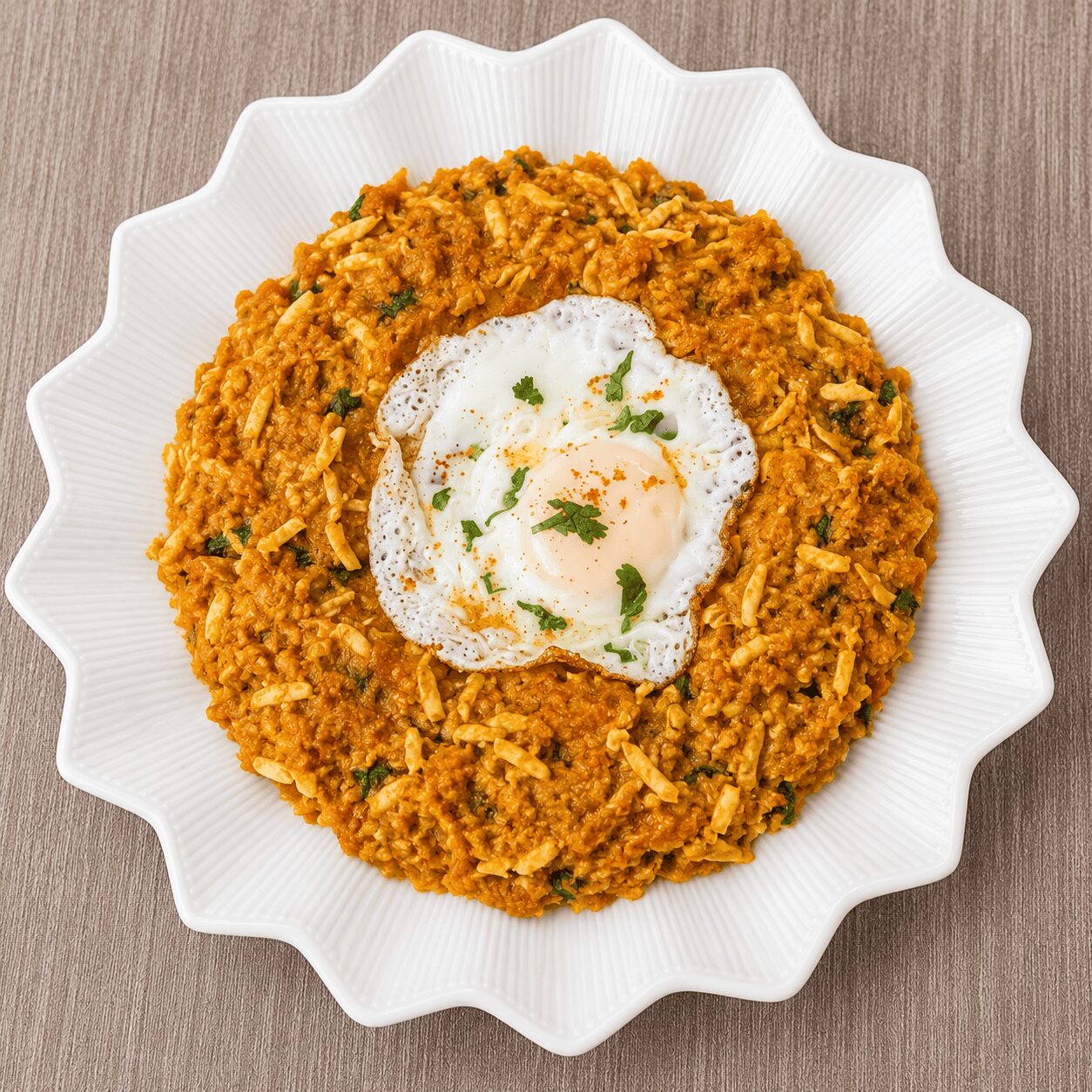
Surti-style anda ghotala — soft sautéed onion, mashed pav bhaji masala, and grated boiled eggs folded into one glossy, mixed-up breakfast bowl.
The name says it all — ghotala means a mix-up, a jumble, and that’s exactly what happens to the onion, tomato, and egg here. Everything gets mashed and mixed until you can’t pick out a single piece on its own, and somehow that’s the entire point.
This recipe is demonstrated step-by-step in our video on the Zaika Mazedaar channel, filmed and cooked in a real kitchen — not assembled from recipe databases. It’s a quick, anytime dish: nashta with parathas (our Anda Paratha Roll recipe pairs especially well), a fast after-school snack, or an easy egg-for-dinner night.
What Is Anda Ghotala?
Anda ghotala, also known as Surti egg ghotala, is a Surti (Surat, Gujarat) street-food-style breakfast dish built on a mashed, pav-bhaji-spiced onion-tomato base with hard-boiled eggs grated directly into it. Rather than chopping the eggs the way you would for a standard bhurji, the eggs are grated on a box grater — fine egg “confetti” that blends almost seamlessly into the masala instead of sitting in separate chunks.
The dish reflects the Surti street-food style of mashed, mixed egg dishes rather than being a generic catch-all “Indian egg recipe” — the pav bhaji masala, the deliberate mash, and the grated egg are all specific, regional choices, not shortcuts.
Why This Recipe Works
Two small technique choices do almost all of the work here, and both come straight from the transcript rather than a generic recipe template.
First: the onion stays soft, never browned. Most egg curries push the onion toward golden or deep brown — the way our Anda Dum Biryani recipe does, for instance. Ghotala doesn’t — the onion is sautéed only until it softens, which keeps the base light and lets the pav bhaji masala stay the dominant flavour rather than competing with a caramelised onion note.
Second: grated eggs, not chopped. Grating the hard-boiled eggs straight into the mashed masala is the defining “ghotala” move. It distributes egg through the entire dish instead of leaving it in bite-sized pieces, and it’s the single biggest textural difference between this and a familiar scrambled-egg bhurji. Our Egg Kebab Curry recipe takes egg reinvention even further, reworking the egg itself into a rolled, sliced omelette.
Ingredients
For the Masala Base
- 2 tbsp oil
- 2 tbsp butter (optional, but it noticeably enhances flavour)
- 2 large onions, finely grated
- 2 large tomatoes, seeds removed, finely chopped
- 1 tbsp ginger-garlic paste
- 1 tsp green chilli paste (or crushed green chillies)
- 2–3 tbsp water, added once the masala is mashed
Whole/Ground Spices
- 1 tsp pav bhaji masala
- ½ tsp red chilli powder, adjustable to taste
- ¼ tsp turmeric powder
- ¾ tsp salt, adjustable to taste
For the Eggs
- 3 hard-boiled eggs, grated (not chopped)
- 1 additional whole egg, for the kadhai-serve style — cracked into a well
- 1 separately fried egg, for the serving-dish style
For Garnish
- Fresh coriander (hara dhania), chopped
- A little extra red chilli powder, for colour on top
- A few coriander leaves, for the final garnish
Ingredient Substitutions
| Ingredient | Substitute | Effect on Taste / Texture |
|---|---|---|
| Pav bhaji masala | Coriander powder + garam masala + a pinch of amchur | A near substitute, but loses the distinct tangy-spiced pav bhaji signature flavour |
| Butter | Extra oil | Lighter version; loses some of the rounded, restaurant-style richness |
| Green chilli paste | Finely crushed fresh green chillies | Slightly sharper, fresher heat; nearly identical result |
| Ginger-garlic paste | Fresh grated ginger + garlic, equal parts | Stronger raw flavour; fry a little longer so it mellows |
| Fresh coriander | Skip, or use a smaller amount of dried | Loses some brightness; the dish still works without it |
Mise en Place Checklist
Have everything below ready before the pan goes on the flame — this recipe moves fast once it starts.
- 2 onions, finely grated
- 2 tomatoes, seeded and finely chopped
- Ginger-garlic paste and green chilli paste measured out
- Pav bhaji masala, red chilli powder, and turmeric measured into one small bowl
- 3 eggs hard-boiled, cooled, and peeled
- Box grater on hand, ready for the eggs
- Fresh coriander washed and chopped
- A masher, ready next to the kadhai
- Decide in advance: kadhai-serve or serving-dish style
Step-by-Step Method
Heat the oil and butter
In a kadhai, heat 2 tbsp oil along with 2 tbsp butter over medium flame. The butter is optional, but it rounds out the flavour noticeably — skip it only if you want a lighter version.
Sauté the grated onion
Once the butter has melted into the oil, add the 2 finely grated onions. Sauté on medium flame just until the onion turns soft — not golden brown, not caramelised. This lighter cook is intentional and is what keeps ghotala distinct from gravy-style egg recipes.

Add and mash in the tomato
Add the 2 finely chopped, seeded tomatoes. Cook on medium flame, mashing the tomato into the onion as it softens, until you can no longer tell the onion and tomato apart as separate pieces.

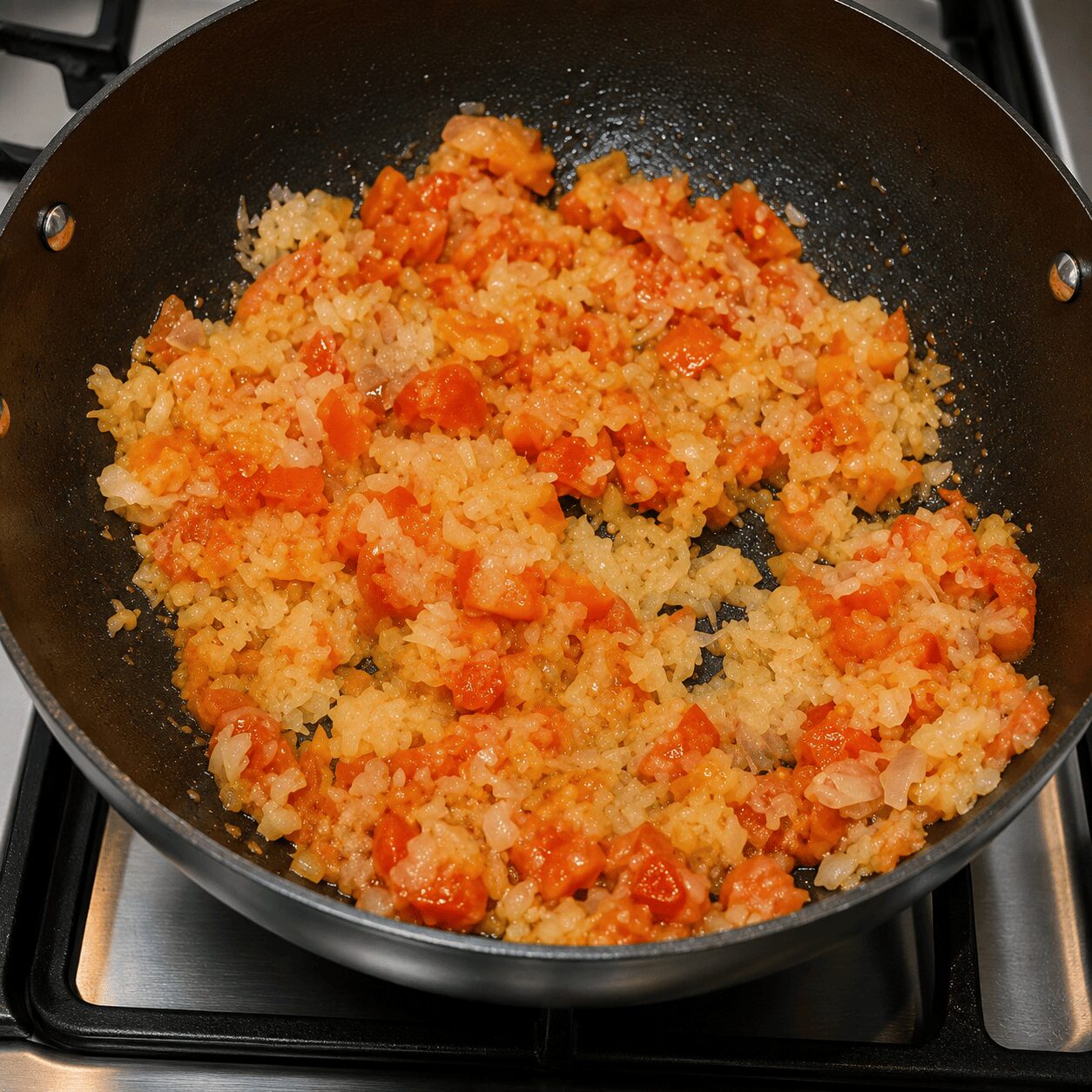
Add ginger-garlic and green chilli paste, then cover and cook
Stir in 1 tbsp ginger-garlic paste and 1 tsp green chilli paste. Mix well, lower the flame, cover the kadhai, and let it cook gently for 3–4 minutes until the tomatoes have softened completely.
Add the spices and mash, pav-bhaji style
Uncover and mix once. Add 1 tsp pav bhaji masala, ½ tsp red chilli powder, and ¼ tsp turmeric powder. Now mash everything thoroughly with a masher — the same technique used for pav bhaji — until the onion and tomato are completely homogenous, with no separate pieces visible.
Keep mashing on slow flame. The masala is ready for the next step once it’s visibly mashed smooth and the oil is separating at the edges.

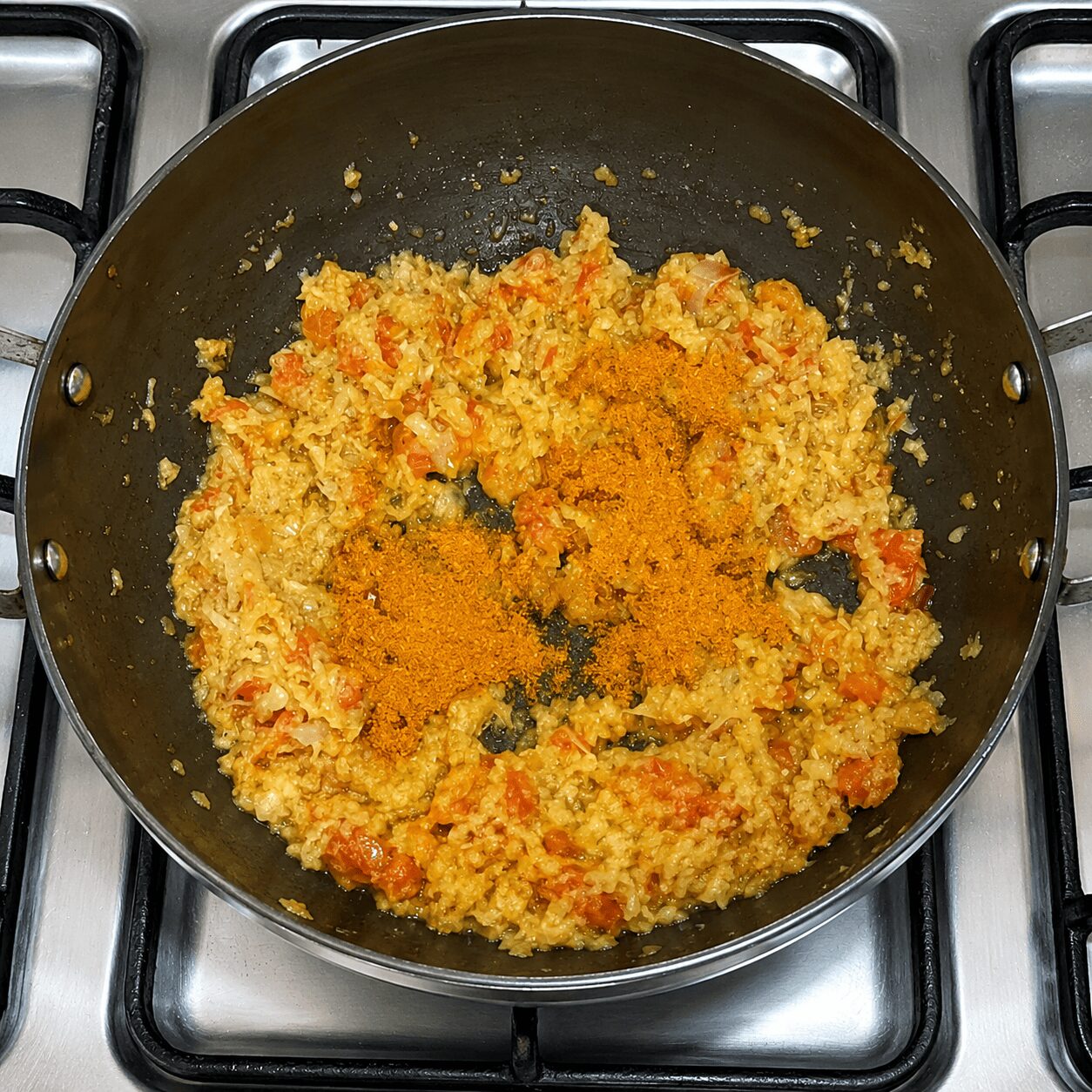
Loosen with water and add salt
Add a little water and mix well. Then stir in ¾ tsp salt, adjusting to your taste. Mix once more so the salt is evenly distributed through the mashed masala.
Grate the boiled eggs into the masala
Take the 3 hard-boiled eggs and grate them directly into the masala using a box grater, instead of chopping them. This is the defining “ghotala” technique — it’s what gives the dish its name and its mixed-up texture.
Mix the grated egg in gently and lightly by hand, not vigorously, so it doesn’t turn to total mush.

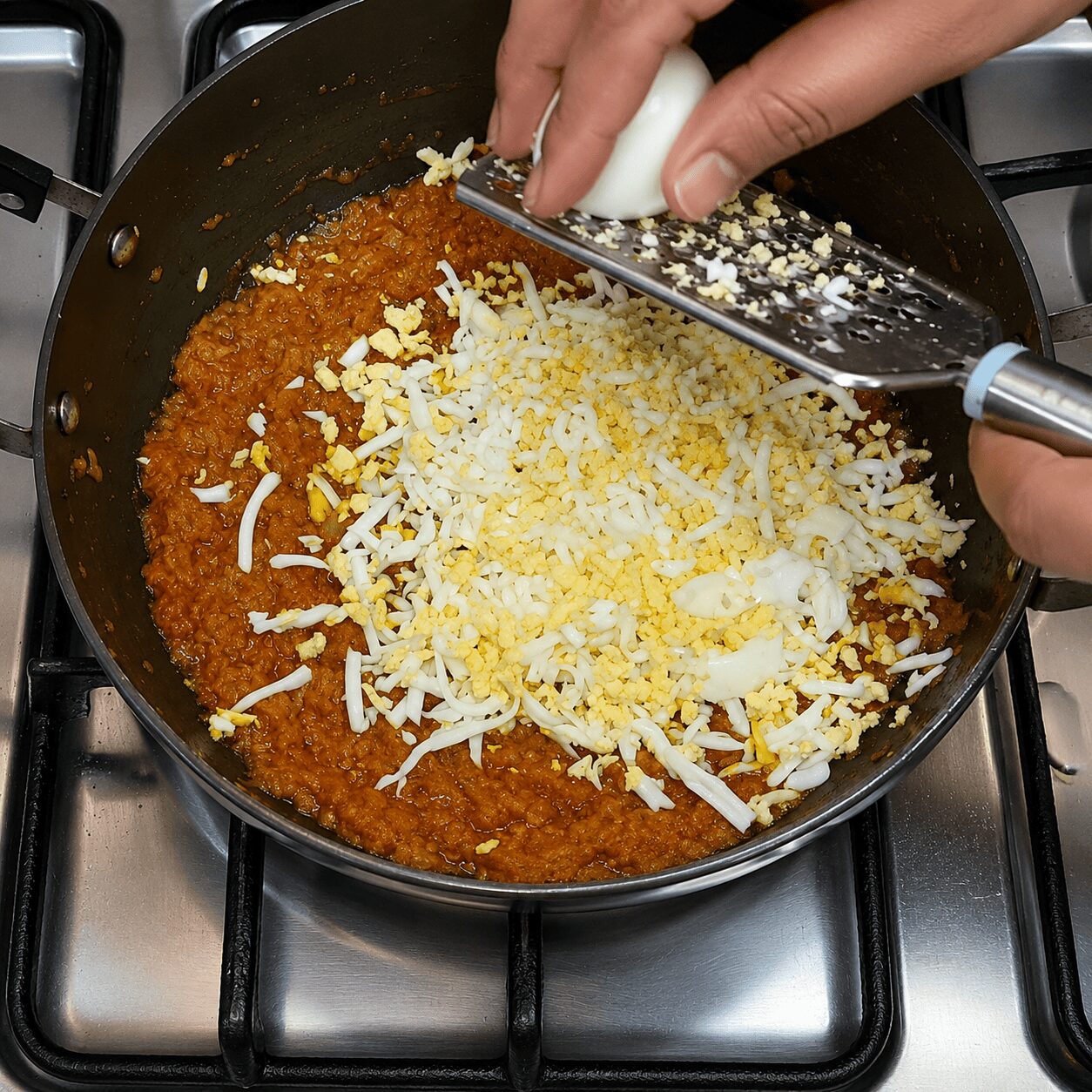
Add water and coriander
Add 2–3 tbsp water and mix well, so all the masala coats the grated egg evenly. Scatter in the fresh coriander and mix once more. The main ghotala mixture is now ready.
Choose your serving style — Style A: straight from the kadhai
Using a spoon, make a few small wells/gaps in the mixture directly in the kadhai. Crack a whole egg into each well. Top with a little red chilli powder and coriander leaves for a yellow-red-green colour contrast.
Cover and cook on low flame for 3–4 minutes, until the egg reaches a “half-fry” texture — set but with the yolk not fully hardened. Bring the kadhai straight to the table.

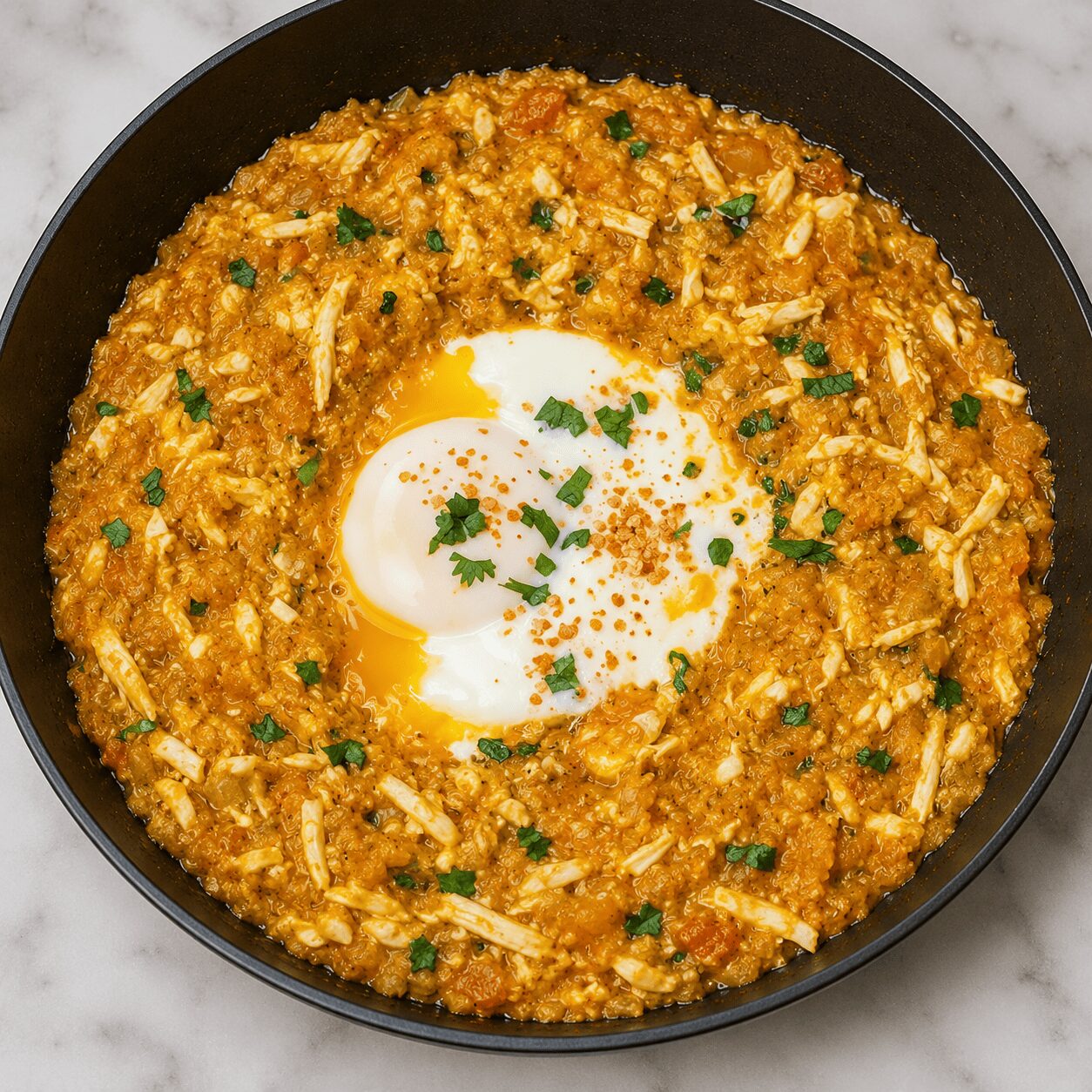
Style B: plated with a fried egg on top
Spread the ghotala mixture around the edges of a serving dish in a ring. Separately fry one egg in very little oil, and place it in the centre. Garnish with a little chilli powder and coriander on top.
Either way, your anda ghotala is ready to eat.

5 Things to Remember for Perfect Anda Ghotala
- Keep the onion soft — never push it to golden brown
- Mash thoroughly, pav-bhaji style, until onion and tomato disappear into one texture
- Grate the boiled eggs — don’t chop them
- Mix the grated egg in gently by hand, not vigorously
- Pick your serving style — wells with a cracked egg, or plated with a fried egg on top
The One Mistake That Ruins Anda Ghotala
Browning the onion, or chopping the eggs instead of grating them.
Either one quietly turns this into a different dish. A browned onion pushes the flavour toward a deeper, gravy-style base instead of the light, mashed pav-bhaji profile ghotala is built on. And chopped eggs sit as separate chunks rather than blending through the masala — which is, after all, what “ghotala” (a mix-up) is named for.
Keep the flame moderate on the onion, mash the masala properly before the eggs go in, and reach for the box grater instead of a knife.
For Beginners
Mash thoroughly — the texture should be fully homogenous, not chunky. If you can still pick out a distinct piece of onion or tomato after mashing, keep going a little longer on low flame before the eggs go in. It’s the one step worth being patient with.
For Confident Home Cooks
Try the whole-egg-cracked-into-a-well kadhai-serve style for a more dramatic presentation — the yellow yolk against the red-flecked masala and green coriander makes for a genuinely good-looking plate, and it takes only a few extra minutes covered on low flame.
What to Serve Anda Ghotala With
Anda ghotala is at its best with hot parathas — the soft, layered bread is the classic pairing for a Surti-style breakfast. Toasted bread slices work well too, especially for a quicker morning. It also holds up nicely as an easy breakfast-for-dinner (“brinner”) option on a busy weeknight.
If you’re packing it for an after-school snack, the kadhai-serve style travels less well than the serving-dish version — plan accordingly if it needs to sit before eating.
Storage, Reheating & Make-Ahead
| Situation | Guidance |
|---|---|
| Fridge storage | Best eaten fresh; if needed, refrigerate briefly in an airtight container and eat within a day |
| Freezing | Not recommended — the mashed egg-and-masala texture degrades on thawing |
| Reheating | Reheat gently on low flame with a splash of water; avoid high-power microwave reheating, which can toughen the egg |
| Make-ahead strategy | The masala base (through step 6) can be made ahead and refrigerated briefly; grate in fresh eggs and finish just before serving for the best texture |
Because this dish contains mashed boiled egg, it’s a good idea to treat it like any cooked-egg dish — eat fresh or refrigerate briefly, and reheat gently rather than letting it sit at room temperature for long.
Myth vs. Fact: Is Anda Ghotala the Same as Egg Bhurji?
Anda ghotala is just another name for egg bhurji.
Not quite. A standard egg bhurji typically scrambles raw egg directly into a sautéed onion-tomato mix. Anda ghotala uses hard-boiled eggs, grated (not chopped) into a masala that’s been mashed pav-bhaji style until completely smooth. The name itself — “ghotala,” a mix-up or jumble — describes that deliberate mashing of onion, tomato, and grated egg into one texture, which is a meaningfully different technique and result from a quick bhurji scramble. If you’d like another breakfast egg dish with a completely different technique, our Turkish Eggs Cilbir recipe is worth trying too.
Nutrition Snapshot (Estimated per serving)
| Nutrient | Estimated Amount |
|---|---|
| Calories | ~220–260 kcal |
| Protein | ~9–11 g |
| Fat | ~16–19 g |
| Carbohydrates | ~9–12 g |
| Sodium | Varies with salt added |
Figures are estimated and will vary based on exact oil/butter quantity, egg size, and serving style chosen. These are not a substitute for individualised nutritional advice. Per-egg nutritional data is available via USDA FoodData Central.
Frequently Asked Questions
What is anda ghotala?
Anda ghotala, also called Surti egg ghotala, is a Surti (Surat, Gujarat) street-food-style breakfast dish made from a mashed pav-bhaji-spiced onion-tomato base with hard-boiled eggs grated directly into it. The name “ghotala” means a mix-up or jumble — describing how everything is mashed and mixed until no single ingredient is separately distinguishable.
How is anda ghotala different from egg bhurji?
Egg bhurji scrambles raw egg directly into a sautéed onion-tomato mix. Anda ghotala instead uses hard-boiled eggs, grated rather than chopped, folded into a masala that’s been thoroughly mashed pav-bhaji style. The result is a more uniform, mixed-up texture rather than the looser scramble you’d get with a bhurji.
What does “ghotala” mean?
“Ghotala” literally translates to a mix-up, scramble, or jumble. In this dish, it refers to the technique of mashing the onion, tomato, and spices, then grating boiled eggs into that mashed base — everything gets mixed together until it’s no longer possible to pick out a single ingredient on its own.
Can I make this without pav bhaji masala?
You can get close with a mix of coriander powder, garam masala, and a small pinch of amchur, though you’ll lose some of the distinct tangy-spiced flavour that pav bhaji masala specifically brings. If pav bhaji masala is available, it’s worth using for an authentic result. For a differently spiced, heartier egg dish, our Chicken Egg Dak Bungalow recipe is worth a look.
Should I chop or grate the boiled eggs?
Grate them, using a regular box grater. Grating is the defining technique of anda ghotala — it distributes the egg through every spoonful of masala instead of leaving it in separate chopped pieces, which is what gives the dish its name and its characteristic mixed texture.
Can I serve this with a whole fried egg on top?
Yes — that’s one of the two serving styles demonstrated in the original recipe. Spread the ghotala mixture in a ring around a serving dish and place a separately fried egg, cooked in very little oil, in the centre, garnished with a little chilli powder and coriander. Our Butter Garlic Egg recipe uses a similar quick-fried-egg approach if you want to explore that technique further.
Is anda ghotala spicy?
It’s mildly spiced by default — ½ tsp red chilli powder and 1 tsp green chilli paste, both adjustable. Reduce either if you’d like it milder, or add an extra green chilli if you prefer more heat. The pav bhaji masala itself contributes warmth rather than sharp heat.
What’s the best bread or roti to pair with it?
Hot parathas are the classic pairing for a Surti-style breakfast, and toasted bread slices work well for a quicker morning. Plain roti is a simpler, equally good option if that’s what you have on hand. If you’d rather pair it with a gravy-style dish for a bigger spread, our Egg Malai Curry recipe is a good addition.
Conclusion
Anda ghotala earns its playful name honestly — every element here, onion, tomato, spice, and grated egg, gets mashed and mixed until it’s genuinely one dish rather than several ingredients sitting next to each other. It reflects the Surti street-food style of mashed, mixed egg dishes, and it comes together in well under half an hour.
Keep the onion soft rather than browned, mash the masala properly before the eggs go in, grate rather than chop the eggs, and mix gently once they’re folded through. From there, it’s just a question of which serving style you’re in the mood for.
A genuinely quick breakfast that also works as a fast after-school snack or an easy brinner — straight from the kadhai or plated up with a fried egg on top, both ways earn the name ghotala. For more Surti and North Indian egg dishes, try our Egg White Korma recipe or Anda Aloo Salan recipe next.
Leave a Reply