

Zaika Mazedaar · North Indian Curries
A genuinely new style of egg curry — rolled, sliced omelette “kebabs” simmered in a quick, dhaba-style gravy with a butter-paneer-like finish. No boiled eggs here.
Egg curry, in most kitchens, means one thing: boiled eggs sitting in a gravy. This egg kebab curry recipe breaks that pattern entirely. The egg here isn’t boiled at all — it’s beaten, poured thin into a hot pan, rolled while still half-set into a soft log, then sliced into rounds that look and behave like little kebabs once they’re nestled into a quick, dhaba-style gravy.
This recipe is demonstrated step-by-step in our video on the Zaika Mazedaar channel, filmed and cooked in a real kitchen — not assembled from recipe databases. The creator is upfront about why this version exists: there are already plenty of boiled-egg recipes on the channel, and this one was made specifically to do something different with the egg itself.
What Is Egg Kebab Curry?
Egg kebab curry (also called anda kebab curry) is a North Indian egg curry where the egg component is a rolled, sliced omelette — styled and shaped like a kebab — rather than a whole or halved boiled egg. The omelette is beaten with onion, green chilli, and coriander, cooked only until half-set, rolled into a log while still soft, cooled, and cut crosswise into rounds. Those rounds are then simmered in a light, fast-building gravy modelled on how butter paneer or butter chicken is typically made at a dhaba.
The gravy itself is deliberately simple: onion, tomato, ginger, garlic, and green chilli softened together, blended into a paste, tempered with whole spices, and finished with cream and kasuri methi. It’s lighter and quicker than a cashew-based gravy, but it still lands with that familiar butter-paneer warmth — just built around a completely different egg format.
Why This Recipe Works (no boiled eggs here — and that’s the point)
Every other egg-gravy recipe on this site — Egg Lababdar, Egg Malai Curry, Egg Butter Masala, Anda Korma, Egg Shakshuka, Reshmi Anda Curry — uses whole or halved boiled eggs. This is the only one where the egg itself is reworked into a rolled, sliced omelette. That’s not a renamed version of an existing dish; it’s a real textural and conceptual difference, and it’s worth saying plainly rather than implying this is somehow the “best” way to do egg curry. It’s a genuinely different way to bring egg into a curry, for when you want a change from the usual.
First: the omelette is rolled while only half-cooked. This is the single technique the whole dish hinges on. If the omelette is left to fully set in the pan, it loses the flexibility to roll, and once it hits the gravy, the roll will simply unravel. Rolling it early, while the top is still slightly underdone and the edges are just starting to lift off the pan, is what holds the kebab shape together.
Second: the gravy stays deliberately light. Because the dish is built as a quick, dhaba-style butter-paneer-type base, the dry spice list is short and the chilli is kept moderate. This isn’t a heavily spiced curry — it’s meant to come together fast and taste familiar, with the omelette doing the textural work instead of the gravy doing the heavy lifting.
Ingredients
For the Gravy Base
- 1 tbsp oil (for softening the vegetables)
- 1 small onion, roughly sliced
- 1 tomato, roughly chopped
- Ginger, roughly chopped
- Garlic, roughly chopped
- 1–2 green chillies, roughly chopped
- 3 tbsp oil (for the gravy itself)
Whole Spices
- A pinch of white cumin seeds (jeera)
- 1 bay leaf (tej patta)
- 1-inch cinnamon stick (dalchini)
- 2 green cardamom pods
Dry Spices
- 1 tsp coriander powder (dhania powder)
- ½ tsp turmeric powder
- ¾ tsp red chilli powder (adjust to taste)
- Salt, to taste
For the Egg Kebabs
- 3–4 eggs (use 3–4 depending on how many servings you’re making)
- 1 small onion, finely chopped
- 1–2 green chillies, finely chopped
- Fresh coriander, finely chopped
- Salt, to taste
- Black pepper powder (optional)
- 1 tbsp milk (water works as a substitute)
- 1 tsp oil, for the pan
For Finishing
- ½ cup water (to adjust gravy consistency)
- 1 tbsp fresh cream (or malai / skimmed cream from milk)
- 1 tsp kasuri methi (dried fenugreek leaves), roasted and crushed
- Fresh coriander, for garnish
Ingredient Substitutions
| Ingredient | Substitute | Effect on Taste / Texture |
|---|---|---|
| Milk (in the egg mixture) | Water | Lightens the mixture the same way, slightly less richness in the omelette itself |
| Fresh cream | Malai / skimmed cream from milk | Nearly identical; whisk it smooth first so it blends evenly into the gravy |
| Regular/refined oil | Mustard oil | Adds a sharper, more traditional dhaba-style pungency — use per personal preference |
| Onion in the egg mixture | Skip it | Milder flavour, slightly less texture in the rolled omelette |
| Red chilli powder | Reduce or skip entirely | Keeps the gravy true to its light, dhaba-style intent with minimal heat |
Mise en Place Checklist
This dish has two prep tracks running side by side — the gravy and the egg kebabs — so getting everything measured out first matters even more here than usual.
- Onion, tomato, ginger, garlic, and green chilli roughly chopped for the base
- Whole spices measured: cumin, bay leaf, cinnamon, cardamom
- Dry spices measured into one small bowl
- Eggs cracked into a bowl, with finely chopped onion, chilli, coriander, and salt ready to beat in
- Milk measured (1 tbsp), or water as a substitute
- Cream measured (1 tbsp), or malai whisked smooth
- Kasuri methi roasted and crushed, ready to add
- A pan for the omelette and a kadhai for the gravy, both ready on the hob
Step-by-Step Method
Soften the onion-tomato base
Heat 1 tbsp oil in a pan. Add the sliced onion, chopped tomato, ginger, garlic, and green chilli all together. Cover and cook on medium flame for 4–5 minutes, stirring once or twice, until the tomato turns completely soft and the onion goes soggy and mushy. There’s very little oil or water here, so don’t skip the occasional stir — that’s what keeps everything from catching at the bottom.

Cool and blend into a paste
Tip the softened mixture onto a plate and let it cool slightly. Once cool enough to handle, blend it into a fine paste using as little water as possible — you want a thick, concentrated paste, not a watery purée.
Temper the whole spices
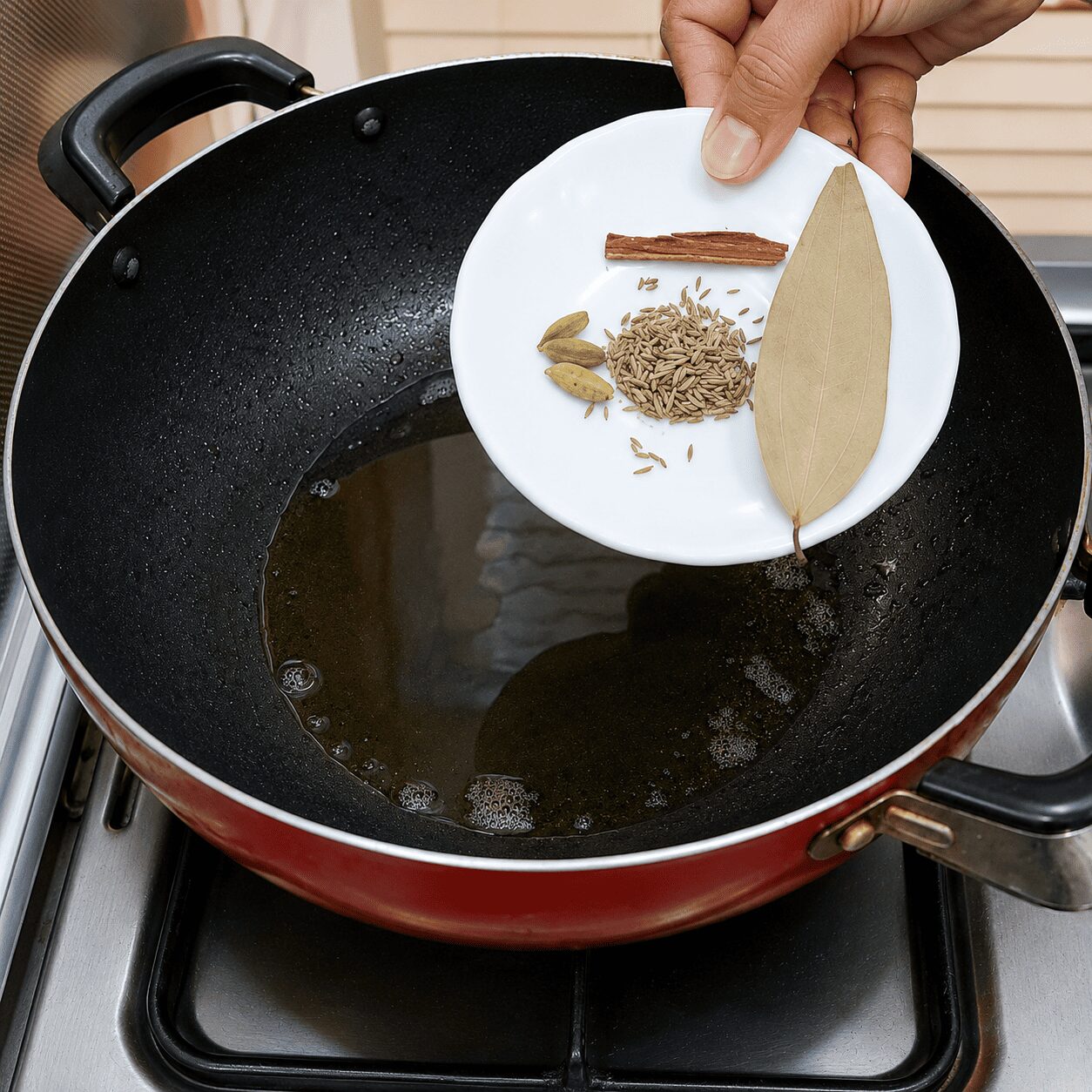
In the same pan, heat 3 tbsp fresh oil for the gravy. Once warm, add a pinch of cumin seeds, the bay leaf, cinnamon stick, and green cardamom pods. Fry for about 30 seconds until fragrant — just enough to release the aroma, no longer.

Add the onion-tomato paste and roast
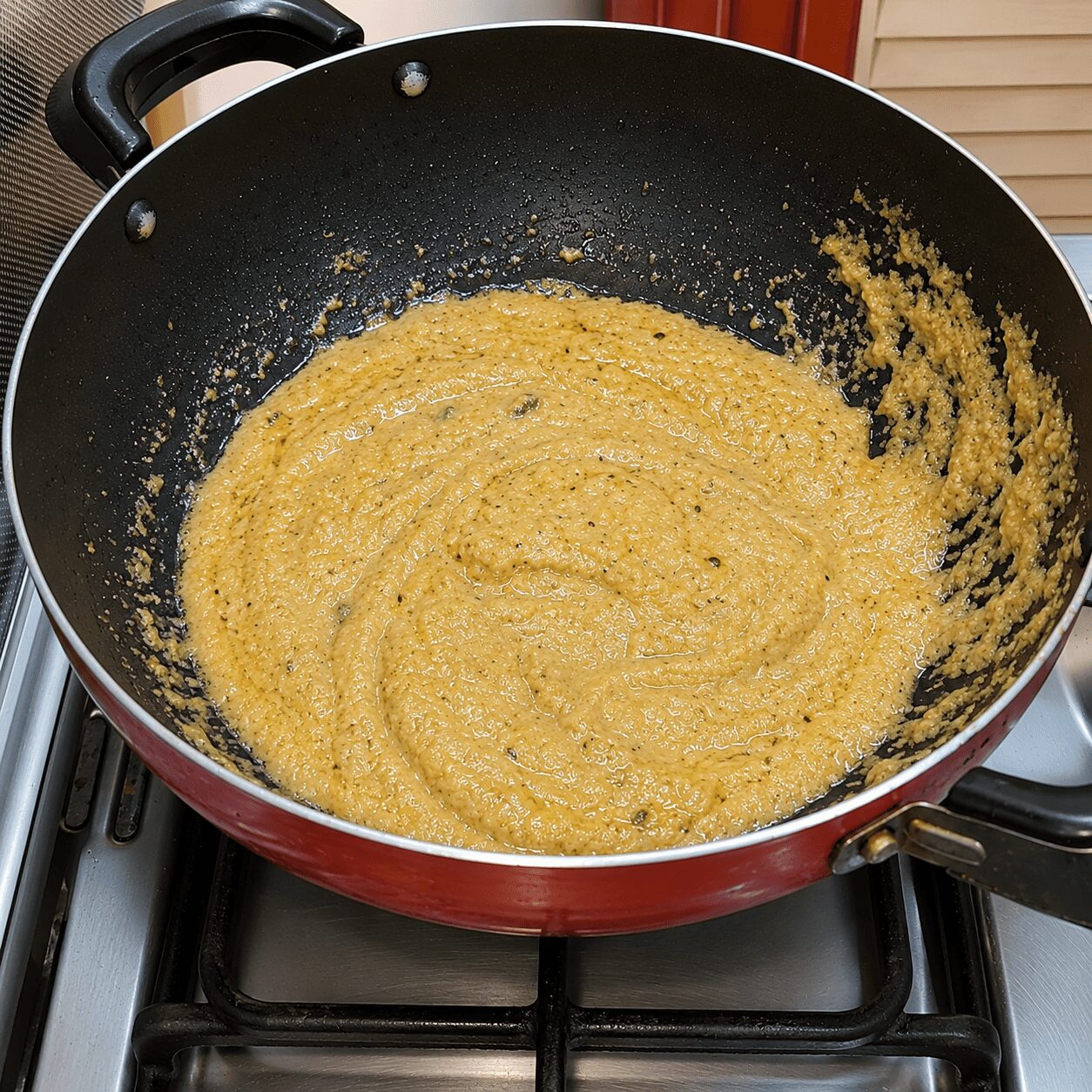
Add the blended onion-tomato paste back into the pan. Since it’s already half-cooked from the first stage, it only needs another 2–3 minutes on medium flame to roast down further.
Add dry spices and bhuna until oil separates
Add a splash of water first, specifically so the dry spices don’t catch and burn. Then stir in the coriander powder, turmeric powder, red chilli powder, and salt. Mix well, cover the pan, and let it cook on low flame until the oil visibly separates and rises to the surface and the raw spice smell is completely gone. This is a deliberately light gravy — don’t over-spice it.
This is also your cue to start the egg kebab component in parallel, while the gravy roasts away on its own.

Beat the eggs for the kebab mixture
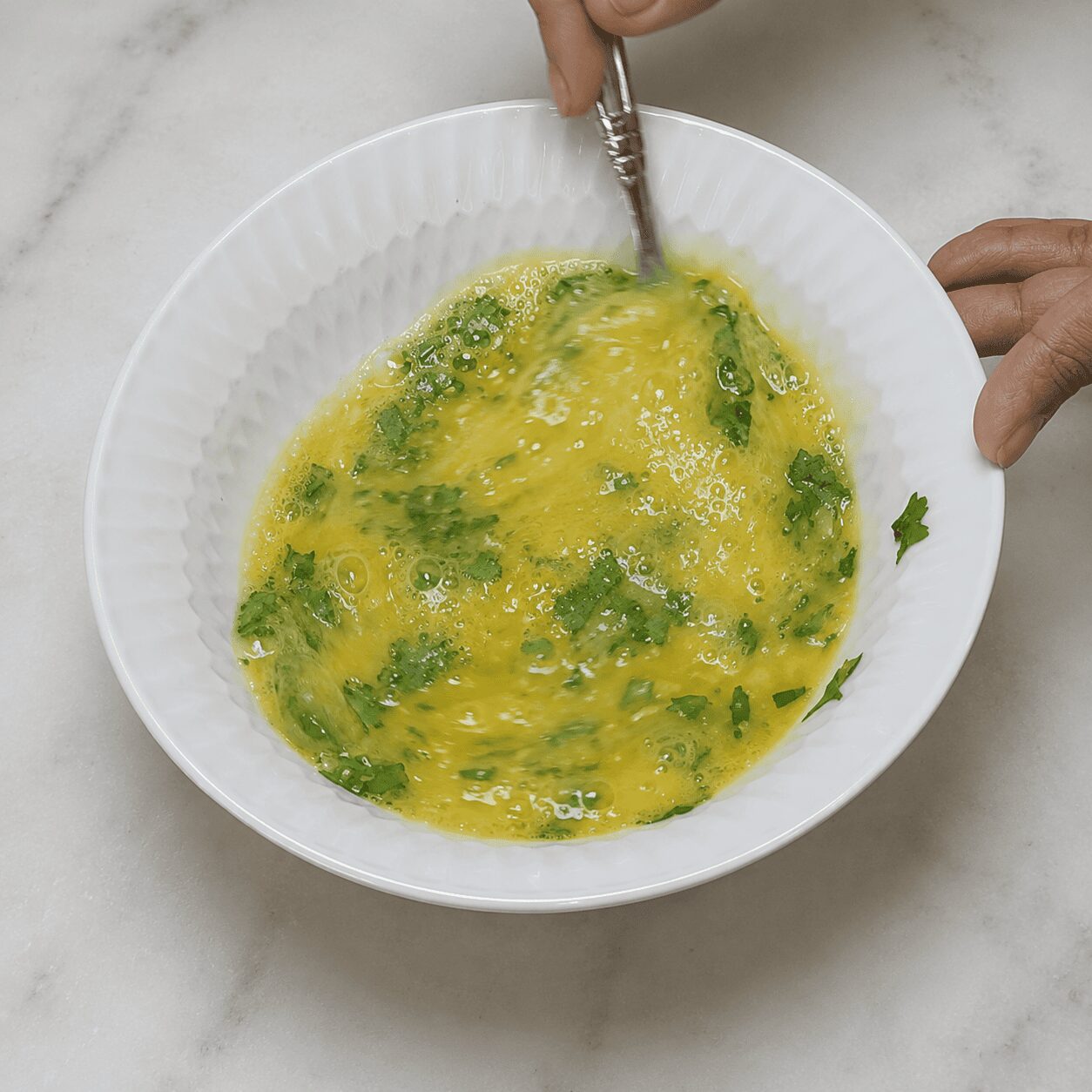
In a bowl, beat 3–4 eggs with the finely chopped onion, green chilli, fresh coriander, and salt — black pepper powder is a good optional addition here. Beat well for about a minute. The mixture will look a little thick at this stage, so whisk in 1 tbsp milk (or water) to lighten it, since it needs to roll cleanly rather than sit as a soft scramble.

Cook the omelette half-set, then roll
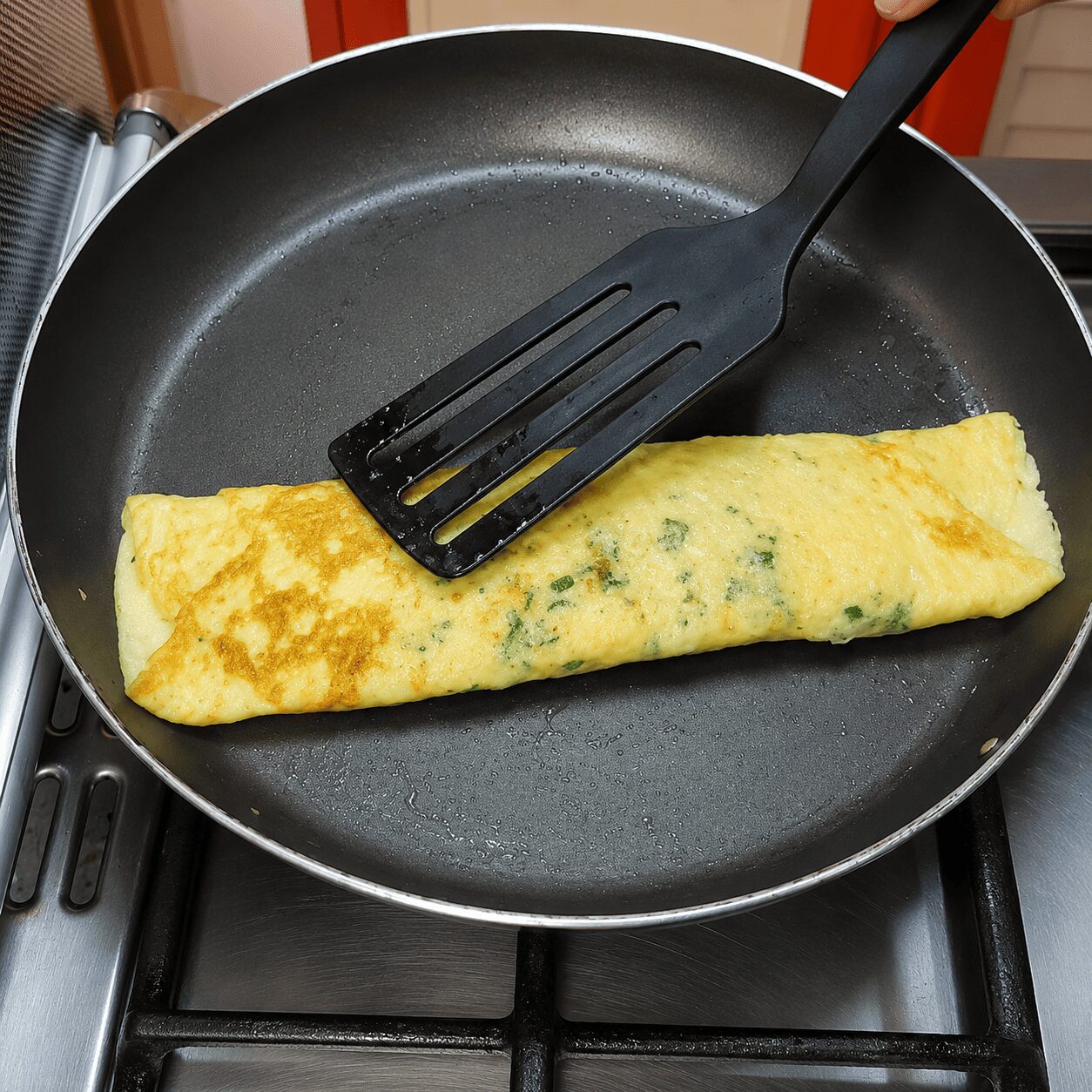
Heat a pan on medium flame and spread 1 tsp oil thoroughly across the surface — this matters more than it sounds, since a well-oiled pan is what lets the omelette release cleanly and roll without tearing. Pour in about half the egg mixture and spread it thin across the pan.
Let it cook only until half-done — the top surface should not be fully dry, and the edges should just be starting to lift on their own. Scrape the edges gently with a spatula first, then roll the omelette up while it’s still soft. Cook for one more minute after rolling, then remove it to a plate.

Repeat, cool, and slice into rounds
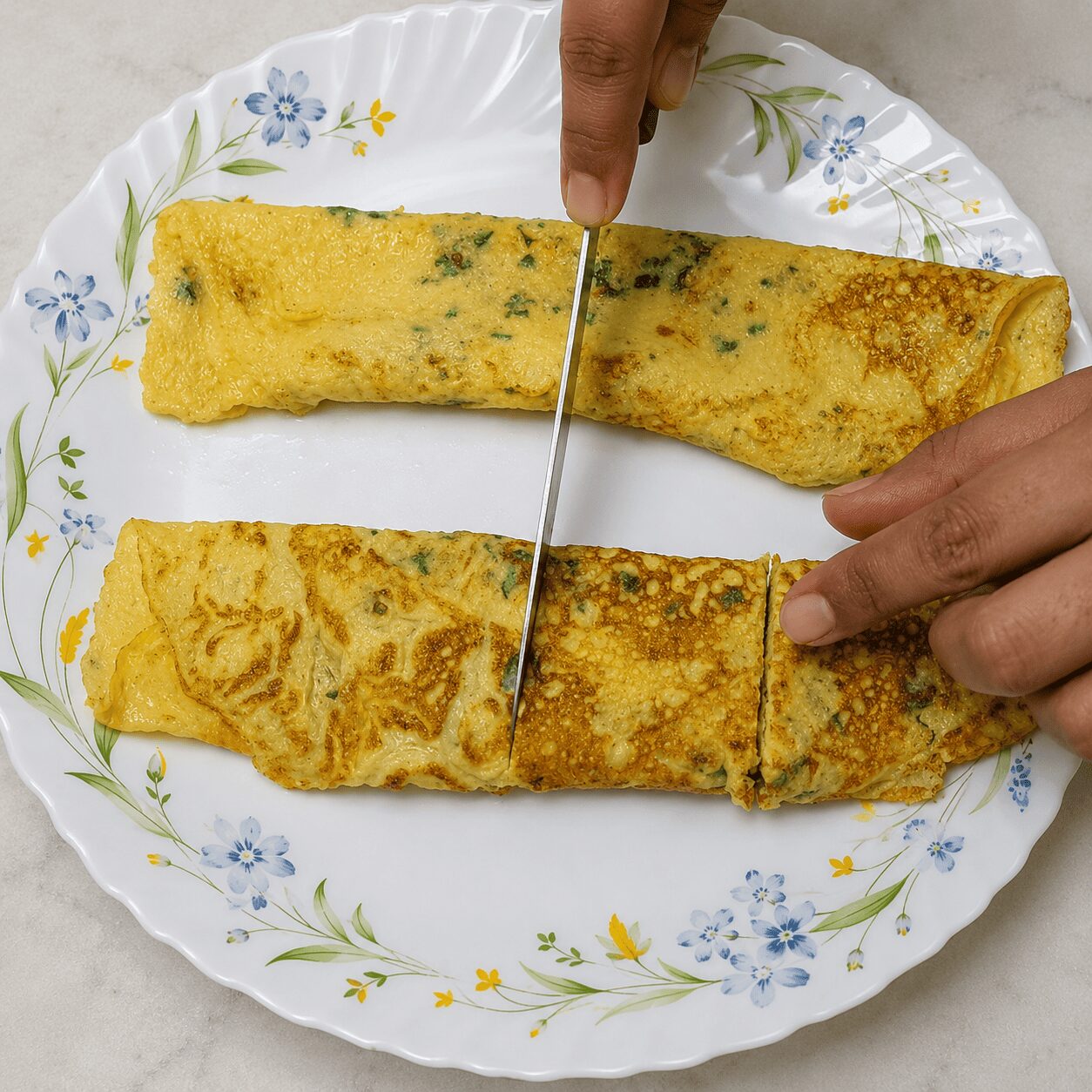
Add a little more oil to the pan, spread it well, and repeat the same process with the remaining egg mixture for a second log. Once both logs have cooled slightly, use a knife to cut each one crosswise into rounds — about 4 pieces per log, adjusted to whatever size you’d like the kebab rounds to be.

Loosen the gravy and finish it
By now the gravy should look visibly darker and thicker than it did at the start, with the oil well separated. Add ½ cup water and mix well to bring it to the consistency you’d like — add a little more if you prefer it runnier. Stir in 1 tbsp cream and the roasted, crushed kasuri methi. Remove the bay leaf now, since its job is done.
Nestle the kebabs, garnish, and simmer
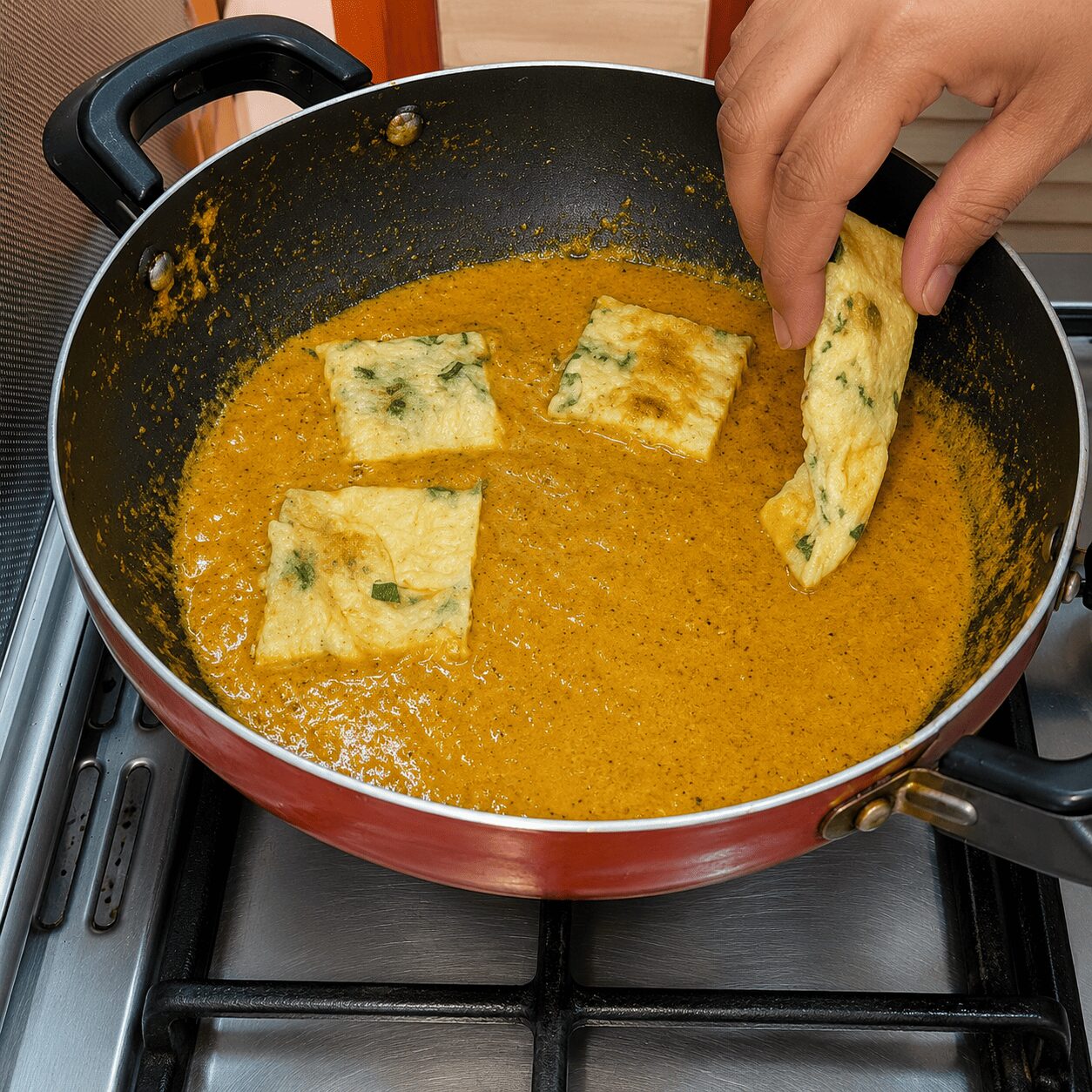
Gently nestle the egg kebab rounds into the gravy one at a time, then spoon a little gravy over the top rather than stirring — stirring hard can break the rolls apart. Sprinkle fresh coriander over the top, cover, and cook on low flame for 2–3 minutes, just until the oil resurfaces and the gravy’s flavour soaks into the egg kebabs.
Open the lid. Your egg kebab curry is ready.

6 Things to Remember for Perfect Egg Kebab Curry
- Cook the onion-tomato base fully mushy before blending it into a paste
- Keep the dry spice list light — this is meant to be a quick, dhaba-style gravy
- Roll the omelette only while it’s half-cooked — never after it’s fully set
- Oil the pan thoroughly before pouring in the egg mixture
- Slice the cooled log into rounds once it’s had a few minutes to firm up
- Nestle the kebab rounds gently and spoon gravy over rather than stirring hard
The One Mistake That Ruins Egg Kebab Curry
Fully cooking the omelette before rolling it.
It feels safer to let the omelette set all the way through before attempting to roll it — but that instinct works against you here. A fully-set omelette is too stiff to hold a roll shape; it’ll crack as you try to roll it, and even if it looks fine on the plate, it will unravel completely once it hits the hot gravy later.
Watch for the top surface staying slightly underdone and the edges just starting to lift on their own — that’s the window to roll, not after.
For Beginners
Don’t panic if your first roll isn’t perfectly neat — a slightly uneven log or a small tear at one end won’t show once it’s sliced into rounds and sitting in gravy with garnish on top. The gravy and the kasuri methi finish cover a lot of small imperfections. Focus on the half-cooked cue rather than the shape.
For Confident Home Cooks
Try a slightly thicker omelette if you’d like heartier kebab rounds — just give it a touch longer before rolling so it still holds together. A pinch of chaat masala whisked into the egg mixture adds a nice tangy edge that plays well against the butter-paneer-style gravy.
What to Serve Egg Kebab Curry With
This was served with paratha in the original kitchen test — our Anda Paratha Roll recipe is a good place to look if you want to make your own from scratch — and it’s an easy pairing to recommend, since the bread holds up well against the gravy without getting lost in it. Plain white rice works just as well for a simpler weeknight plate, letting the gravy and the egg kebabs do the talking. If you’d rather skip the gravy altogether, our Butter Garlic Egg recipe is a quicker, drier alternative worth keeping in rotation.
Because it comes together quickly and travels well, this is also genuinely tiffin-friendly — a good option for a packed lunchbox or a fast breakfast that doesn’t feel like leftovers.
Storage, Reheating & Make-Ahead
| Situation | Guidance |
|---|---|
| Fridge storage (gravy only) | Up to 2 days in an airtight container |
| Fridge storage (with egg kebab rounds) | Best eaten the same day — the rolled omelette texture firms up and toughens after a day in the fridge |
| Freezing | Not recommended — the egg kebab rounds lose their soft, rolled texture on thawing |
| Reheating | Gently on low flame with a splash of water; avoid a high-power microwave, which toughens the rolled omelette |
| Make-ahead strategy | Make the gravy ahead and refrigerate. Prepare the egg kebab rounds fresh and add them to the reheated gravy just before serving |
Making the egg kebabs fresh each time genuinely makes a difference — the soft, just-rolled texture is most of what makes this dish work, and it’s worth not skipping.
Myth vs. Fact: Does Egg Curry Always Mean Boiled Eggs?
Egg curry has to be made with boiled eggs — that’s just what the dish is.
Not in this version. The egg component here is a beaten, half-cooked omelette that’s rolled into a log and sliced into rounds before it ever touches the gravy. It’s a real change in technique, not just a different shape — the egg cooks differently, holds a different texture, and absorbs the gravy’s flavour in a different way than a boiled egg ever could. Boiled-egg curries remain the more familiar format, but they’re not the only legitimate way to bring egg into a curry.
Nutrition Snapshot (Estimated per serving)
| Nutrient | Estimated Amount |
|---|---|
| Calories | ~230–270 kcal |
| Protein | ~10–13 g |
| Fat | ~17–20 g |
| Carbohydrates | ~7–9 g |
| Sodium | Varies with salt added |
Figures are estimated and will vary based on exact oil quantity, egg size, and cream used. These are not a substitute for individualised nutritional advice. Per-egg nutritional data is available via USDA FoodData Central.
Frequently Asked Questions
What is egg kebab curry?
Egg kebab curry is a North Indian egg curry where the egg component is a rolled, sliced omelette — shaped and styled like a kebab — rather than a whole or halved boiled egg. The rounds are simmered in a quick, dhaba-style gravy finished with cream and kasuri methi for a butter-paneer-like flavour.
How is this different from a regular boiled egg curry?
Regular egg curry uses whole or halved boiled eggs sitting in a gravy. This version uses a beaten omelette cooked only until half-set, rolled into a log, cooled, and sliced into rounds before going into the gravy — a genuinely different texture and technique, not just a different shape of the same egg.
Why roll the omelette while it’s still half-cooked?
A fully-cooked omelette is too set to hold a roll shape — it will crack while rolling and unravel later once it’s simmered in the gravy. Rolling it while the top is still slightly underdone and the edges are just lifting off the pan is what lets it hold together.
Can I make the egg kebabs ahead and add them to gravy later?
It’s best to make the egg kebab rounds fresh, since the soft, just-rolled texture is a big part of what makes this dish work. The gravy, on the other hand, can be made up to 2 days ahead and reheated gently before the fresh egg kebabs go in.
Can I make this less spicy?
Yes — this gravy is already kept deliberately light. Reduce the red chilli powder further or skip the green chillies in the egg mixture entirely for a milder version. The dish still works well with minimal heat, since the focus is on the texture of the egg kebabs rather than spice intensity.
Is this good for a lunchbox or tiffin?
Yes — it comes together quickly and holds up reasonably well for a few hours, which makes it a practical tiffin or packed-lunch option. Just note that the egg kebab texture is best enjoyed fresh, so try to make and pack it the same day.
Can I use water instead of milk in the egg mixture?
Yes. Water works as a direct substitute for lightening the egg mixture before rolling — the result is just very slightly less rich than using milk, but the texture and rollability stay the same.
What’s the best way to reheat egg kebab curry without toughening the egg?
Reheat gently on low flame with a small splash of water rather than using a high-power microwave. Low, slow heat warms the gravy through without overcooking the rolled omelette rounds, which toughen quickly under high heat.
Conclusion
Egg kebab curry is a genuinely different way to bring egg into a curry, not just a fresh coat of paint on the same boiled-egg formula. The gravy comes together fast, the spice list stays light on purpose, and the real technique to focus on is timing — rolling the omelette while it’s still half-cooked, not after.
The moment that decides whether these egg rolls hold together in the gravy happens before the gravy is even ready — it’s all in how long the omelette stays on the pan. Get that timing right once, and the rest of the dish comes together easily.
A fun twist for a weekday dinner, genuinely tiffin-friendly as demonstrated, and a good way to use up a familiar dhaba-style gravy with a completely different egg format than you’re probably used to. For more ways to break from the boiled-egg formula, try our Turkish Eggs Cilbir recipe or our deeply spiced Afghani Egg Curry recipe.
Leave a Reply