

Zaika Mazedaar · Restaurant-Style Egg Curries
Spicy, silky anda korma — crispy fried eggs in a roasted onion-cashew gravy, built the way a proper degi korma mixture is made.
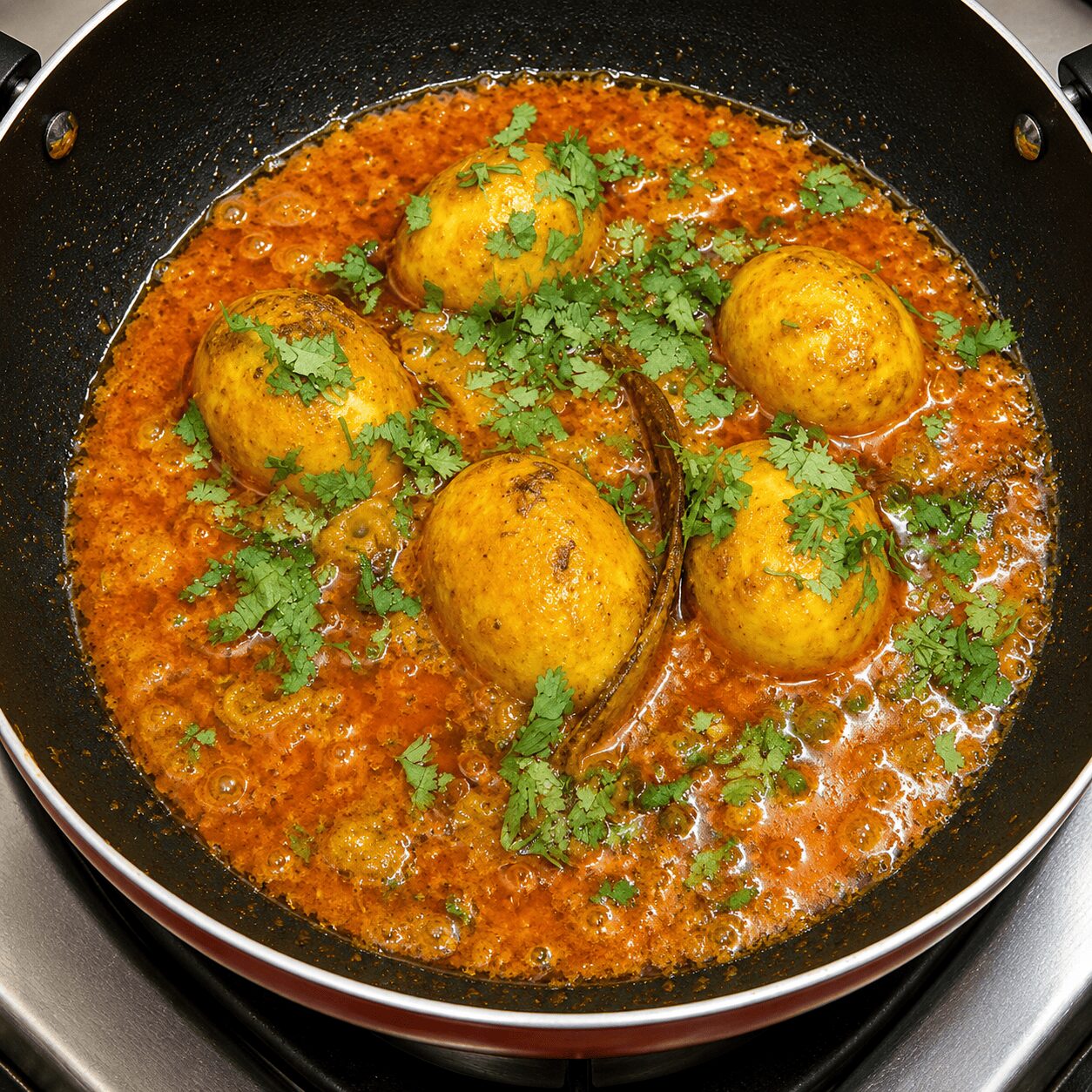
There’s a particular kind of gravy that looks silky before you’ve even tasted it — ghee pooling at the surface, a deep, even colour, no separate grains of spice floating loose. That’s what’s happening here. The eggs get a crispy, golden coating from a quick fry, then sit in a roasted onion-cashew gravy until every bit of masala has soaked through.
This recipe is demonstrated step-by-step in our video on the Zaika Mazedaar channel, filmed and cooked in a real kitchen — not assembled from recipe databases. A quick note before you start: this is not our anda korma biryani — that one’s a rice dish, this is a gravy.
What Is Anda Korma?
Anda korma is a rich, restaurant-style egg curry built on a roasted onion-cashew-yogurt gravy, made the way a proper degi korma mixture is made — a specific, named technique rather than a generic “restaurant-style” label. The eggs are boiled, pricked, and fried first for a crispy coating, then simmered briefly in the finished gravy purely to absorb flavour.
It’s worth being clear about where this sits next to the other egg curries on this site, since the names can blur together. Egg lababdar uses a tomato-cashew base roasted to a thicker gravy. Our egg malai curry uses milk and very few spices for a light, fast gravy. Our Egg White Korma takes the pale, no-tomato route instead, built on cashew-almond paste and cream rather than roasted onion. And anda korma biryani is a rice dish, not a gravy at all. This anda korma is its own thing — a ground onion-cashew paste with whole spices, roasted in two stages, for a richer, silkier result than any of the others.
Why This Recipe Works
There’s a reason this gravy turns out silky instead of just thick — and it’s not the cashews alone.
First: the masala is roasted in two separate stages. The yogurt-and-whole-spice base is roasted on its own first, until the ghee separates. Only then does the blended onion-cashew-green chilli paste go in, for a further roast. This staged approach — rather than grinding everything together and adding it all at once — is what gives a korma its specific character, distinct from a straightforward onion-tomato curry.
Second: small habits that protect the gravy. The cold yogurt goes in with the gas off, so it doesn’t split the moment it hits the hot ghee — a smaller, quicker version of the room-temperature-milk principle used elsewhere on this site. I mix the cold yogurt in with the gas off; it’s a small habit, but it keeps the gravy from splitting before it’s even started.
Ingredients
For the Eggs
- 5 eggs, hard-boiled, pricked all over with a fork
- ¼ tsp red chilli powder, for frying the eggs
- ¼ tsp turmeric powder, for frying the eggs
For the Onion-Cashew Paste
- 2 medium onions, finely sliced, layers loosened by hand before frying
- 10–15 cashews, soaked in water until soft
- 2 green chillies
For the Yogurt-Spice Base
- ½ cup cold yogurt (deliberately not brought to room temperature for this recipe)
- 1 tsp red chilli powder
- ½ tsp turmeric powder
- ½ tsp cumin powder
- 2 tsp coriander powder
- 1 tsp Kashmiri red chilli powder, for colour
- 1 tsp salt, adjustable to taste
Whole Spices
- 1 bay leaf (tej patta)
- 1-inch piece cinnamon (dalchini)
- 2–3 green cardamom pods
- 3–4 cloves
For Garnish
- ½ tsp garam masala powder
- Fresh coriander, chopped
Fat
- ⅓ cup desi ghee (oil is an acceptable substitute)
Ingredient Substitutions
| Ingredient | Substitute | Effect on Taste / Texture |
|---|---|---|
| Desi ghee | Oil | Lighter, less rounded flavour; the gravy will still turn out silky, just less rich |
| Cashews | Soaked almonds | Slightly drier, less creamy body; still gives a good paste-based gravy |
| Kashmiri red chilli powder | A small pinch of paprika | Adds colour only — paprika contributes little to no heat, unlike Kashmiri chilli |
| Yogurt | Whisked curd of the same consistency | Nearly identical; still add it cold, with the gas off |
| Fresh coriander | Skip or use less dried | Loses some brightness on top; the gravy itself is unaffected |
Mise en Place Checklist
This gravy is roasted in two stages, so getting everything measured out ahead of time genuinely helps it move smoothly.
- 5 eggs hard-boiled, peeled, and pricked all over with a fork
- 2 onions, sliced, layers loosened by hand
- 10–15 cashews soaking in water
- Yogurt-spice mix (chilli, turmeric, cumin, coriander, Kashmiri chilli) combined in one bowl, kept cold
- Whole spices measured into a small bowl
- 2 green chillies, ready for the blender
- Garam masala and fresh coriander set aside for the finish
- Kadhai or pan, ready on the hob
Step-by-Step Method
Fry the pricked eggs
Heat 1 tbsp of the ghee in a kadhai over medium flame. Add the pricked boiled eggs along with ¼ tsp red chilli powder and ¼ tsp turmeric powder. Fry on medium flame until a crispy coating forms — about 3–4 minutes. Remove and set aside on a plate.

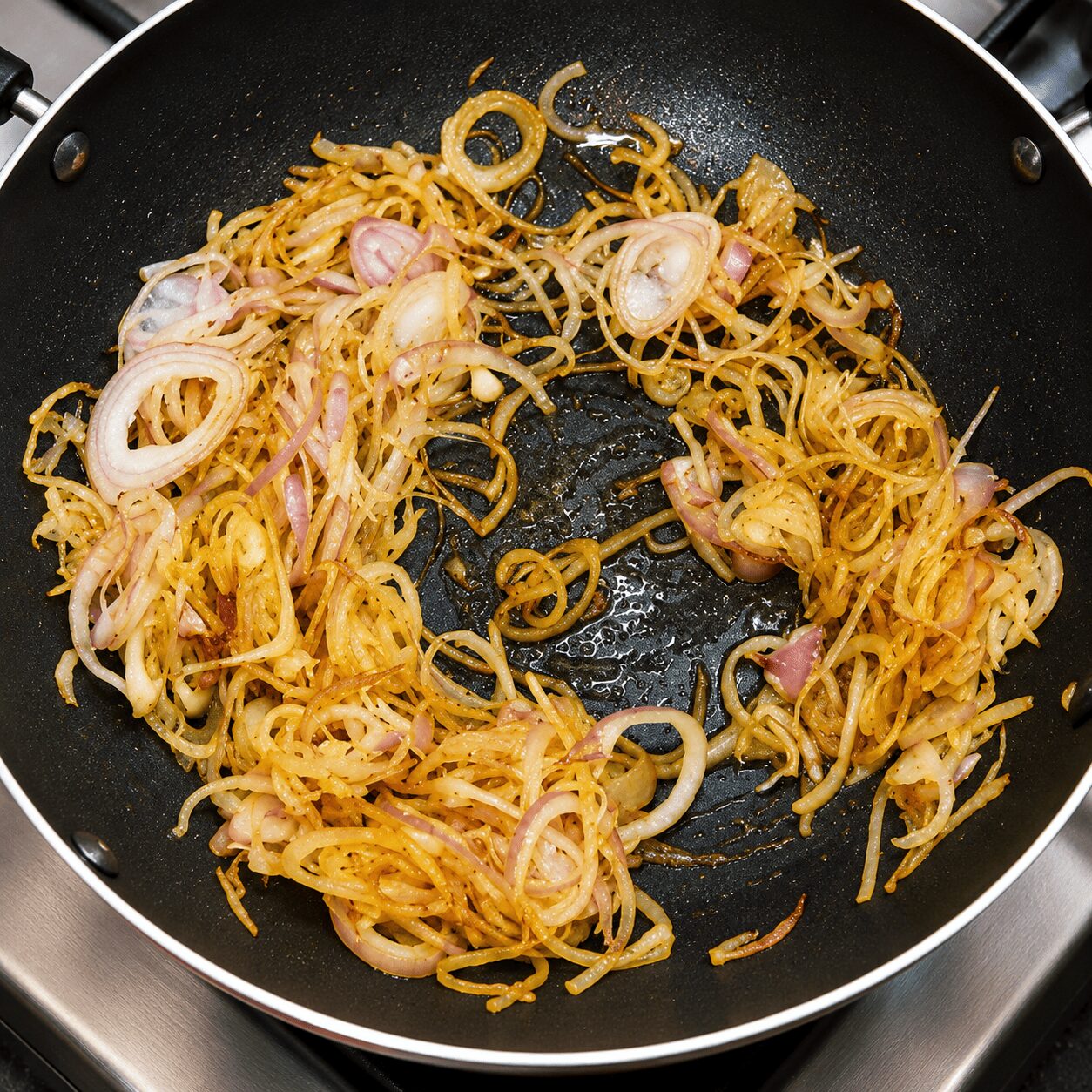
Fry the onion to light golden, not deep
Add another 1 tbsp ghee to the same pan. Add the sliced onion (layers loosened by hand before slicing — this helps it fry faster and more evenly with less oil). Fry on medium-to-high flame until light golden brown, not deep or crispy — it’s going to be ground afterward, so taking it further isn’t necessary. Remove, tilt the pan to drain excess ghee back in, and set the onion aside.

Mix in cold yogurt and spices with the gas off
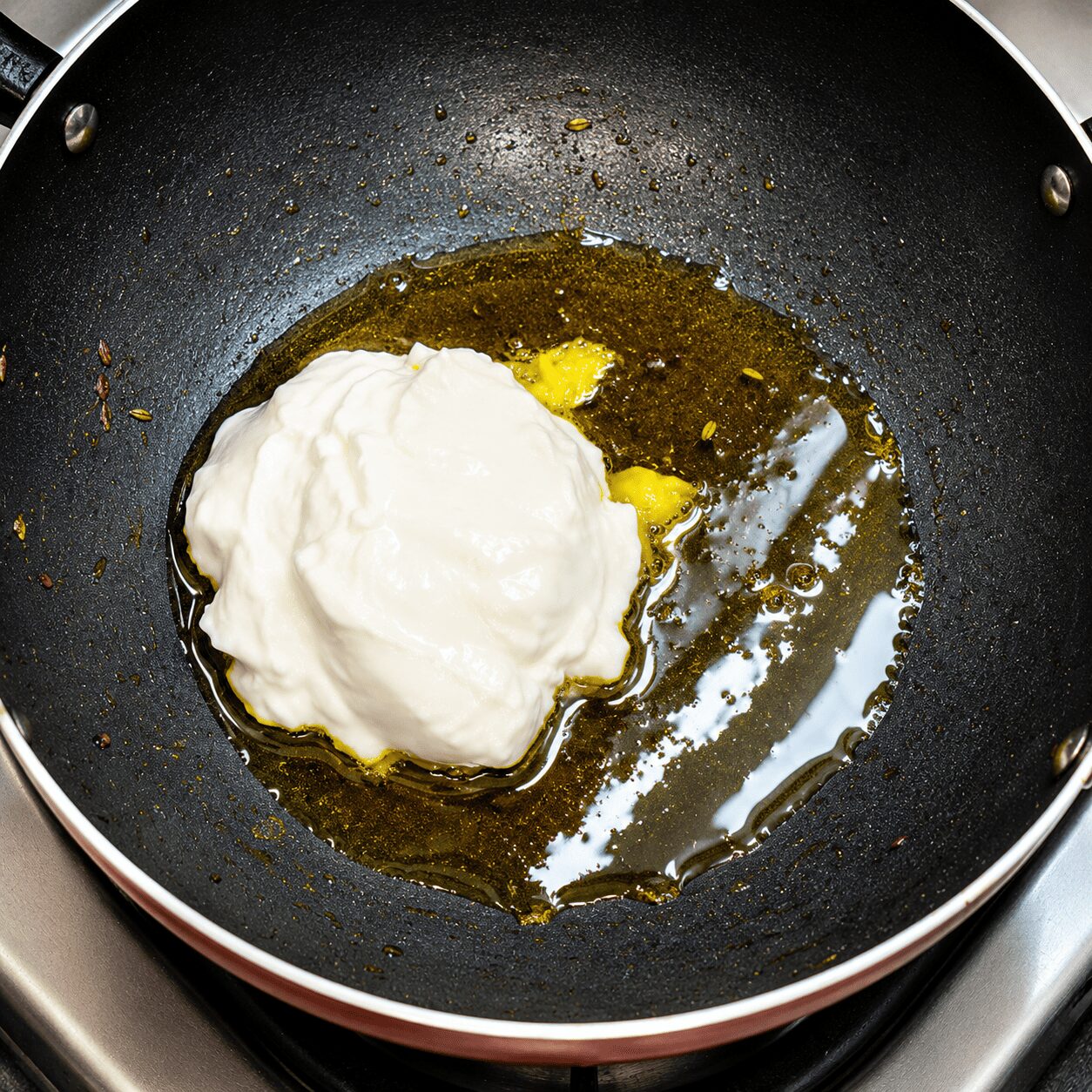
Add the remaining ghee to the pan. Turn the gas off. Add the ½ cup cold yogurt directly — no need to bring it to room temperature for this recipe. Mix in the red chilli powder, turmeric, cumin powder, coriander powder, Kashmiri red chilli powder, and the whole spices (bay leaf, cinnamon, cardamom, cloves). Combine everything well while the flame is still off.

Roast the masala, degi-korma style
Turn the gas back on. Cook on medium flame, stirring frequently and adding small amounts of water as needed, the way a degi korma mixture is made — roasted thoroughly rather than just simmered. While this roasts, blend the reserved fried onion with the soaked cashews and green chillies into a fine paste.
The masala is ready for the next stage once the ghee visibly separates and the aroma develops — give this stage your full attention.
Blend the onion-cashew-green chilli paste
While the masala roasts in step 4, blend the reserved fried onion together with the soaked cashews and green chillies into a fine, smooth paste. This staged grinding — separate from the yogurt-spice base — is what gives this gravy its specific korma character.

Stir the paste into the masala and roast further
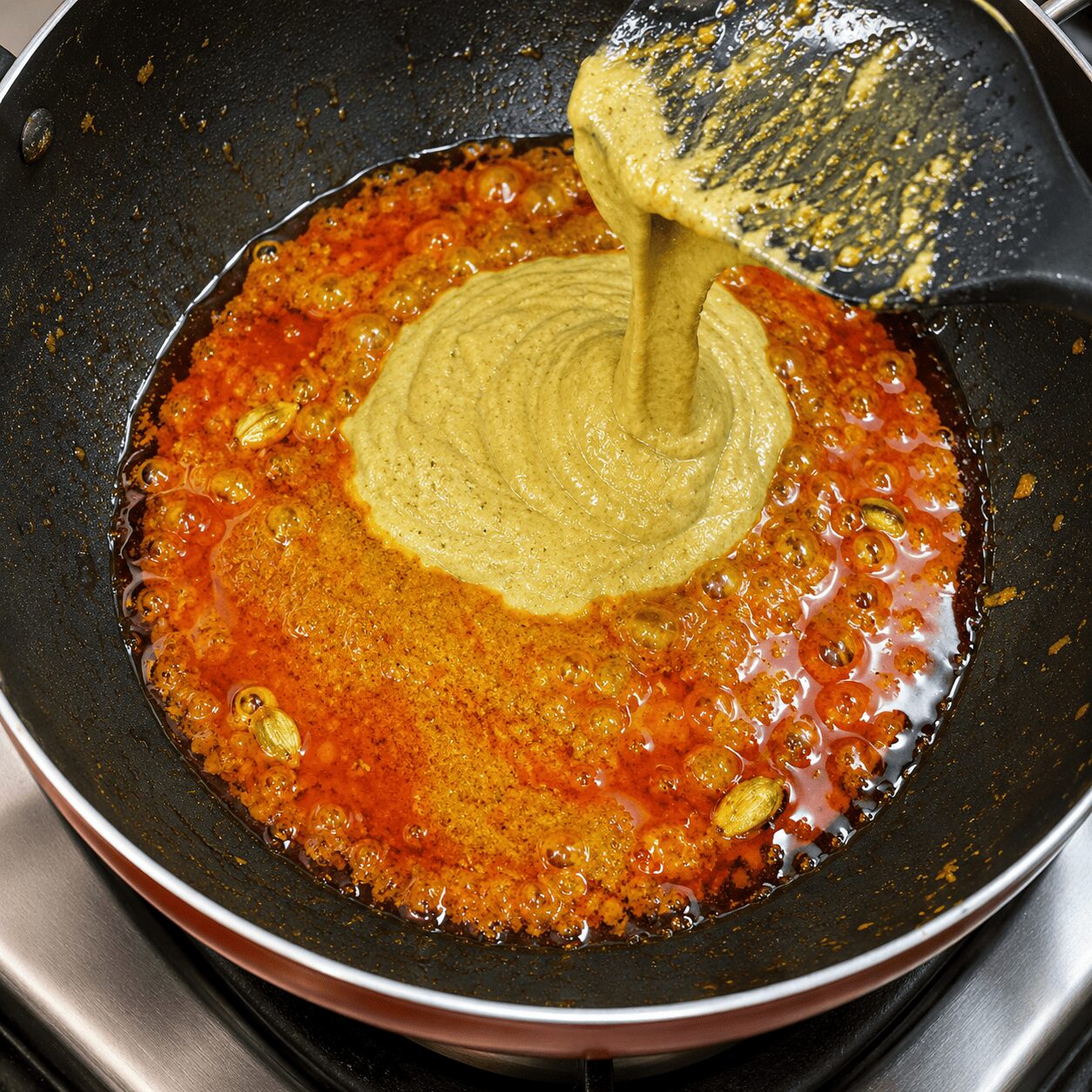
Add the onion-cashew-chilli paste to the roasted masala. Use a little water to rinse the last of the masala out of the grinder jar, and pour that in too — nothing goes to waste. Combine and roast together on low flame for a further 8–10 minutes, stirring every couple of minutes.
Add 1 tsp salt, adjusting to taste, and mix in well.

Cover and cook until the gravy turns silky
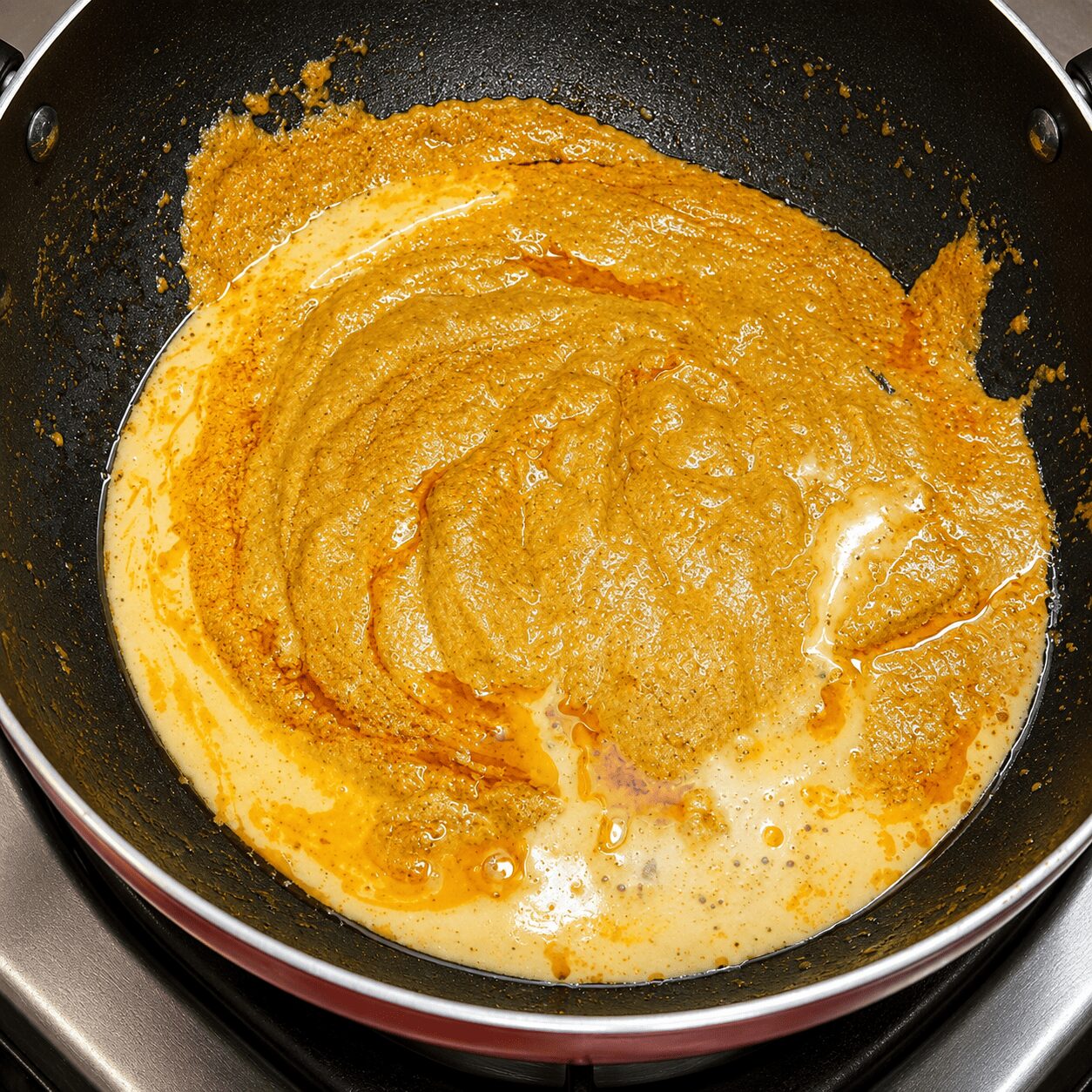
Cover and cook for about 10 minutes total at this stage, stirring 2–3 times, until the ghee separates again and the gravy looks genuinely beautiful — silky, with no raw masala smell left.
Add the fried eggs
Add the fried eggs into the gravy and mix gently. Cover and cook for just 2–3 minutes — the eggs are already fully cooked from boiling and frying, so this step is purely to let them absorb the surrounding masala flavour.
Finish with garam masala and coriander
Sprinkle ½ tsp garam masala powder over the top, then scatter on fresh coriander to taste. Mix gently into the gravy and let it rest for 2 minutes on low flame before serving.

6 Things to Remember for a Perfect Anda Korma
- Prick the eggs before frying so the masala can penetrate later
- Fry the onion only light golden — it’s getting ground, not eaten as-is
- Mix the cold yogurt in with the gas off, then turn the heat back on
- Roast the masala in two stages — the yogurt-spice base first, then the onion-cashew paste
- Stir often once the cashews go in — they stick and burn easily
- Rest the gravy 2 minutes before serving
The One Mistake That Keeps This Gravy From Turning Silky
Adding the cold yogurt with the gas still on, or under-roasting the onion-cashew paste.
Either one leaves you with a gravy that’s thick but not silky. Cold yogurt hitting a hot pan with the gas still running is the fastest way to split it before the cooking has even properly started. And rushing past the second roasting stage — the 8–10 minutes after the onion-cashew paste goes in — leaves a gravy that tastes raw at the edges, no matter how long it simmers afterward.
Turn the gas off before the yogurt goes in. Wait for the ghee to visibly separate, twice — once after the base roasts, once after the paste goes in.
For Beginners
Don’t rush the bhuna stage. Wait for the ghee to visibly separate before moving on — and that happens twice in this recipe, once after the yogurt-spice base roasts, and again after the onion-cashew paste is stirred in. If you’re unsure, give it another minute or two rather than moving on early.
For Confident Home Cooks
Adjust the Kashmiri chilli ratio slightly upward for a deeper red colour without adding more heat. You can also swap the ghee for oil for a lighter version of this gravy — it loses some of the rounded, restaurant-style richness, but the degi-korma technique still comes through.
What to Serve Anda Korma With
Jeera rice is the pairing the creator herself recommends, and it’s an easy match for this richer gravy. Plain white rice works just as well if you’d rather keep things simple. Naan or paratha are both great for scooping up the silky gravy, especially for a weekend dinner where you want something a little more indulgent than a quick weeknight curry. If you want something much faster on a weeknight instead, our Butter Garlic Egg is ready in under 15 minutes.
Storage, Reheating & Make-Ahead
| Situation | Guidance |
|---|---|
| Fridge storage | Up to 2 days in an airtight container |
| Ghee solidifying | The gravy may solidify slightly when chilled, since it’s ghee-based — this is normal and resolves on reheating |
| Freezing | Not recommended — the yogurt-cashew gravy can separate on thawing |
| Reheating | Reheat gently on low flame with a splash of water; avoid high-power microwave reheating |
| Make-ahead strategy | The gravy is actually a good make-ahead option — it reheats well, and the flavour deepens slightly overnight |
Because this gravy contains both dairy and egg, treat leftovers the way you would any dairy-and-egg dish — refrigerate promptly, and reheat thoroughly rather than letting it sit out.
Myth vs. Fact: Is Egg Korma the Same as Anda Korma Biryani?
Anda korma and anda korma biryani are basically the same dish with different names.
No — one’s a gravy, one’s a rice dish. This anda korma is a roasted onion-cashew-yogurt curry with crispy fried eggs sitting in the gravy, eaten alongside rice or bread. Anda korma biryani folds a yogurt-only masala directly into the rice itself, with no separate gravy at all. They share a name and a few spices, but the technique, texture, and the way you’d actually eat each one are genuinely different.
Nutrition Snapshot (Estimated per serving)
| Nutrient | Estimated Amount |
|---|---|
| Calories | ~320–360 kcal |
| Protein | ~13–15 g |
| Fat | ~24–28 g |
| Carbohydrates | ~11–14 g |
| Sodium | Varies with salt added |
Figures are estimated and will vary based on exact ghee quantity, egg size, and cashew amount. These are not a substitute for individualised nutritional advice. Per-egg and per-cashew nutritional data is available via USDA FoodData Central.
Frequently Asked Questions
What is anda korma?
Anda korma is a rich, restaurant-style egg curry built on a roasted onion-cashew-yogurt gravy, made using the same technique used for a proper degi korma mixture. Boiled eggs are pricked, fried until crispy, and then simmered briefly in the finished gravy purely to absorb flavour.
Is egg korma the same as anda korma biryani?
No. Anda korma is a gravy-style curry eaten with rice or bread. Anda korma biryani is a rice dish where a yogurt-based masala is folded directly into the rice, with no separate gravy. They share some spices and a name, but the technique and the way each is served are genuinely different.
Why fry the onion lightly instead of deep golden?
Because the onion gets ground into a paste afterward, along with cashews and green chillies. Taking it to deep, crispy brown isn’t necessary for that purpose and can actually add a slightly bitter edge once blended — light golden is enough.
Why add yogurt with the gas turned off?
Cold yogurt added to hot ghee while the flame is still on can split or curdle almost immediately. Turning the gas off, mixing the yogurt and spices in fully, and then turning the heat back on gives the dairy a gentler start and keeps the gravy smooth.
Can I use oil instead of ghee?
Yes. The gravy will turn out a little lighter and less rich in flavour, but the degi-korma roasting technique still works the same way, and the result is still recognisably anda korma.
Can I make this less spicy?
Yes — reduce the green chillies in the onion-cashew paste, or use a milder variety. You can also lower the red chilli powder in the yogurt-spice base slightly while keeping the Kashmiri chilli powder, which mainly affects colour rather than heat.
Why does the cashew paste get added separately, later in the recipe?
Roasting the yogurt-spice base first, then stirring in the blended onion-cashew-green chilli paste afterward for a second roast, is what gives this gravy its specific korma character. Adding everything together at once, the way you might for a simpler onion-tomato curry, produces a noticeably different, less silky result.
What’s the best side to serve with egg korma?
Jeera rice is the pairing the creator herself recommends. Plain white rice, naan, or paratha all work well too — any of them are good at soaking up the silky gravy.
Conclusion
Anda korma earns its richer, more indulgent identity honestly. Compared to the lighter egg curries on this site, this one asks for a bit more patience — two roasting stages, a staged paste, frequent stirring once the cashews are in — but the payoff is a gravy that’s genuinely silky, not just thick, with crispy-fried eggs sitting in it rather than just simmered raw.
Prick the eggs before frying, keep the onion light since it’s getting ground, mix the cold yogurt in with the gas off, and don’t rush either roasting stage. From there, it’s a proper weekend dish, built using the degi-korma technique that gives it its name.
Good for a slightly special weekend dinner with naan, and a solid make-ahead option too — the gravy reheats well, and the flavour only deepens overnight.
Leave a Reply