

Zaika Mazedaar · Afghani-Style Curries
A pale, fragrant egg gravy built on cardamom, coriander, cashew, and yogurt — finished with both milk and cream, and an optional curl of charcoal smoke that’s the real signature of the style.
There’s a moment near the end of this recipe that most home cooks have never tried: a piece of lit charcoal, a drop of oil on top, and the dish covered just long enough to trap the smoke. It’s the step that makes Afghani chicken, Afghani mutton, and Afghani pulao taste like they came from a dhaba rather than a home kitchen — and it works exactly the same way here, on eggs.
This recipe is demonstrated step-by-step in our video on the Zaika Mazedaar channel, filmed and cooked in a real kitchen — not assembled from recipe databases. If you’ve only ever had egg curry in its red, tomato-based form, this pale, cardamom-fragrant version is worth the detour.
What Is Afghani Egg Curry?
Afghani egg curry (anda Afghani) is the term widely used across South Asian home cooking and restaurant menus for a pale, mild, coriander-cashew-cream style gravy — distinct from the red, tomato-forward curries most people associate with North Indian cooking. There’s no tomato here and no turmeric-driven colour; the base stays a soft off-white to pale gold throughout. Worth saying plainly: “Afghani” in this context is a culinary style descriptor as used across South Asian kitchens, not a claim that this dish documents Afghan national cuisine. It’s a gravy with loose inspiration from that direction, made the way home cooks across the region actually make it — mild, aromatic, and without red chilli heat.
Why This Recipe Works (What Makes Afghani Style Distinct Here)
This is the first Afghani-style article on the site, and it doesn’t overlap with any of our other egg curries — the profile is genuinely its own.
No tomato, no turmeric colour. Where most egg curries on this site build colour and acidity from tomato, this one skips it entirely. The base colour comes from a deliberately pale-cooked onion paste, not from any spice.
A coriander-cashew-yogurt paste, not a tomato-cashew one. Fresh coriander, soaked cashews, yogurt, and green chilli are blended together into the flavour base — yogurt in particular is a texture and tang this site’s other egg curries don’t use.
Both milk and cream — not one or the other. Every other gravy on the site picks a single dairy finish. This one uses both: milk to thin and lighten the gravy, cream to add body, so the result lands somewhere between the two rather than being either thin or heavy.
The charcoal smoke (koyla dhuan) finish. Optional, but this is the technique that actually defines the genre. It’s the same step used in Afghani chicken, Afghani mutton, and Afghani pulao — a lit piece of charcoal, a drop of oil or ghee, and a covered pan to trap the smoke before serving.
Ingredients
For the Eggs
- 5–6 eggs, boiled and scored (cross-cuts or lengthwise cuts on top)
- 3 tbsp oil
For the Onion Base
- 2–3 green cardamom pods (hari elaichi)
- 2–3 cloves (laung)
- 1 medium onion, blended into a paste with a little water
- 1 tsp garlic paste
- 1 tsp ginger paste
For the Coriander-Cashew Paste
- A handful of fresh coriander (hara dhaniya), washed
- 8–10 cashews, soaked
- 3 tbsp yogurt (dahi)
- A little water, for grinding
- 4 green chillies, chopped, or to taste
Spices
- ½ tsp black pepper powder (kali mirch)
- 1 tsp chaat masala powder
- Salt, to taste
- ¼ cup water (rinsed from the grinding jar)
- ¼ tsp garam masala powder
For the Finish
- ¾ cup milk (doodh) — up to 1 cup if you prefer a thinner gravy
- 2 tbsp cream
Optional: Charcoal Smoke Finish
- 1 small piece of charcoal
- A few drops of oil or ghee
- A small metal bowl to hold the lit coal inside the dish
Ingredient Substitutions
| Ingredient | Substitute | Effect on Taste / Texture |
|---|---|---|
| Cashews | Blanched almonds (skin removed), or skip entirely | The creator’s own guidance: cashews and cream exist purely to enhance flavour, not to structure the gravy — skipping or swapping lightens it slightly but doesn’t break the dish |
| Cream | Homemade malai (milk cream), or more milk to thin the gravy | Malai is a near-identical substitute; using extra milk instead of cream gives a lighter, slightly thinner gravy that still carries good flavour |
| Chaat masala | A pinch of amchur (dry mango powder) + a pinch of coriander powder | Approximates chaat masala’s tangy note; slightly less complex but works in a pinch |
| Whole green cardamom | ⅛ tsp cardamom powder | Convenient, but loses some fragrance — blooming whole pods in oil releases noticeably more aroma than pre-ground powder |
Mise en Place Checklist
Get all of this ready before turning on the flame. The onion needs your attention while it cooks — it should never be left to brown unsupervised.
- Eggs boiled, scored with cross-cuts or lengthwise cuts, set aside
- Cashews soaking in water until soft
- Onion blended into a fine paste with a little water
- Coriander, soaked cashews, yogurt, water, and green chilli ready to blend (same jar used for the onion works fine)
- Garlic paste and ginger paste measured
- Dry spices (black pepper powder, chaat masala, salt) measured into one small bowl
- Milk and cream measured out separately
- If doing the charcoal step: a small piece of charcoal, tongs, a small metal bowl, and a little oil or ghee ready nearby
Step-by-Step Method
Score and fry the eggs
Heat 3 tbsp oil in a pan. Score each boiled egg with shallow cross-cuts on top, or lengthwise cuts if you prefer. Fry on medium flame until golden all over, then remove to a plate and set aside.

Bloom the cardamom and cloves
In the same oil the eggs were fried in — no need to add more — add the green cardamom pods and cloves. Let them bloom for 30–40 seconds until fragrant. This step builds the base aroma before anything else goes into the pan.
Cook the onion paste — pale, never golden
Add the blended onion paste. Cook on medium-to-low flame, stirring occasionally, until it turns only lightly pink — not golden, not brown.
Add garlic and ginger paste
Add 1 tsp garlic paste and 1 tsp ginger paste to the pale onion. Fry together on medium-to-low flame for about 1 minute, until the raw smell is gone.
Blend the coriander-cashew-yogurt paste
In the same grinding jar used for the onion, blend the fresh coriander, soaked cashews, yogurt, a little water, and chopped green chillies into a fine paste.

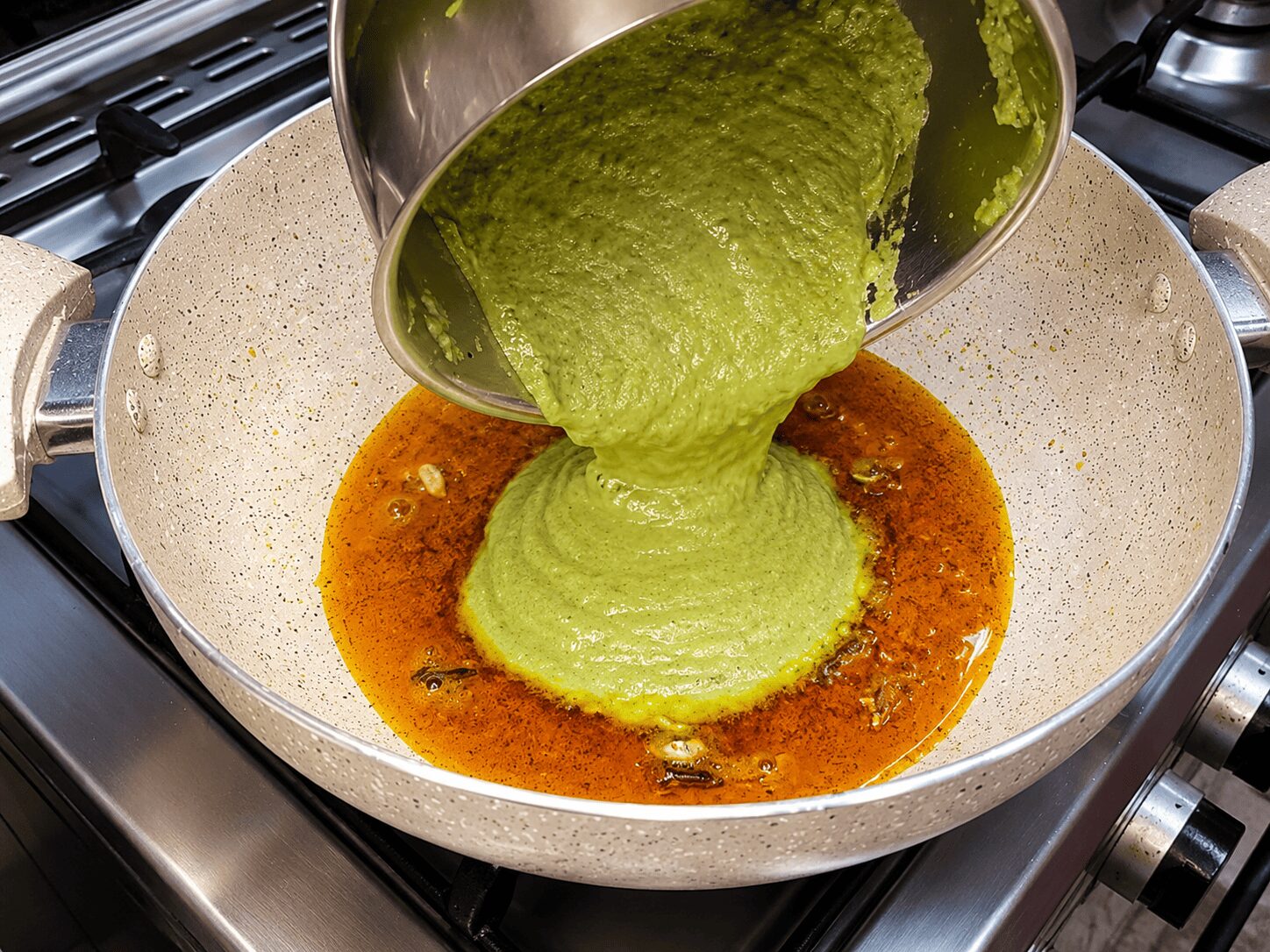
Add the paste and roast until oil separates
Pour the coriander-cashew-yogurt paste into the pan. Add ½ tsp black pepper powder, 1 tsp chaat masala powder, and salt to taste. Mix well and roast until the yogurt’s excess moisture has completely dried off and the oil begins to separate.
Add milk and cream
Once the oil has separated, add ¼ cup water rinsed from the grinding jar. Add ¾ cup milk to enhance the gravy’s flavour — use a little extra water alongside it, or go up to a full cup of milk, if the gravy still looks thick. Add ¼ tsp garam masala powder for fragrance. Then add 2 tbsp cream and mix it in well.

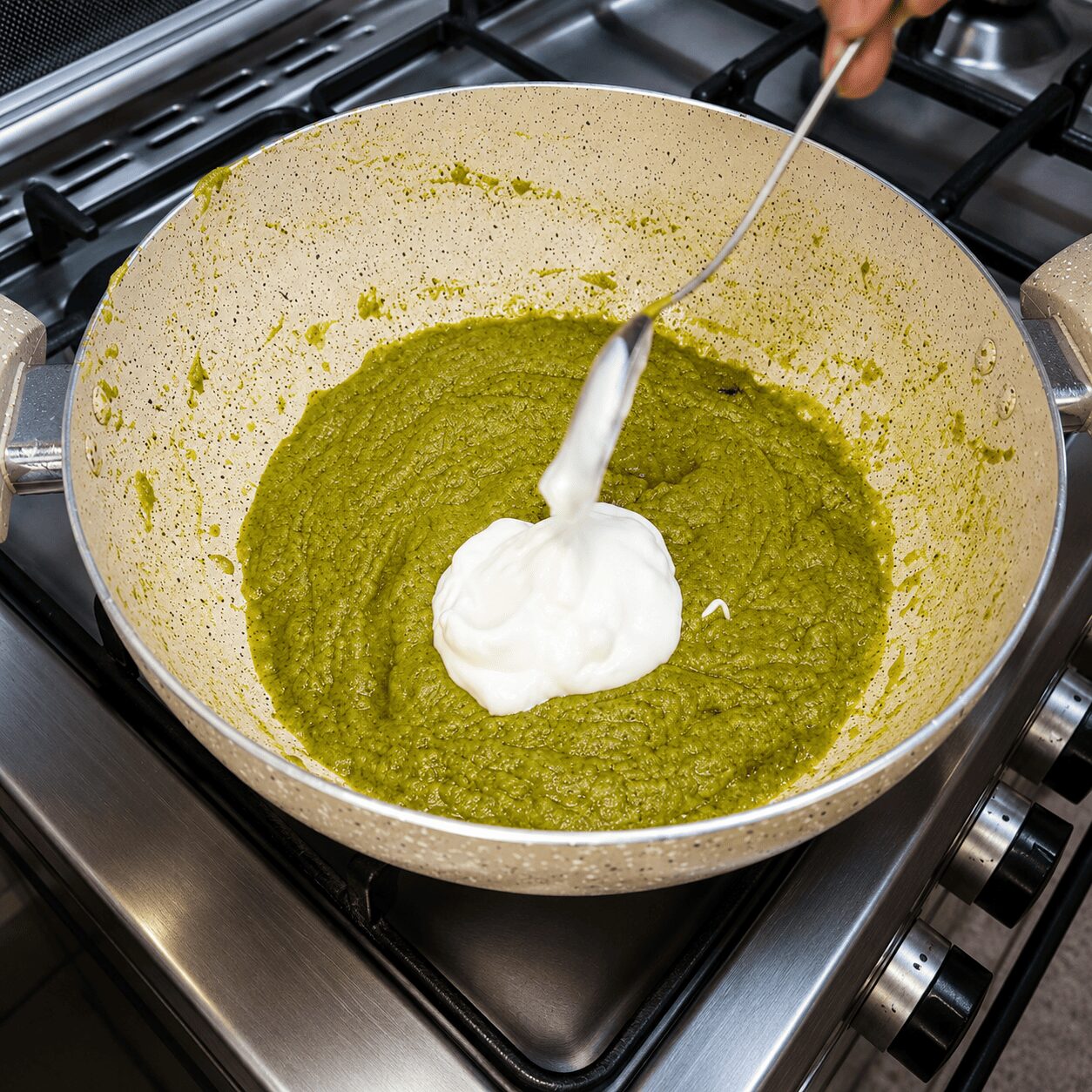
Simmer covered until the consistency is right
Cover and cook on low flame for about 5 minutes. The gravy should reach a perfect, medium consistency — it will thicken slightly further once the eggs go in and simmer.
Add the fried eggs
Add the fried eggs to the gravy. Mix gently on low flame — the eggs are already cooked, so this stage isn’t about cooking them further, just coating them and letting flavours settle in. Cover and cook for 2–3 minutes so the gravy’s flavour is absorbed into the eggs through the scored cuts.

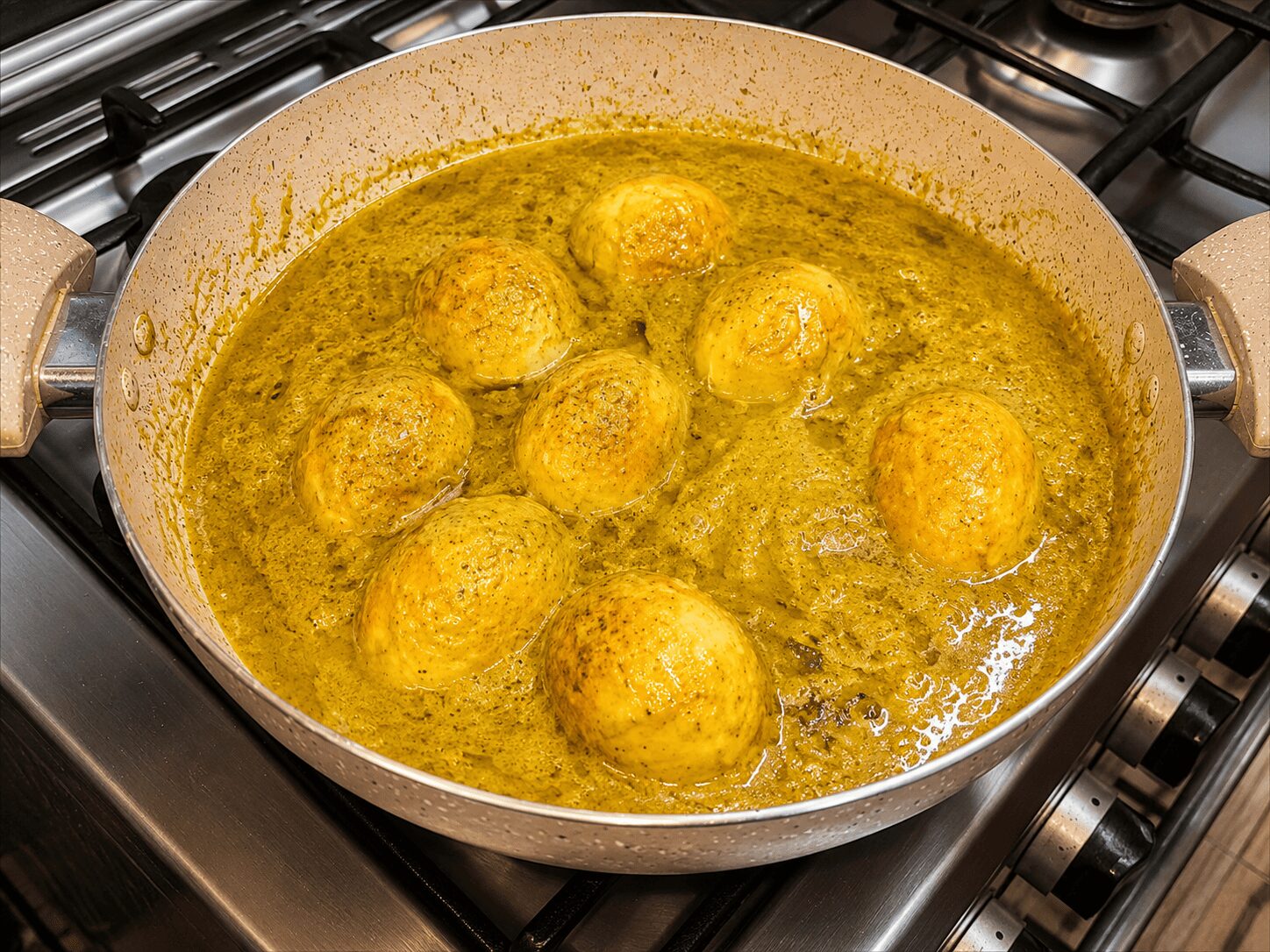
How to Do the Charcoal Smoke (Koyla Dhuan) Step
This step is optional, but it’s the one that actually makes a dish “Afghani” rather than just mild and creamy. It’s the same finishing technique used for Afghani chicken, Afghani mutton, and Afghani pulao on this channel — once you’ve done it here, you can use it on any of those too.
- Light a small piece of charcoal until it glows red-hot, using tongs to handle it.
- Place the lit coal into a small heatproof metal bowl, and set that bowl directly inside the pot of finished curry, nestled among the eggs and gravy without touching them.
- Pour a few drops of oil or ghee onto the hot coal — it will begin smoking immediately.
- Cover the pot right away so the smoke has nowhere to escape.
- Leave it covered for as long as you’d like the smoke flavour to develop — a light touch needs only a minute or two; a fuller smoke flavour, the way the creator prefers it, means waiting until the smoke has fully settled before lifting the lid.
- Remove the bowl with tongs before serving.
Dish out and serve
Lift the lid, remove the charcoal bowl if you used it, and dish out your Afghani egg curry. The gravy should be pale gold, fragrant, and clinging well to the eggs.
6 Things That Give This Curry Its Afghani Character
- Pale onion, never golden — this is non-negotiable for the Afghani look
- Cardamom and cloves bloomed in oil first, before the onion goes in
- Coriander, cashew, and yogurt blended into one paste — not added separately
- Both milk and cream in the gravy, not one or the other
- A short, minimal spice list — this is intentional, not a shortcut
- The charcoal smoke finish — optional, but the technique that defines the genre
The One Mistake That Ruins Afghani Egg Curry
Letting the onion brown.
It’s an easy habit to fall into, especially if you’ve cooked a lot of standard Indian curries — onion usually wants to go golden-brown for depth of flavour. But Afghani-style gravy depends on the onion staying pale, just a light blush of pink. Let it brown and the entire gravy takes on a brownish-Indian-curry shade instead of the pale, off-white look that defines the style. No amount of milk or cream added afterward will undo that colour shift.
Medium-to-low flame. Watch closely. Stop the moment you see pink, not gold.
For Beginners
Feel free to skip the charcoal smoke step entirely — the curry is complete and authentic-tasting without it. Focus your attention on the onion colour instead; that’s the step that actually determines whether this looks like Afghani-style gravy or not.
For Confident Home Cooks
If you’re comfortable with the basic charcoal smoke technique, try adding a small piece of cinnamon stick or a few dried rose petals directly onto the hot coal along with the oil. It builds a more layered, slightly sweeter smoke aroma than charcoal alone — a small variation, but one that’s genuinely worth trying once the base technique feels familiar.
What to Serve Afghani Egg Curry With
Afghani-style gravies are typically paired with something plain — naan or roti work best, soaking up the pale, fragrant gravy without competing with its subtlety. Plain basmati rice is another natural match; its neutral flavour lets the cardamom, coriander, and dairy notes come through clearly.
This is not a dish that needs a heavily spiced side. Keep the rest of the meal simple and let the curry’s fragrance be the main event.
Storage, Reheating & Make-Ahead
| Situation | Guidance |
|---|---|
| Fridge storage | Up to 2 days in an airtight container |
| Charcoal smoke flavour | Fades somewhat overnight — strongest the day it’s made |
| Freezing | Not recommended — the milk-and-cream gravy can separate on thawing, and egg texture turns rubbery |
| Reheating | Gentle reheat on low flame with a splash of milk, not plain water — water dilutes the creamy flavour the milk and cream built in |
| Make-ahead strategy | The gravy (through the milk and cream stage) can be made a day ahead and refrigerated. Reheat gently with a splash of milk, then add freshly fried eggs and simmer 2–3 minutes |
Milk or Cream — Why This Recipe Uses Both
Most egg curries pick one dairy finish and stop there. This recipe uses both deliberately, because they do two different jobs.
| Dairy | What It Contributes |
|---|---|
| Milk (¾ cup–1 cup) | Thins and lightens the gravy, adds a subtle natural sweetness, and keeps the texture from becoming heavy |
| Cream (2 tbsp) | Adds richness and body — the dairy thickness that milk alone can’t provide |
| Both together | Balances the gravy so it’s neither too thin nor too heavy — the texture this style is known for |
If you only have one or the other, the dish still works — see the substitutions table above for how to adjust.
Myth vs. Fact: Is Afghani Curry Actually from Afghanistan?
“Afghani” curry is a direct, documented part of Afghan national cuisine.
Not quite. “Afghani” is widely used across South Asian home kitchens and restaurant menus as a style descriptor — a pale, mild, coriander-cashew-cream gravy, loosely inspired by the direction of Afghan cooking but developed and popularised within South Asian food culture. It isn’t a precise document of Afghanistan’s national cuisine, and it’s worth being honest about that distinction rather than overclaiming authenticity. What it is, genuinely, is a distinct and well-loved style in its own right — mild, fragrant, and built around techniques (the pale onion, the charcoal smoke) that give it real character.
Nutrition Snapshot (Estimated per serving)
| Nutrient | Estimated Amount |
|---|---|
| Calories | ~270–310 kcal |
| Protein | ~11–14 g |
| Fat | ~19–23 g |
| Carbohydrates | ~8–11 g |
| Sodium | Varies with salt added |
Figures are estimated and will vary based on exact oil quantity, egg size, and how much milk and cream are used. Eggs supply complete protein and cashews add healthy fats — a reasonable nutritional combination, though these figures aren’t a substitute for individualised nutritional advice. Egg and cashew nutrient data is available via USDA FoodData Central.
Frequently Asked Questions
What is Afghani egg curry?
Afghani egg curry is a pale, mild, coriander-cashew-cream style egg gravy popular across South Asian home cooking — built without tomato or turmeric, finished with both milk and cream, and optionally given a charcoal smoke finish. It’s milder and more aromatic than the typical red, tomato-based egg curry.
Why does Afghani-style curry stay pale and not turn orange or red?
There’s no tomato or turmeric in the base, and the onion paste is deliberately cooked only until lightly pink — never golden or brown. Letting the onion brown the way you would for a standard curry gives the gravy a brownish shade that goes against the pale Afghani look.
What does the charcoal smoke step actually do to the flavor?
A lit piece of charcoal with a drop of oil or ghee, covered briefly inside the finished dish, infuses the gravy with a subtle smoky aroma. It’s the same finishing technique used in Afghani chicken, Afghani mutton, and Afghani pulao — optional here, but it’s the step that gives the genre its signature character.
Can I skip the cashews or the cream?
Yes. Both exist purely to enhance flavour, not to structure the gravy. Skip the cashews or swap in another nut like blanched almonds; if you don’t have cream, use homemade malai instead, or simply use a little extra milk to thin the gravy while keeping the flavour balanced.
Why use both milk and cream — what does each one do?
Milk thins and lightens the gravy and adds a subtle dairy sweetness; cream adds richness and body. Used together, they balance each other so the gravy ends up neither too thin nor too heavy — exactly the texture this style is known for.
How spicy is this recipe, and can I make it spicier?
It’s intentionally mild — Afghani-style gravies are built for fragrance over heat. Four green chillies give a gentle background warmth in the original recipe. You can add more chilli or a pinch of red chilli powder if you’d like more heat, but doing so moves the dish away from its characteristic mild profile.
What’s the best way to reheat Afghani egg curry without ruining the gravy?
Reheat gently on low flame with a splash of milk rather than plain water — water dilutes the creamy flavour the milk and cream built into the gravy. Avoid microwaving on high, which can toughen the eggs.
Can I use the charcoal smoke technique for other dishes?
Yes — it’s the same technique used for Afghani chicken, Afghani mutton, and Afghani pulao. Once you’re comfortable doing it here, you can apply it to any of those dishes for the same smoky, restaurant-style finish.
Conclusion
Afghani egg curry is the mildest, most fragrant egg curry on this site — and the charcoal smoke step, optional as it is, is what makes it feel genuinely Afghani rather than just a mild egg curry with a label borrowed from somewhere else. The pale onion isn’t a small detail to rush past; it’s the whole identity of the dish.
The technique worth remembering: keep the onion pale, non-negotiably; bloom the whole spices in oil before anything else goes in; let the coriander-cashew-yogurt paste do the real flavour work; trust that the short spice list is the style, not a shortfall; cook milk and cream together properly so neither tastes raw; and try the charcoal smoke at least once — it’s a small, safe step that changes the dish more than you’d expect.
Forty minutes from pan to plate, one pot for both the eggs and the gravy, and a curry that tastes noticeably different from anything else on this site. Worth making the next time you want something fragrant and rich without reaching for red chilli.
Leave a Reply